Create and Manage Filters
In this article
- Create and test a filter
- Find overdue deposits
- Save and reuse a filter
- Find unpaid orders for a customer
- Create a rush filter
- Find orders waiting for goods
- Filter jobs by production stage
- Open a job from a filter
- Filter tasks by person, type, or progress
- Review completed work and find jobs ready to ship
- Find unpaid invoices and open their orders
- Follow up from an invoice
- Edit a saved filter
- Remove a saved filter
- Watch the filter walkthroughs
Use filters to find the orders, jobs, and tasks that need attention. Save views you use often so you can jump right back to them as work moves through your shop. You can use filters across YoPrint, including Sales Orders, Purchase Orders, Jobs, and Tasks.
Create and test a filter
A filter shows only the orders that match your chosen conditions. Start on the Sales Orders list. This example finds unpaid deposits.
-
Click + Filter at the bottom of the sidebar.
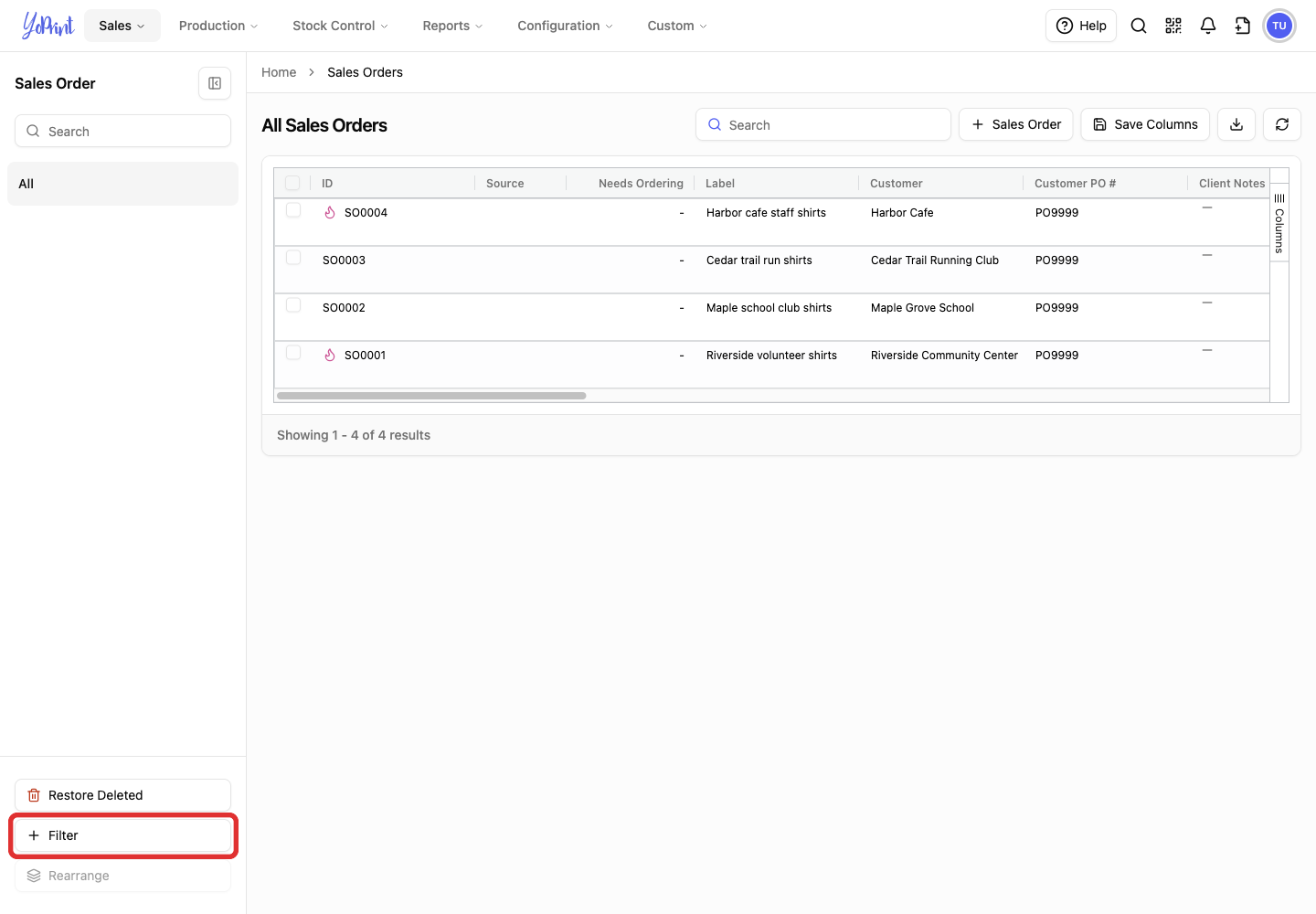
-
Enter a Filter Name, such as Unpaid deposits.
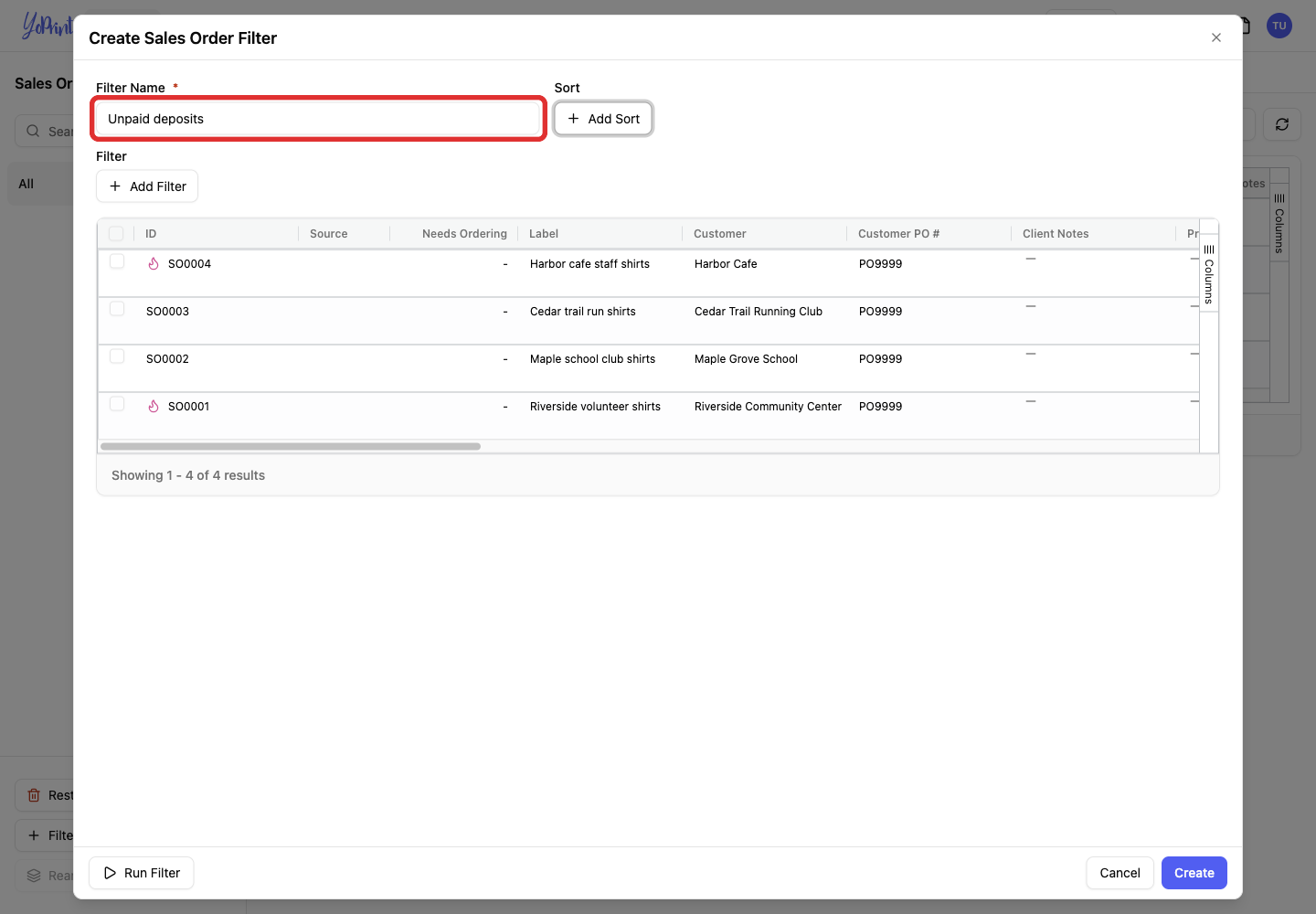
-
Click Add Filter.
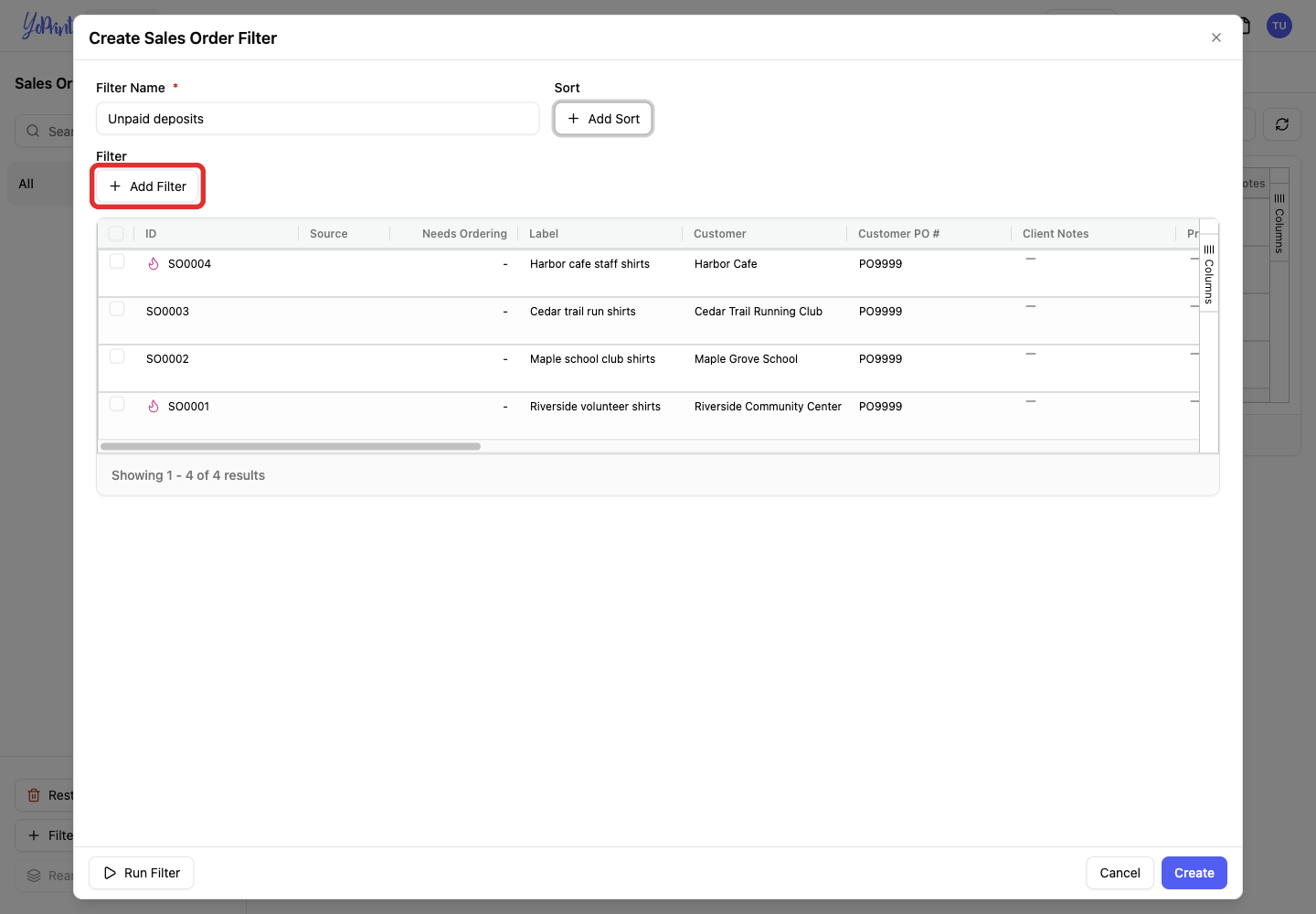
-
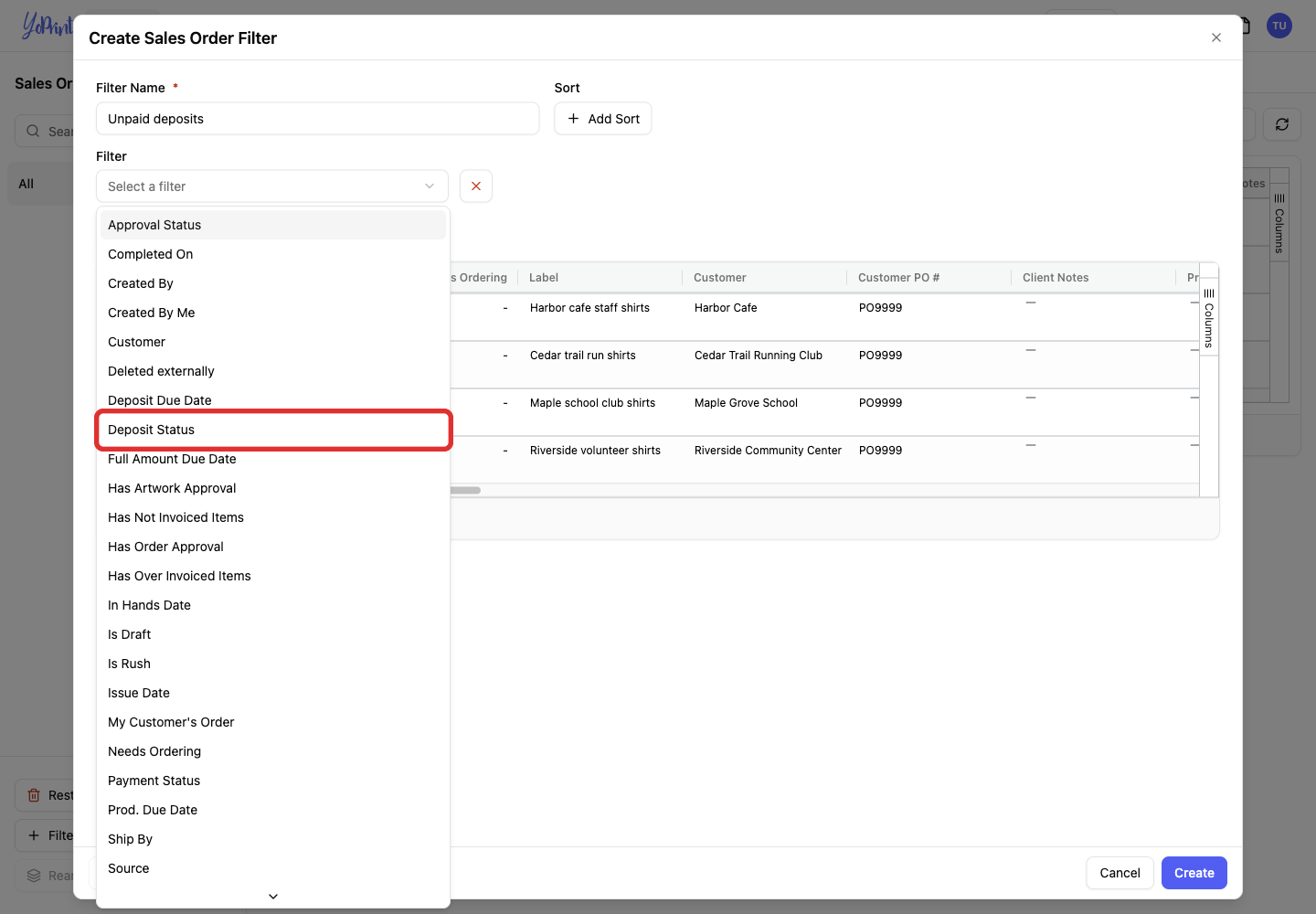
Open Select a filter.
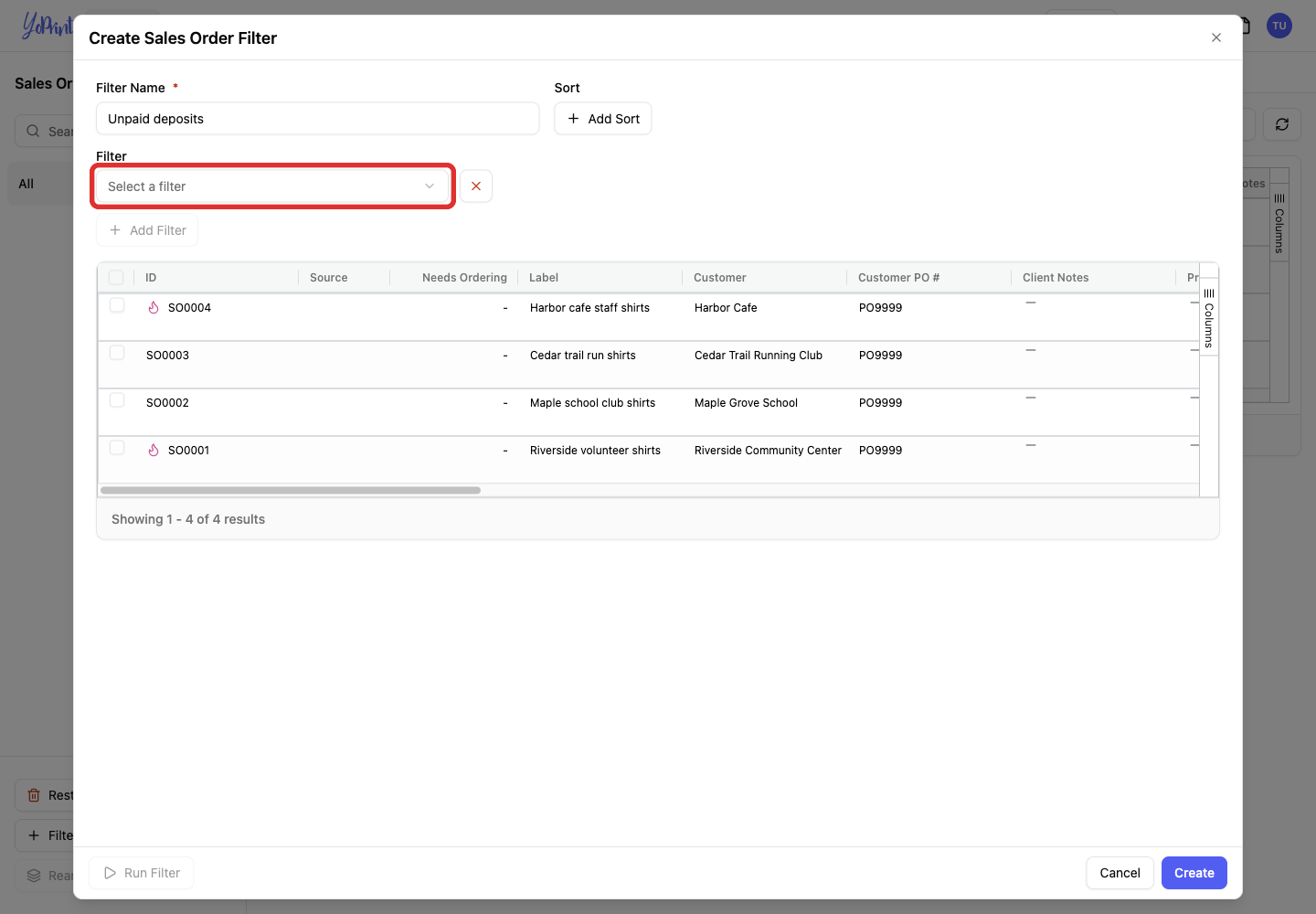
-
Choose Deposit Status.
-
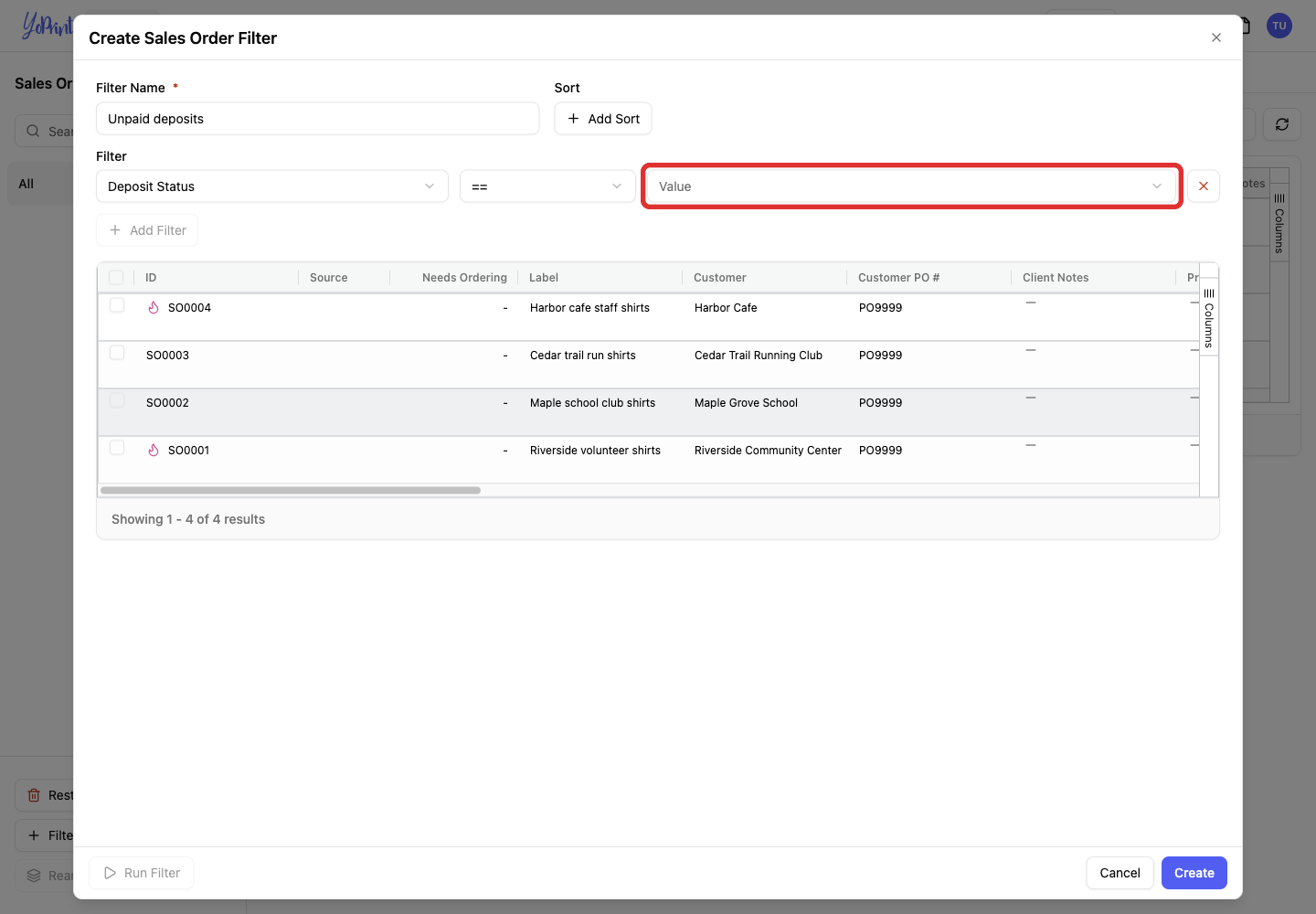
Leave the operator as == and open Value.
-
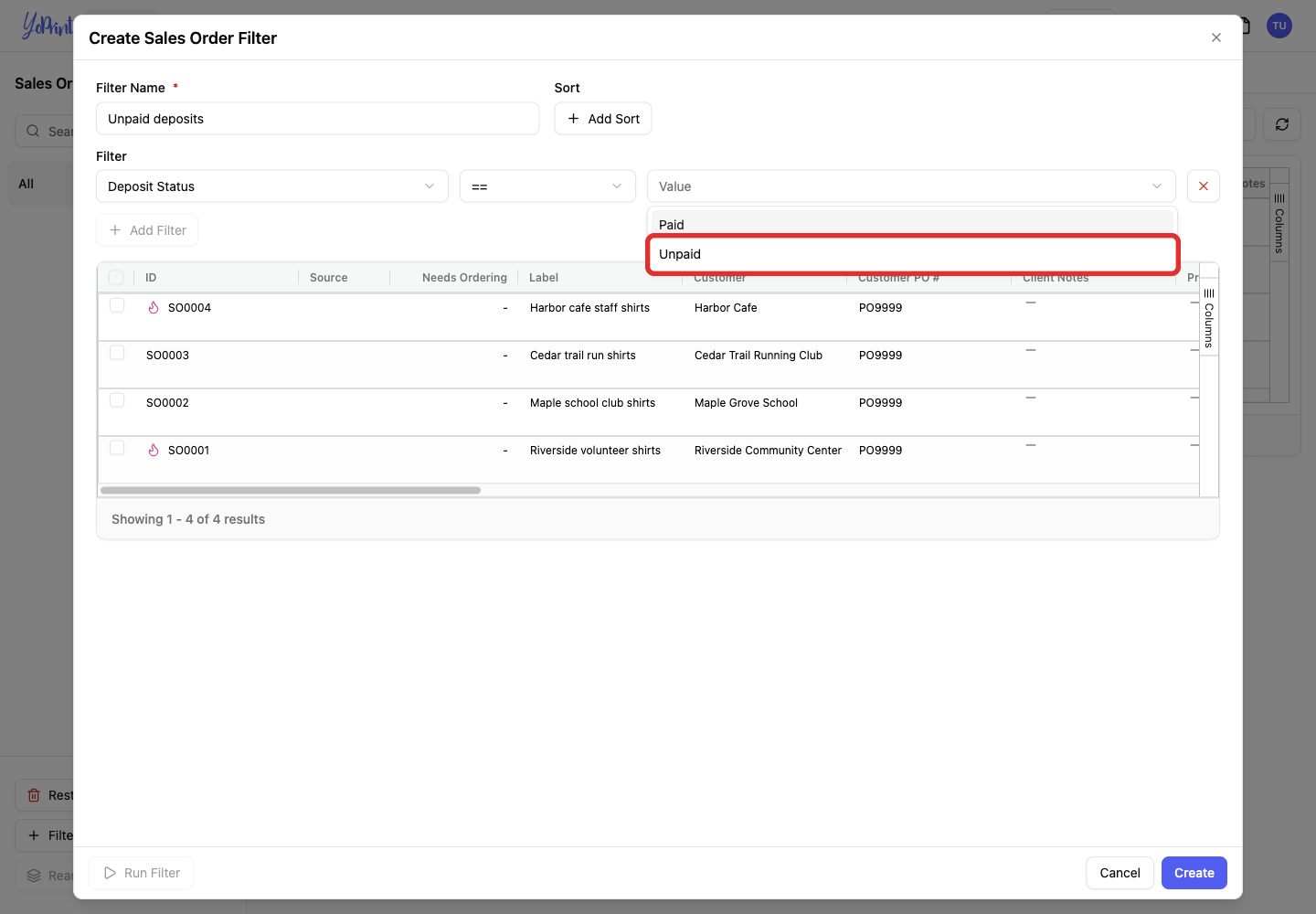
Choose Unpaid.
-
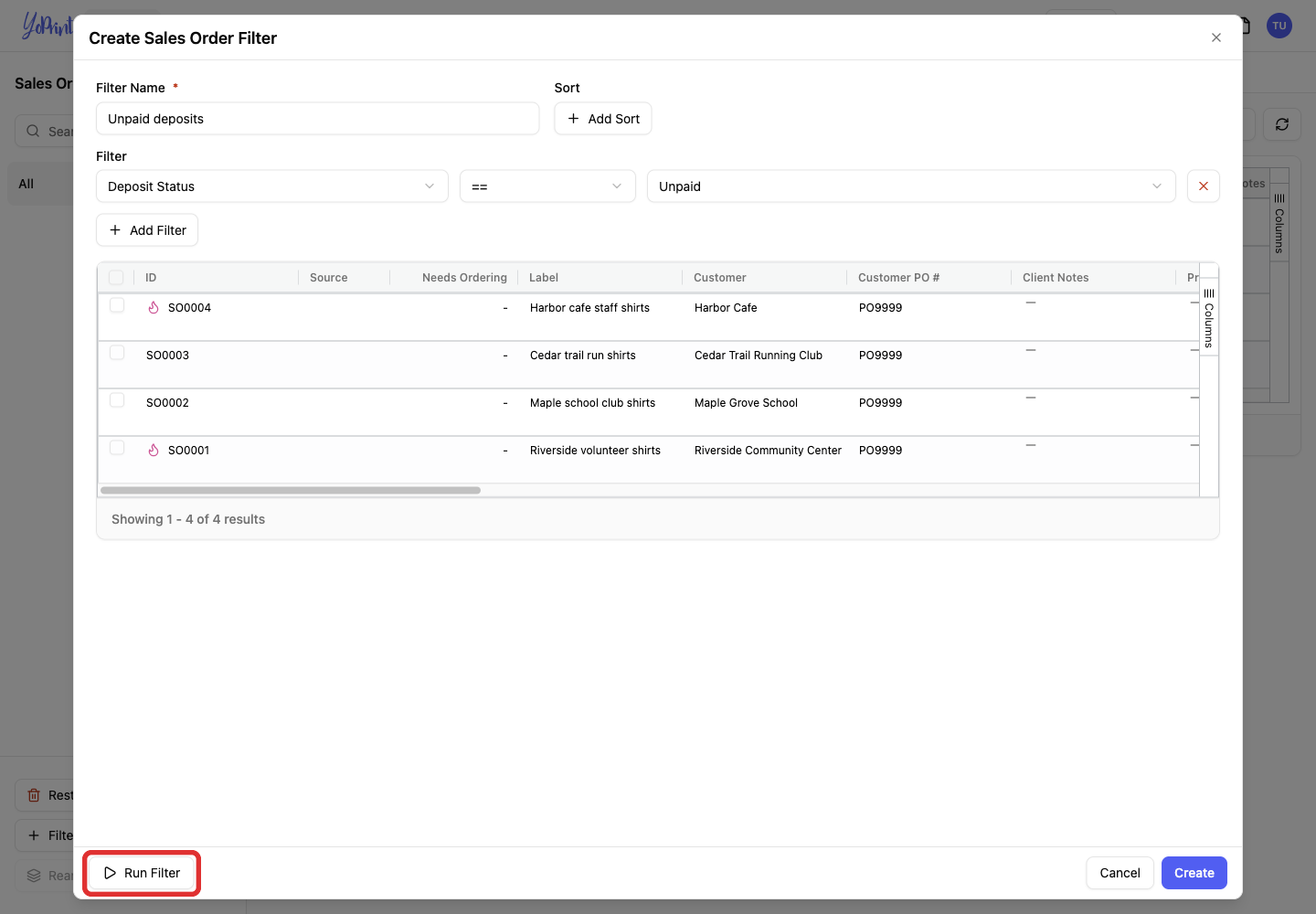
Click Run Filter to check the matching orders in the preview.
Find overdue deposits
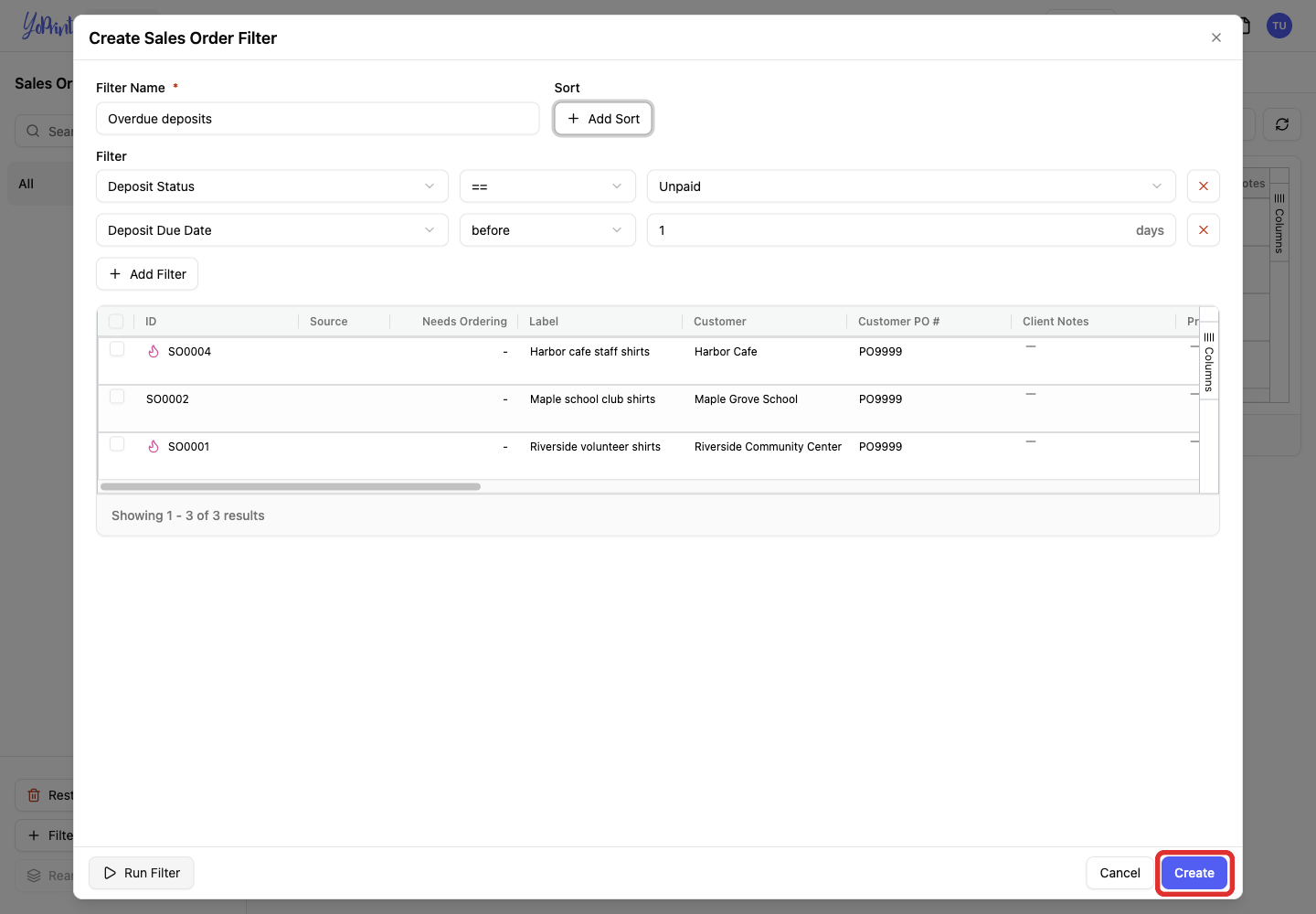
Add another condition to narrow the same filter. For example, combine an unpaid deposit with its deposit due date.
-
Click Add Filter again.
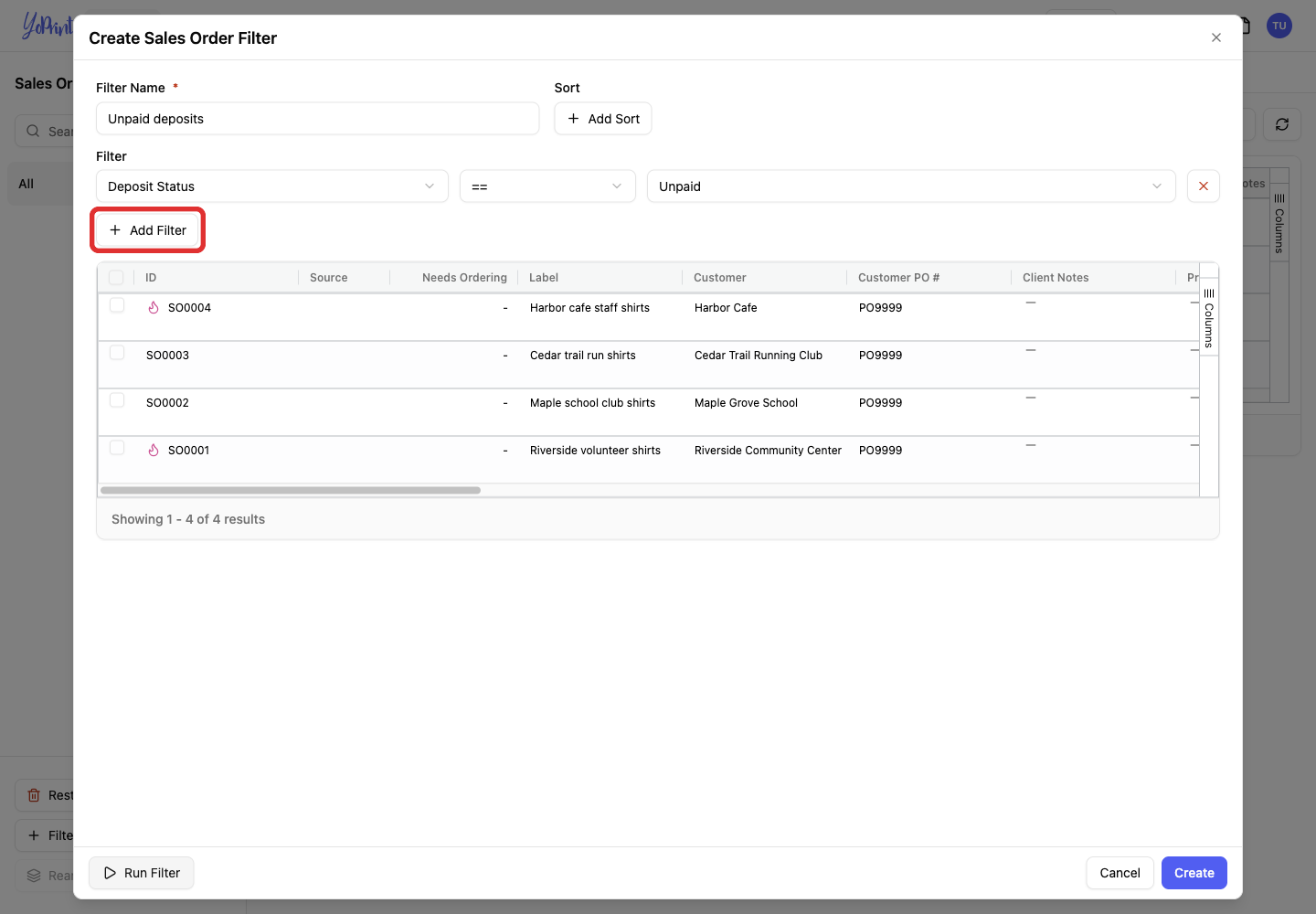
-
Open Select a filter in the new row.
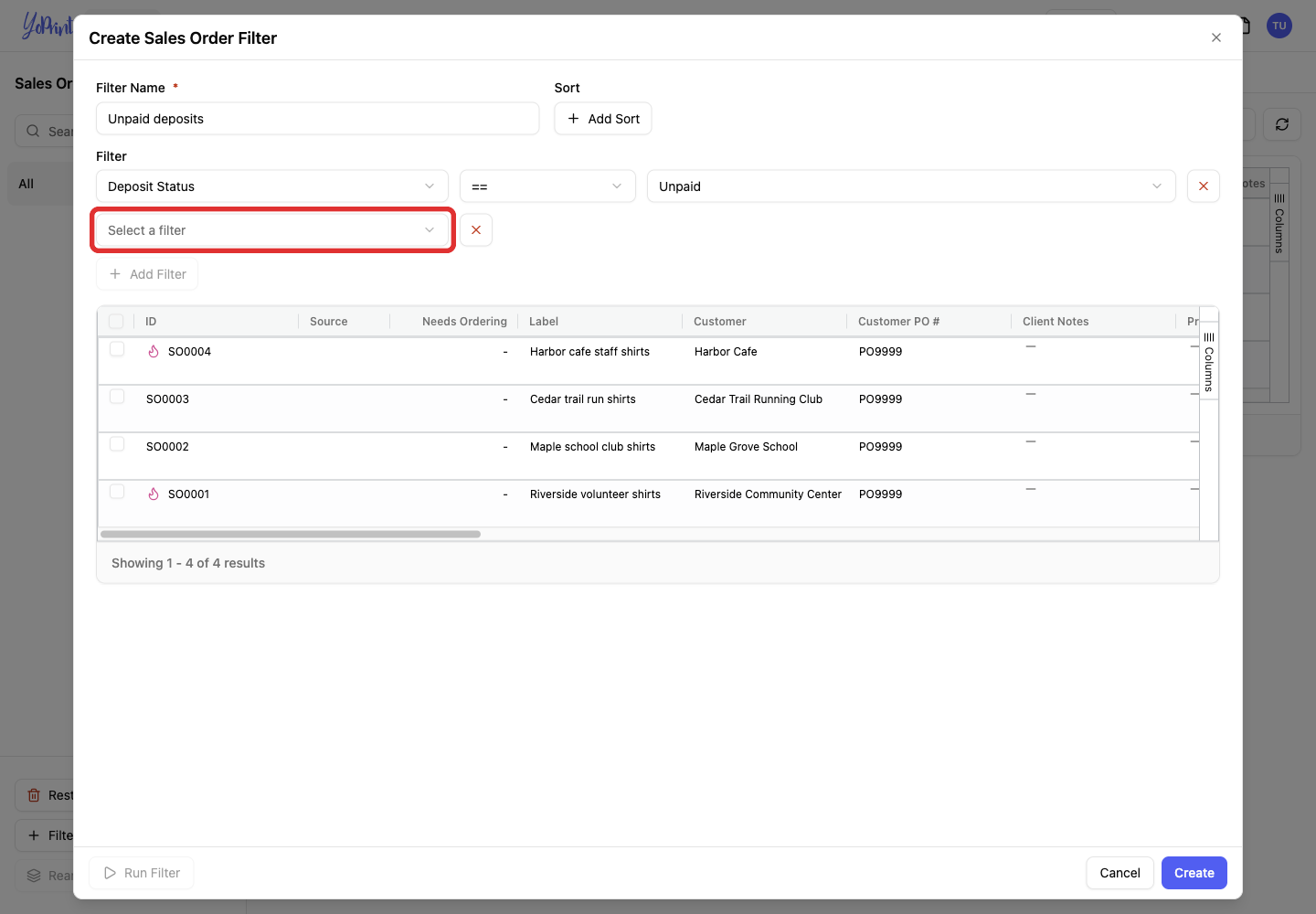
-
Choose Deposit Due Date.
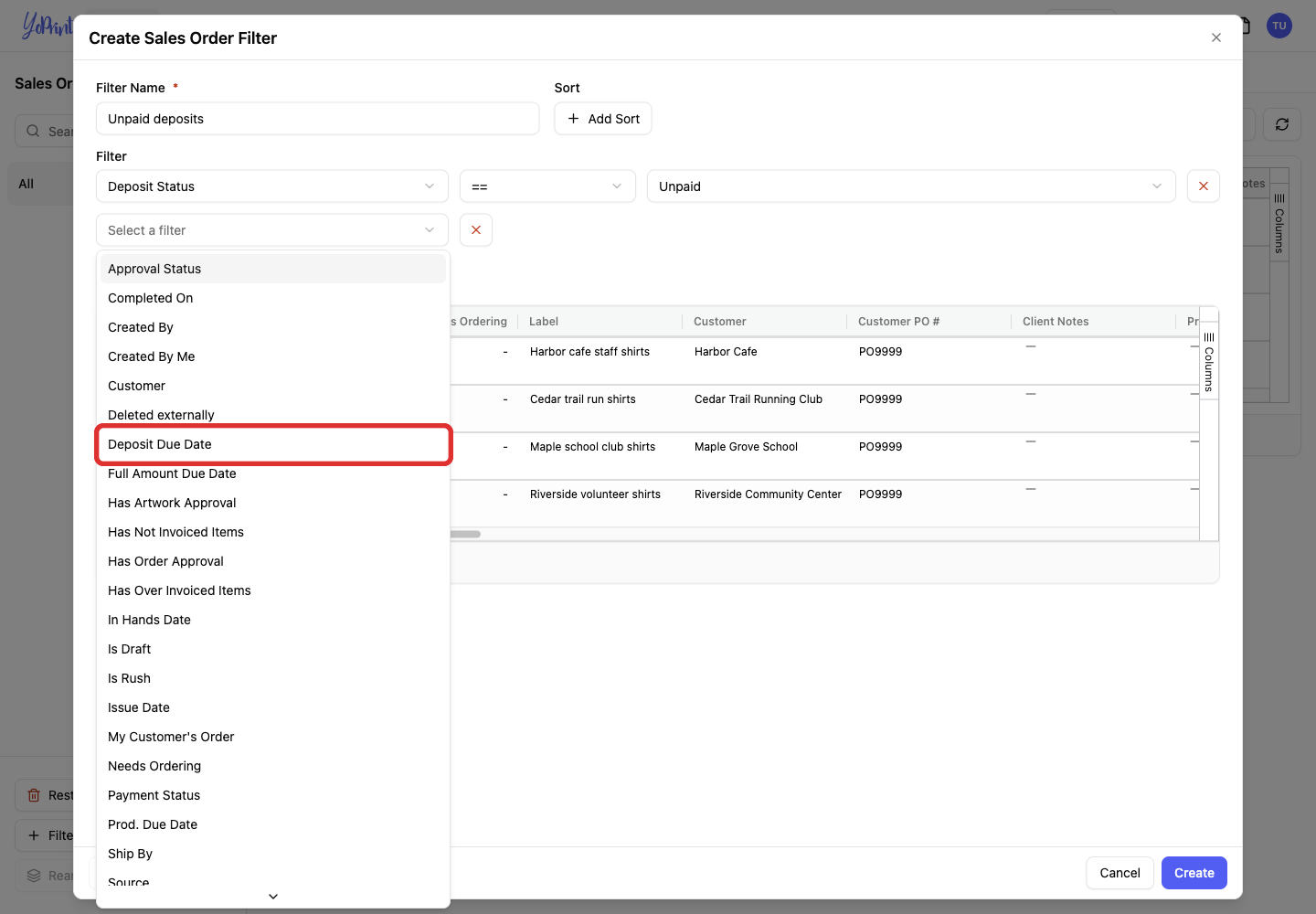
-
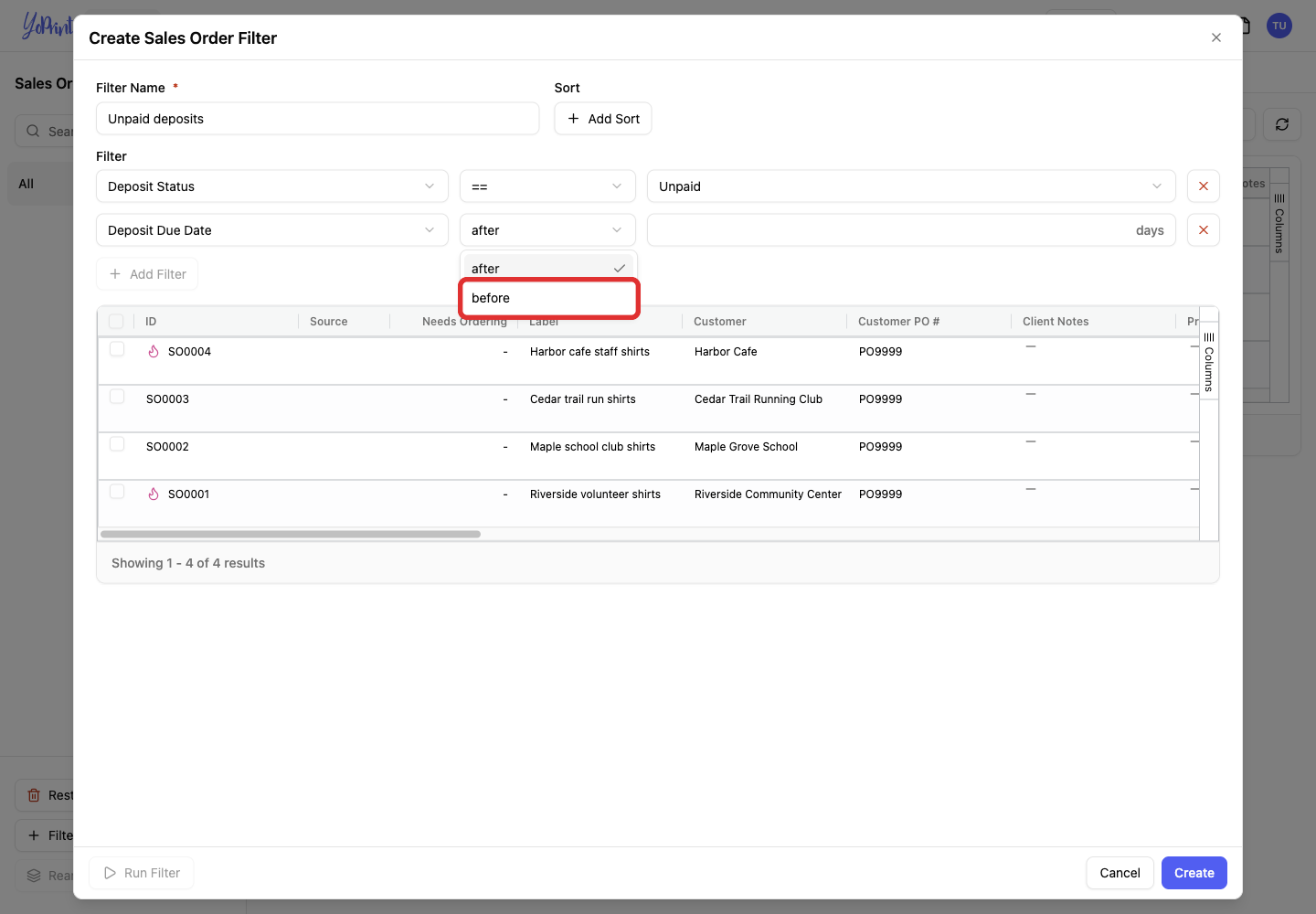
Open the date operator.
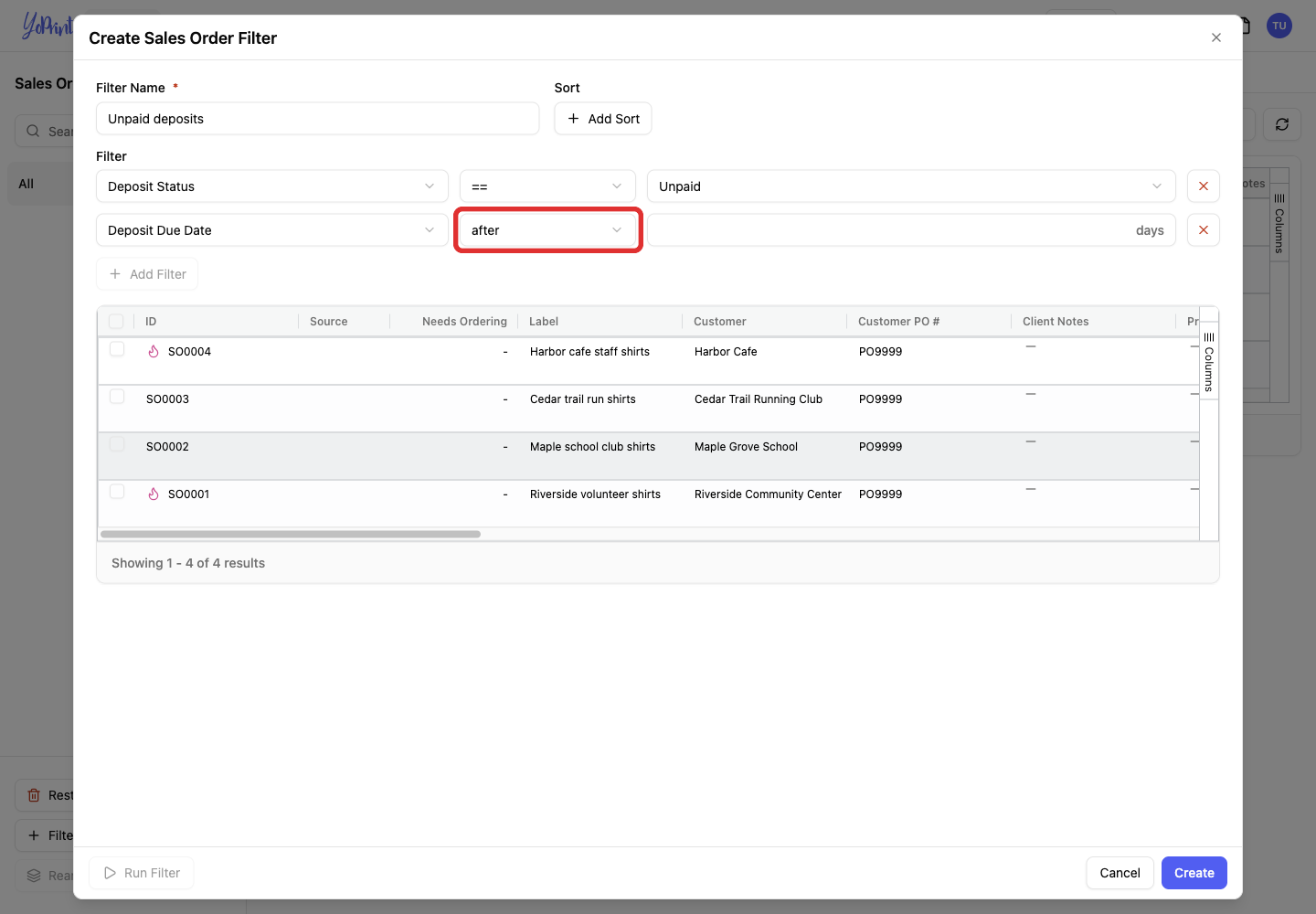
-
Choose before.
-
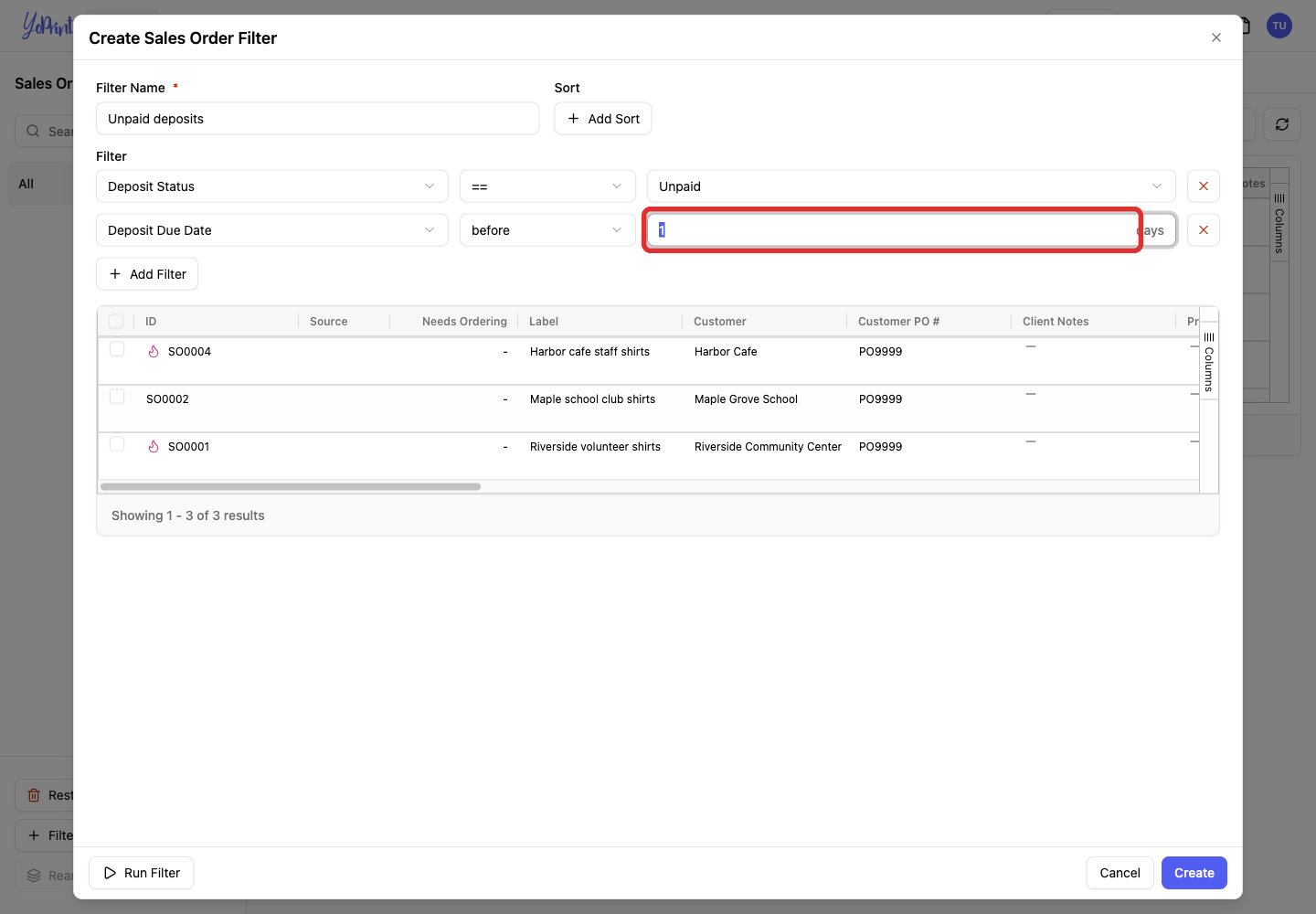
Enter 1 in the days field.
-
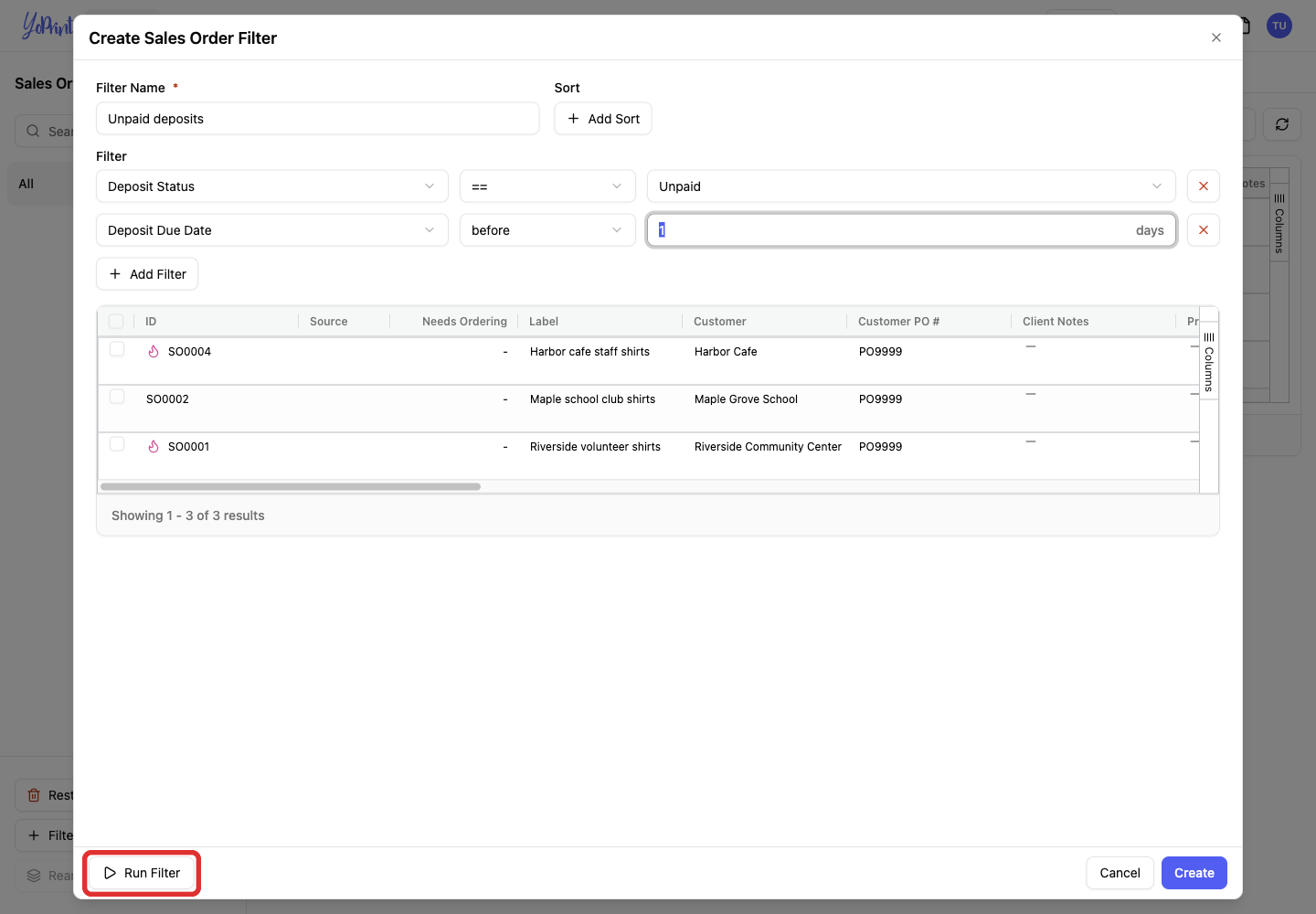
Click Run Filter to check the results.
Save and reuse a filter
Save any filter you want to use again. The sidebar keeps it right beside the list it belongs to.
-
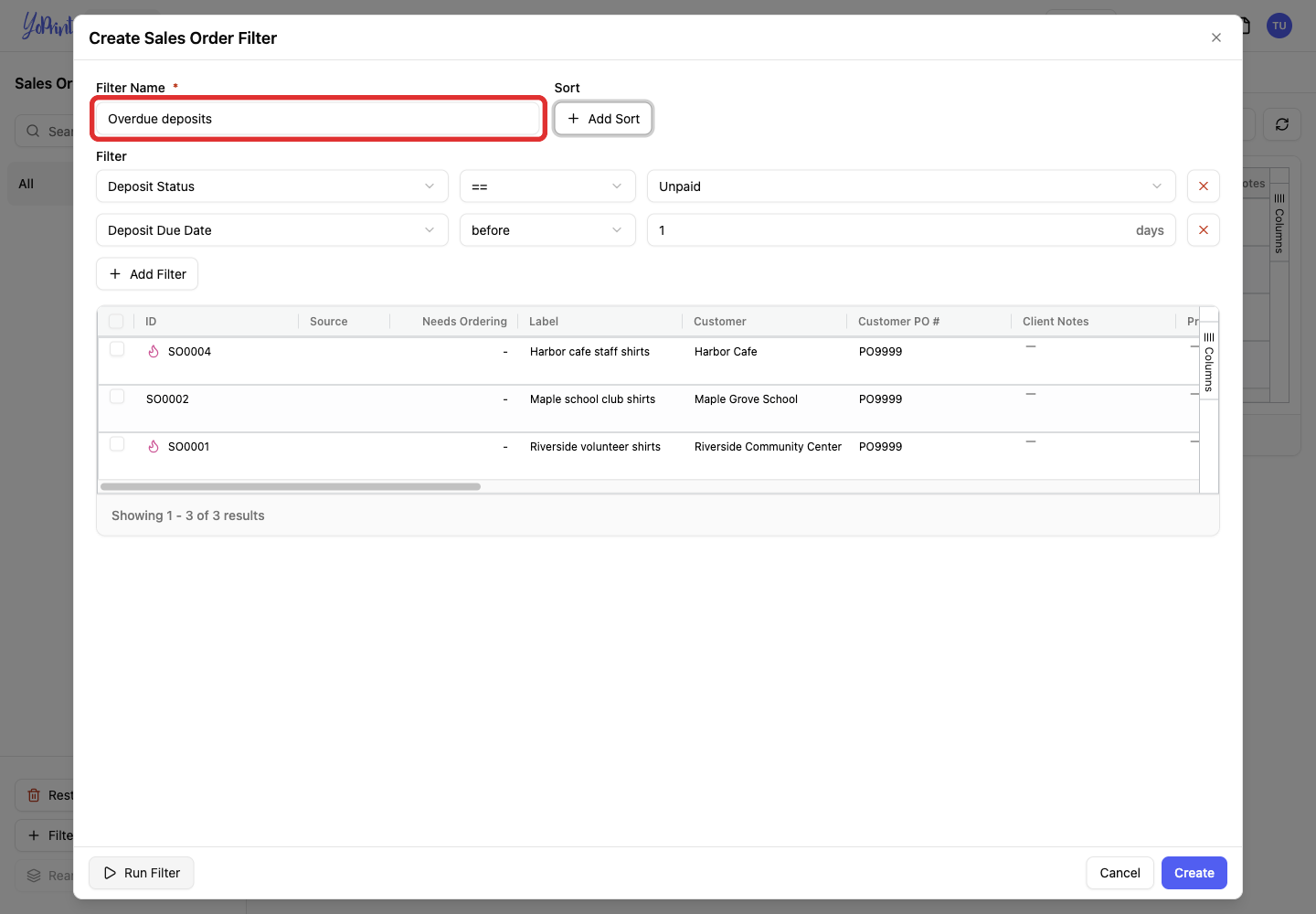
Give the combined filter a useful name, such as Overdue deposits.
-
Click Create to save it.
-
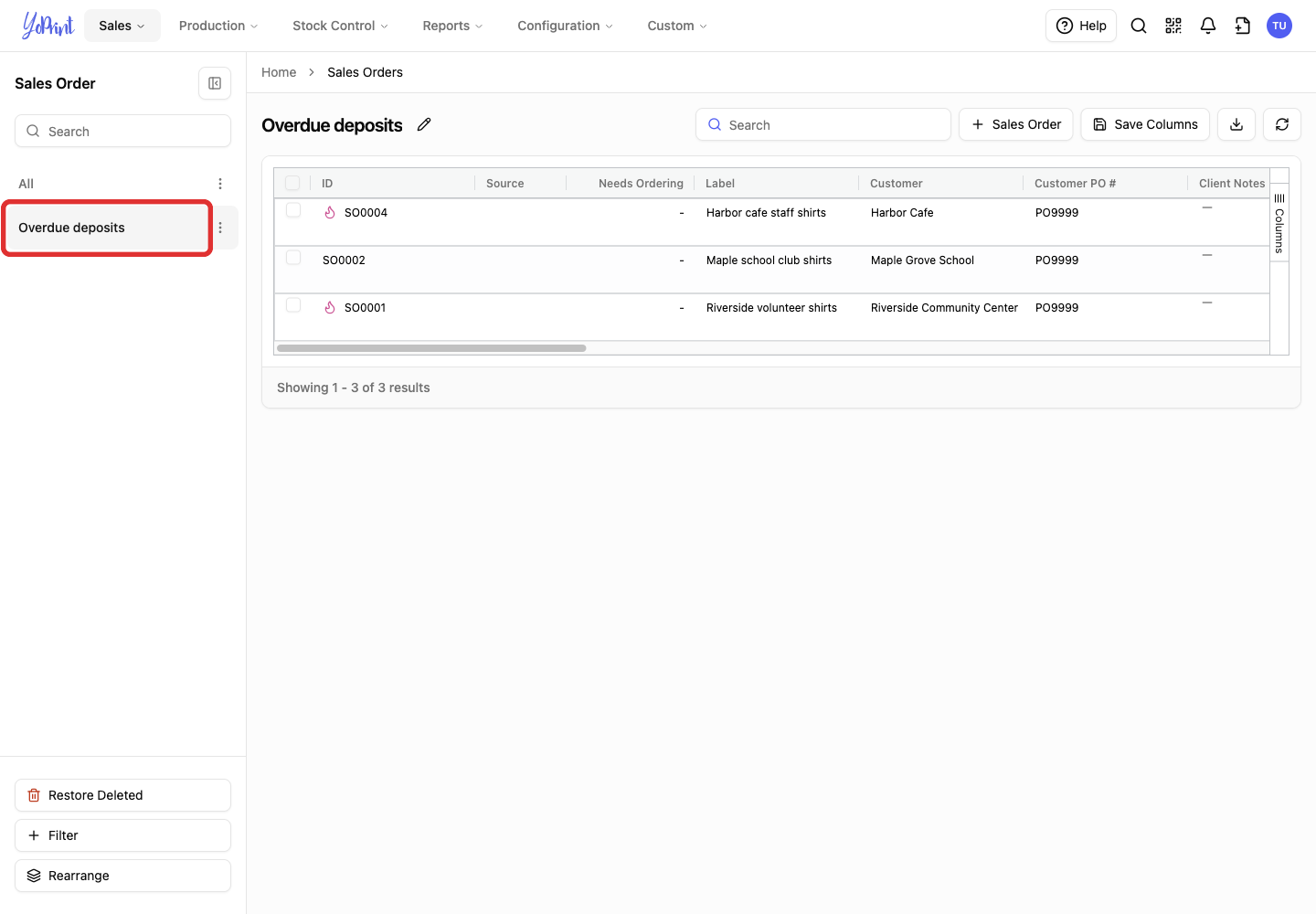
Select the saved filter in the sidebar whenever you want to see its matching orders.
Find unpaid orders for a customer
The examples below use the same + Filter, Add Filter, Run Filter, and Create controls as the first walkthrough. The tables give the conditions to use for each saved view.
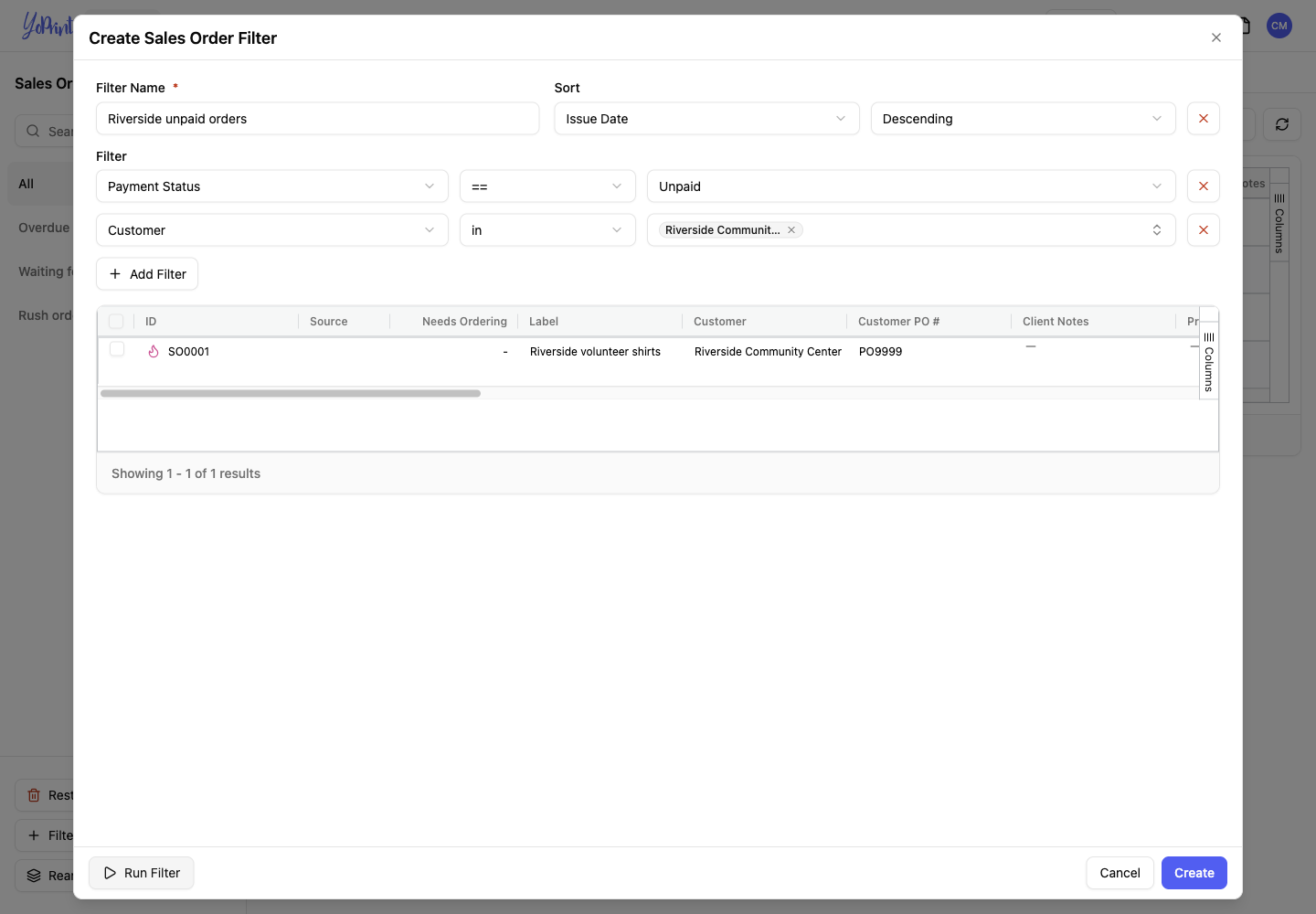
Payment Status == Unpaid finds orders with an unpaid balance. To focus on one customer, add Customer in and select that customer. For example, this filter shows Riverside Community Center's unpaid sales orders, with the newest issue date first. Use Edit a saved filter to add or change the sort order.
| Setting | Example value |
|---|---|
| Filter Name | Riverside unpaid orders |
| First condition | Payment Status == Unpaid |
| Second condition | Customer in Riverside Community Center |
| Sort | Issue Date, Descending |
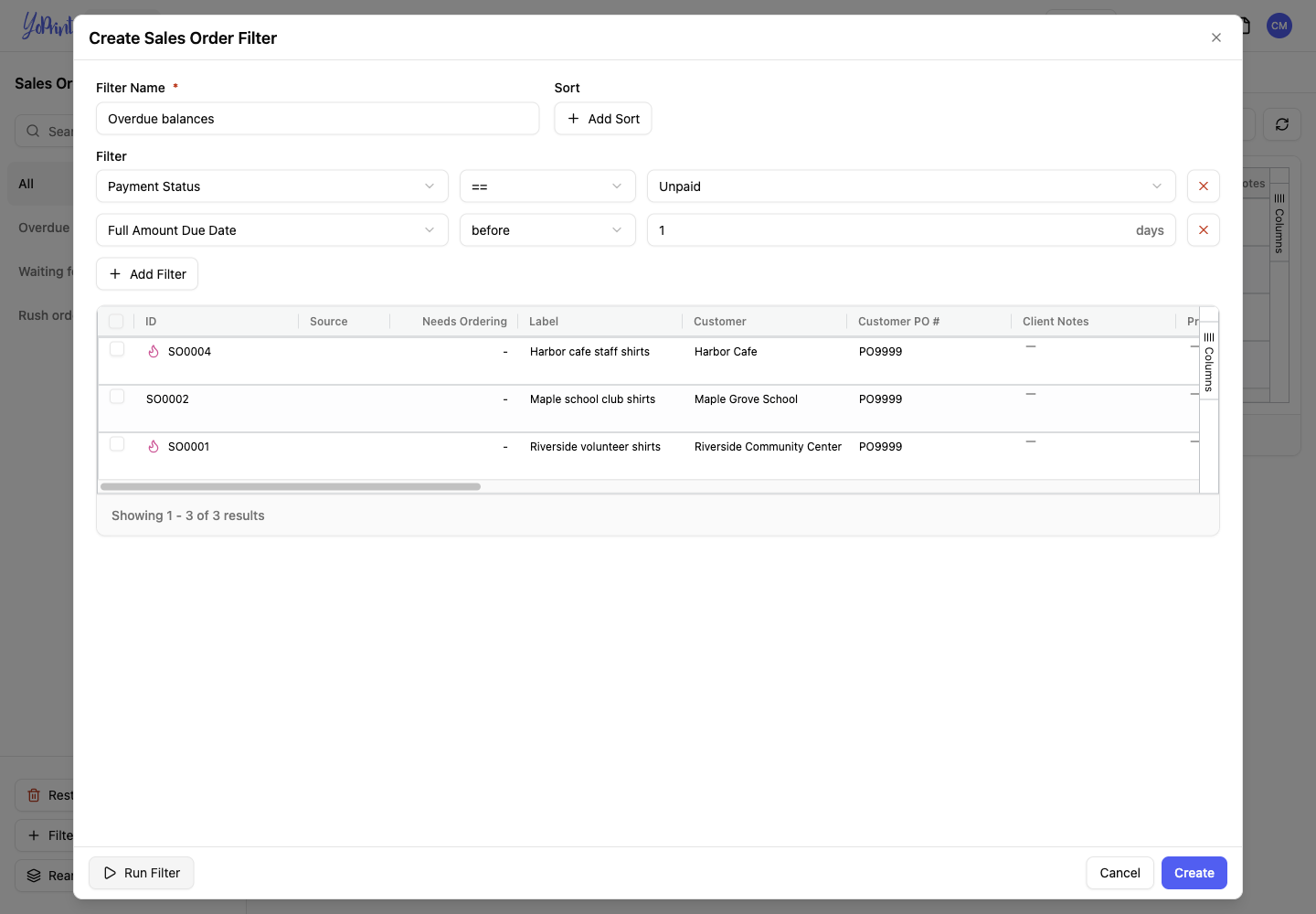
To find overdue balances instead, combine Payment Status == Unpaid with Full Amount Due Date before 1 day. Deposit Status checks the deposit; Payment Status checks the order's balance.
The Quotes list has the same payment filter fields: Deposit Status, Deposit Due Date, Payment Status, and Full Amount Due Date. In the Total column, the due date helps you decide which unpaid orders to follow up on.
For a payment reminder, open the matching order and follow Send a payment request.
Create a rush filter
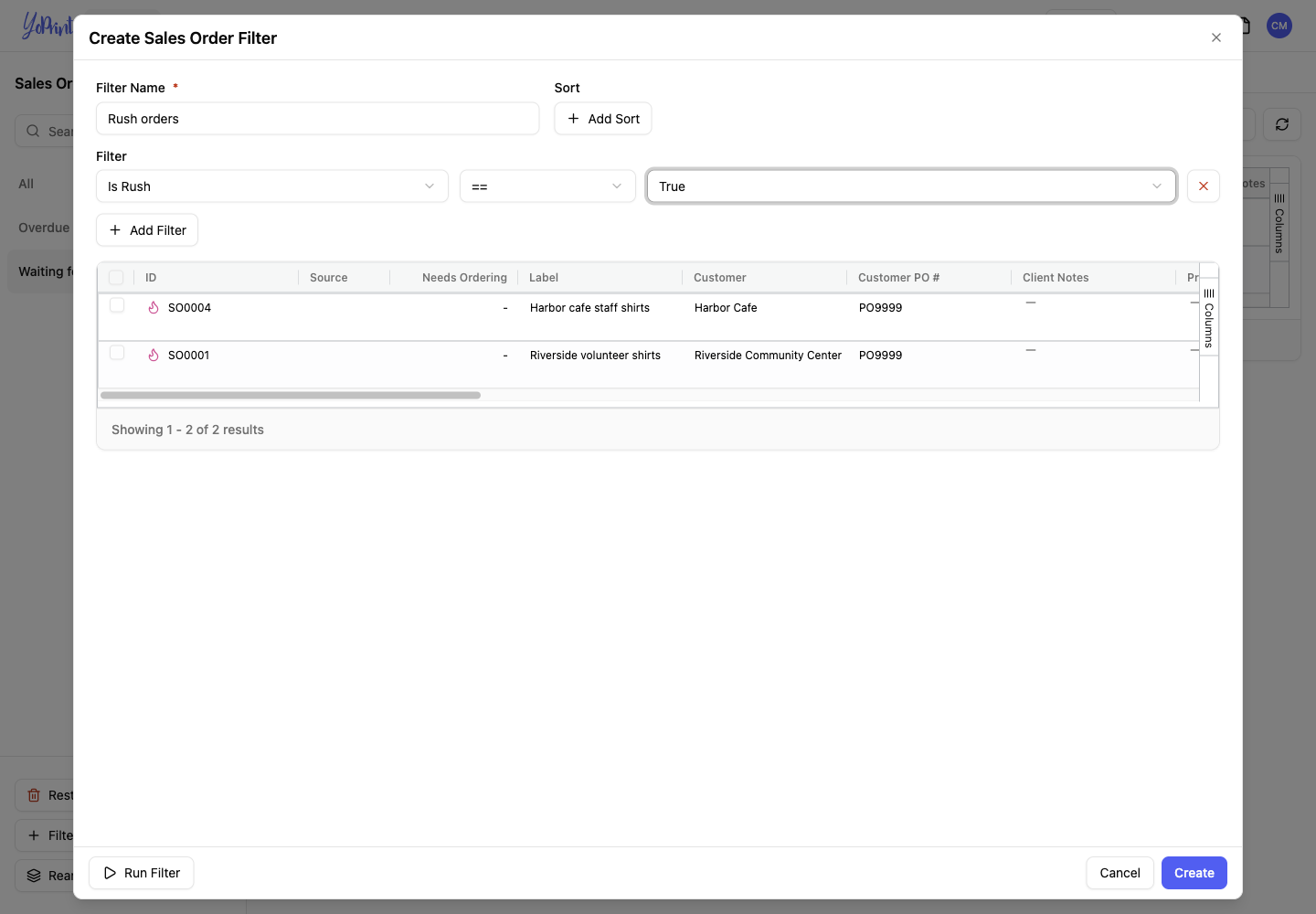
A rush filter shows orders marked as rush. Use these settings on the Sales Orders list, then test and save the filter as in the first walkthrough.
| Setting | Example value |
|---|---|
| Filter Name | Rush orders |
| Condition | Is Rush == True |
Find orders waiting for goods
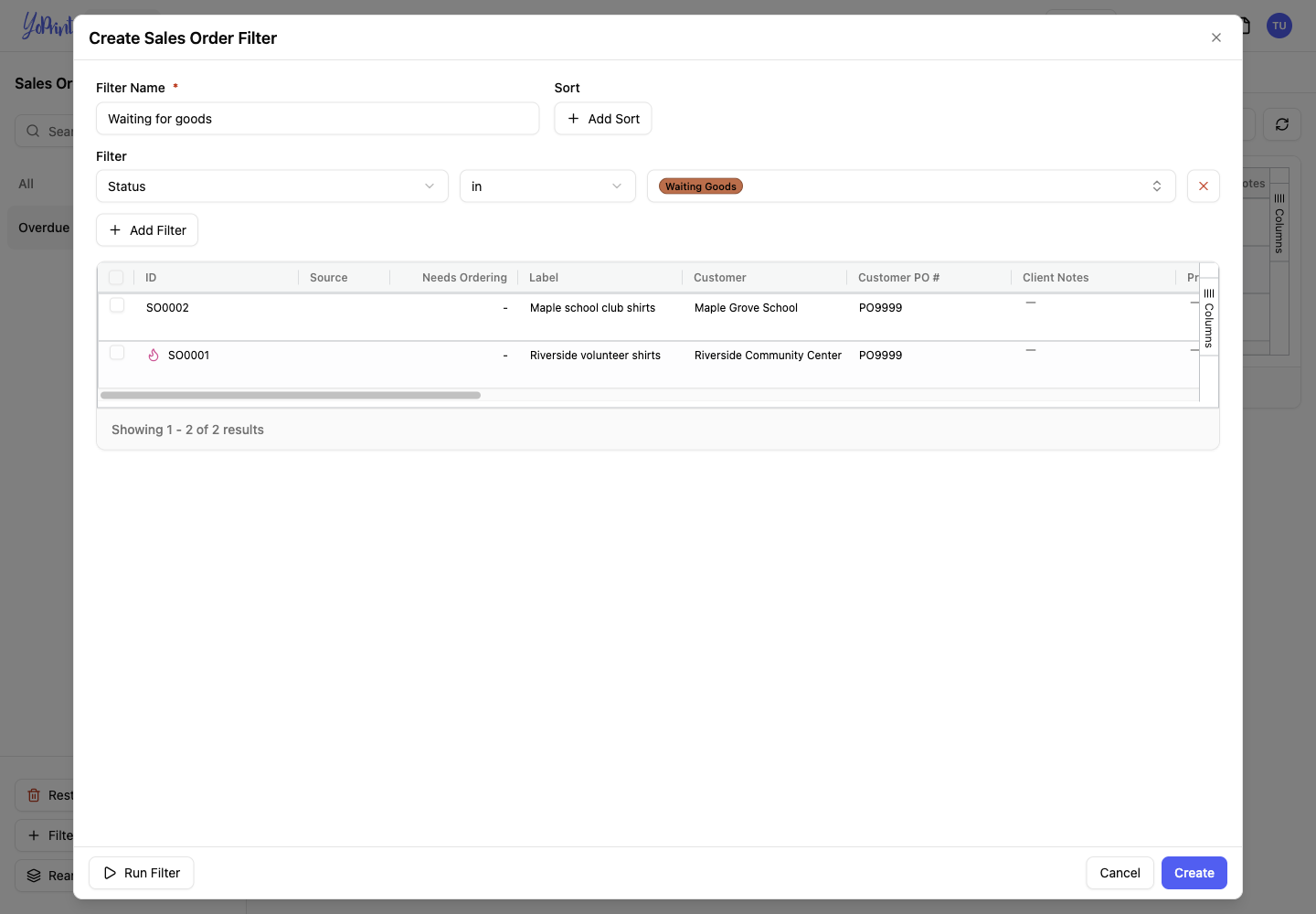
A status filter helps you gather orders at the same stage. In this example, Waiting Goods identifies the orders whose blanks still need to be ordered. Use the status that matches your shop's workflow.
| Setting | Example value |
|---|---|
| Filter Name | Waiting for goods |
| Condition | Status in Waiting Goods |
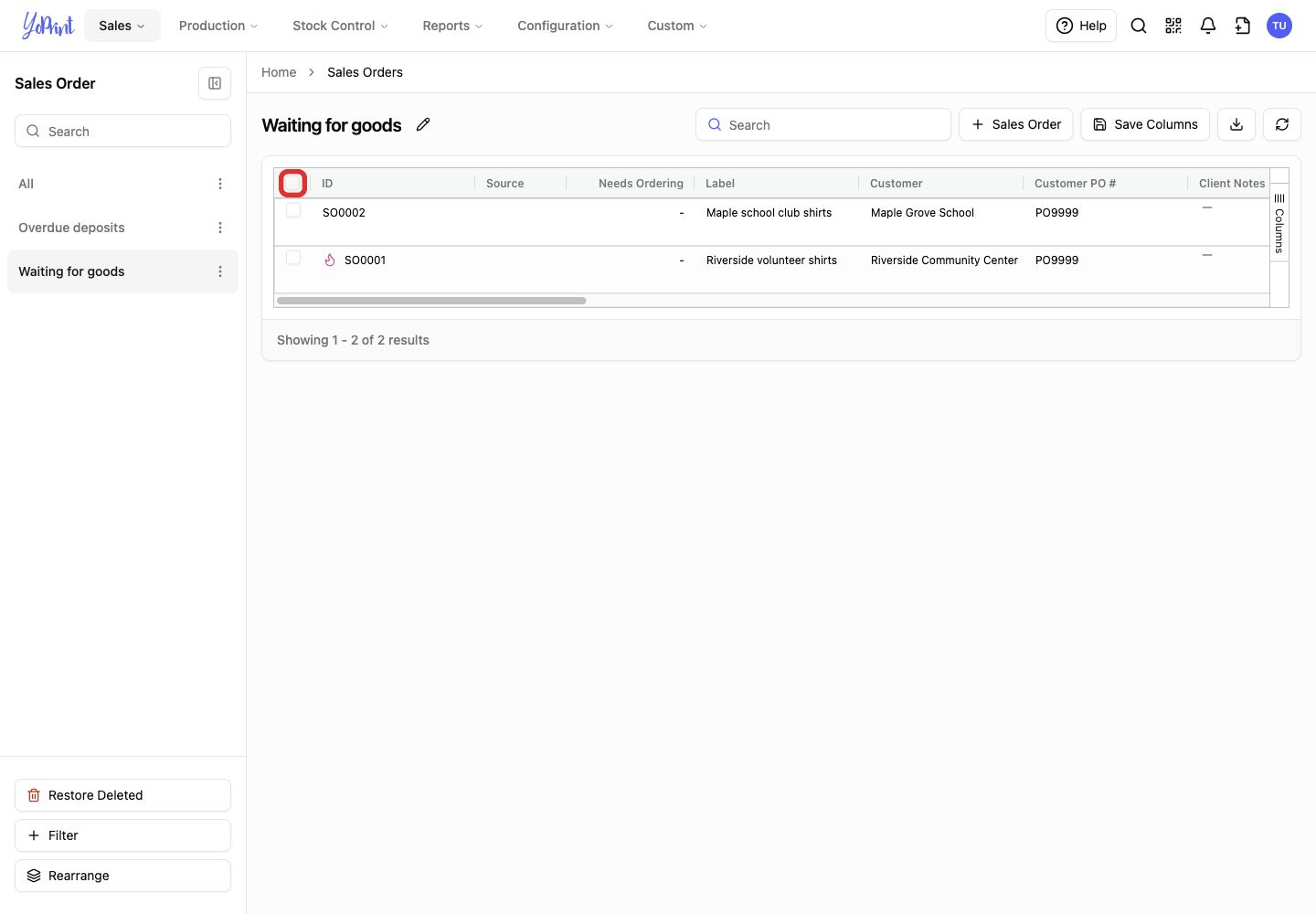
After testing and saving the filter, you can use its results to start a purchase order.
-
Select the orders you want to include. The header checkbox selects the displayed orders in this example.
-
Choose Create Purchase Order from the bulk actions menu.
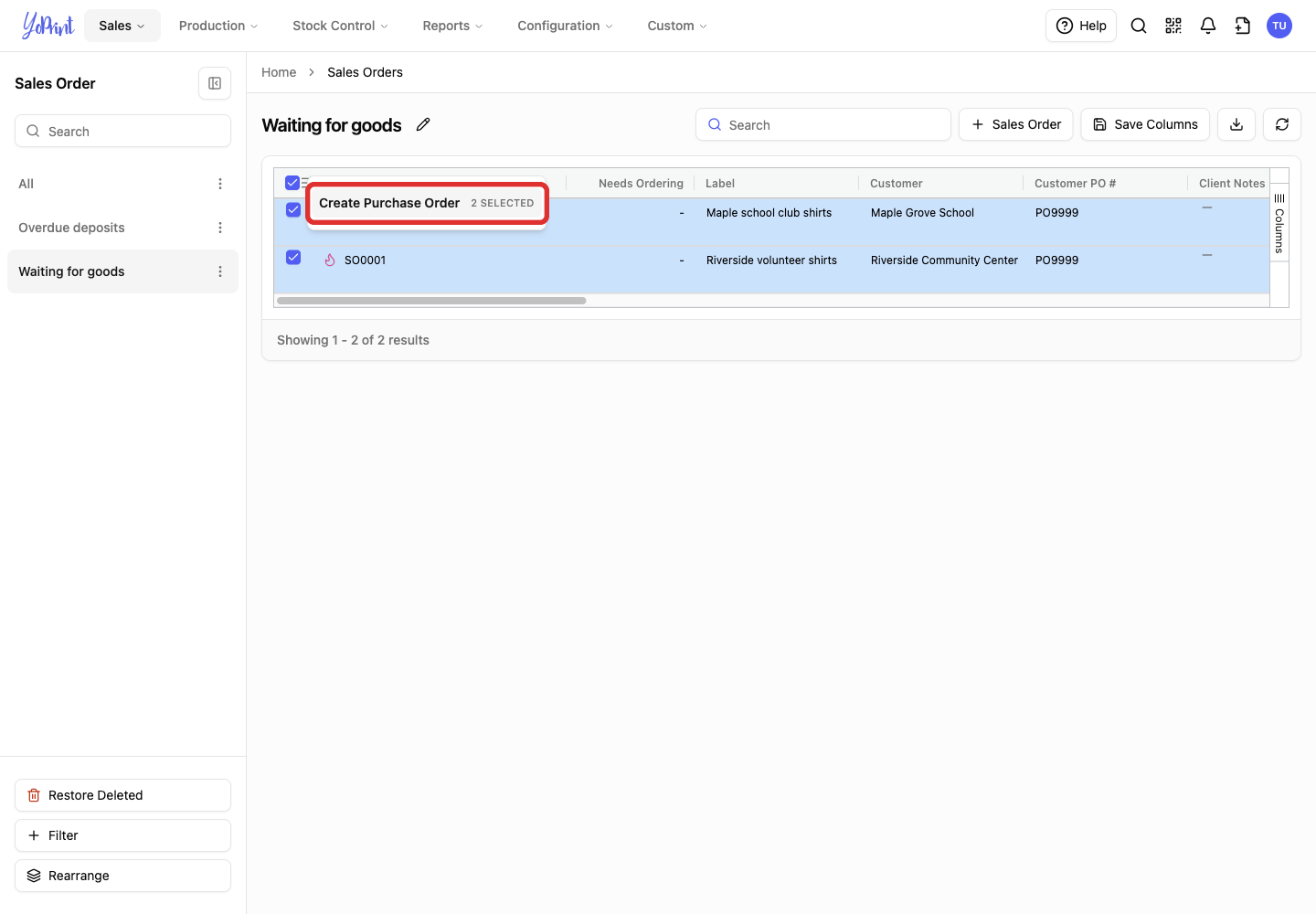
Continue with Create the bulk purchase order to choose the supplier and finish the purchase order.
Filter jobs by production stage
Use the Jobs list when the work you want to find belongs to individual jobs. For example, after blanks arrive, an order can move to Pending Production while its jobs move to Pull From Inventory. These are separate statuses that your team updates as work progresses.
-
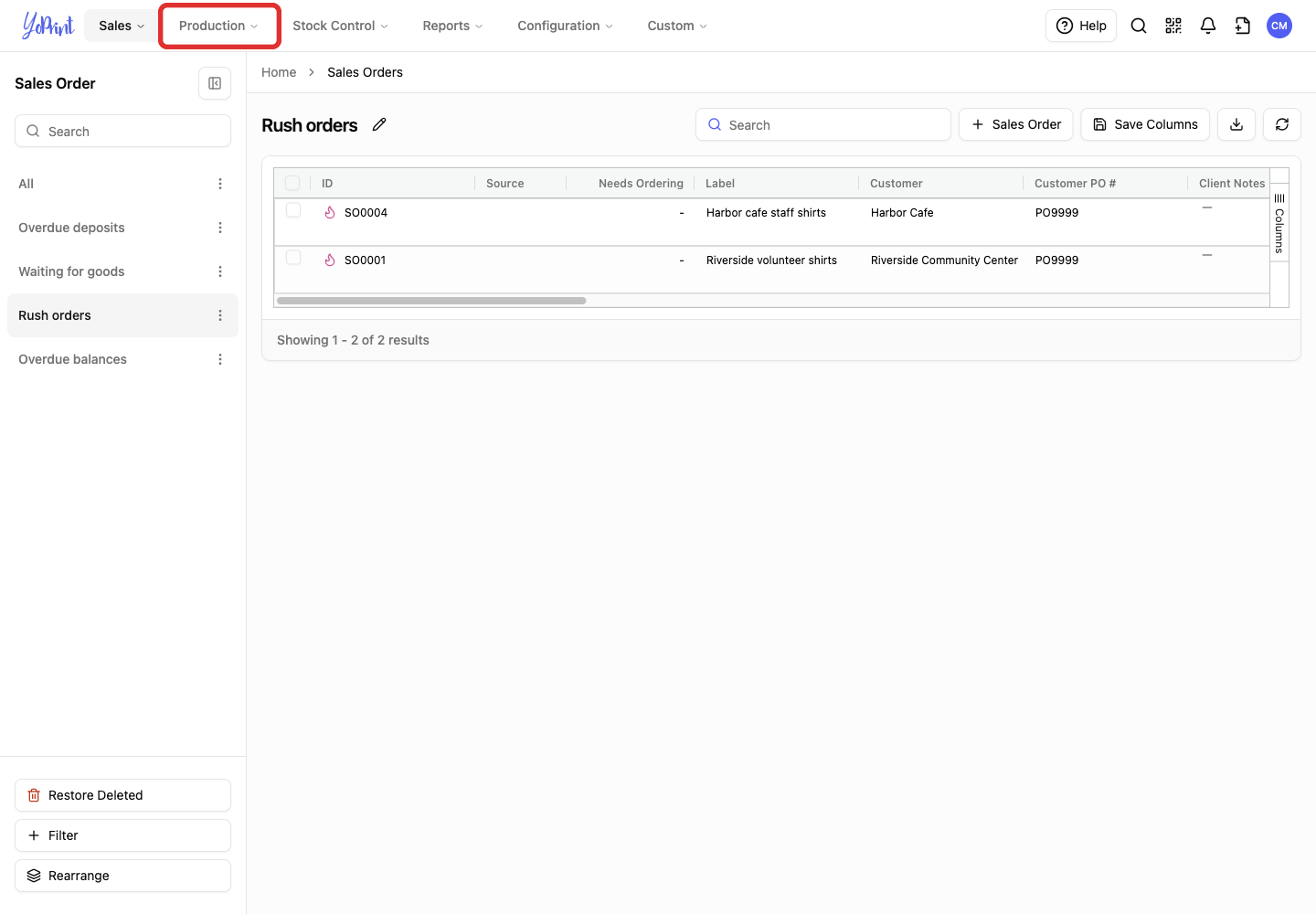
Open Production in the top menu.
-
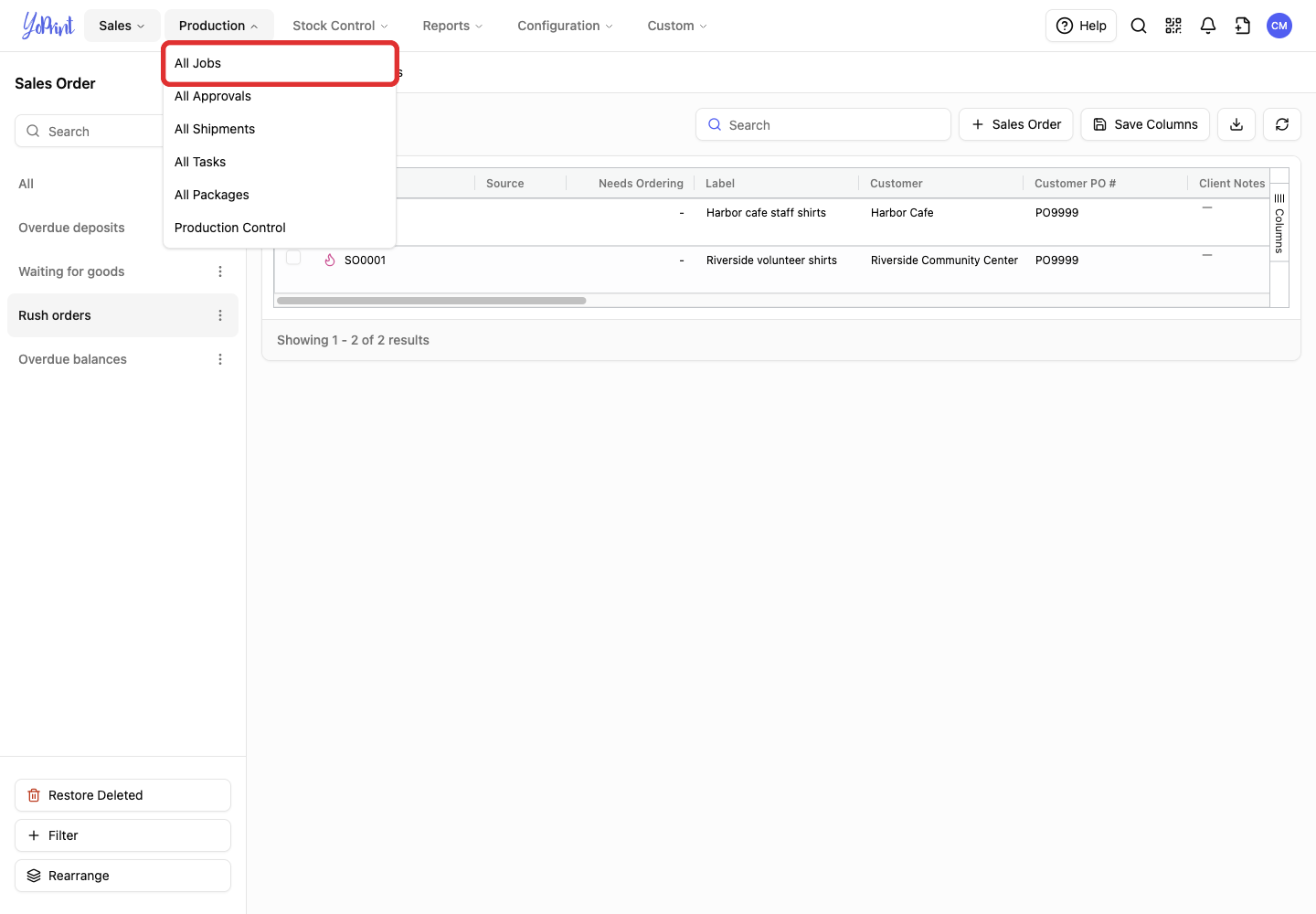
Select All Jobs.
-
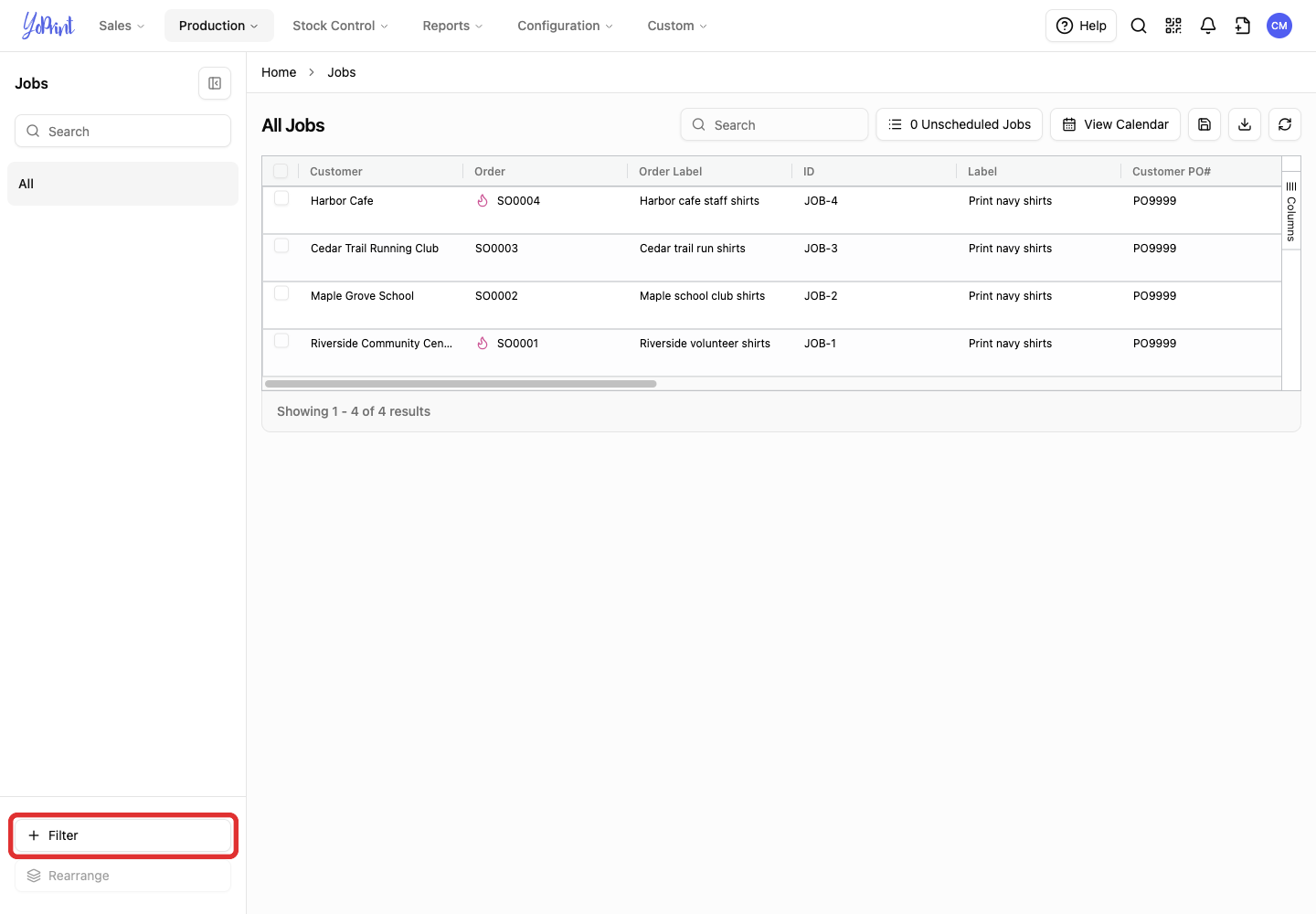
Click + Filter in the sidebar.
The same filter-building steps apply here. This example uses Status in Pull From Inventory with the name Pull from inventory. Test it with Run Filter, then save it with Create.
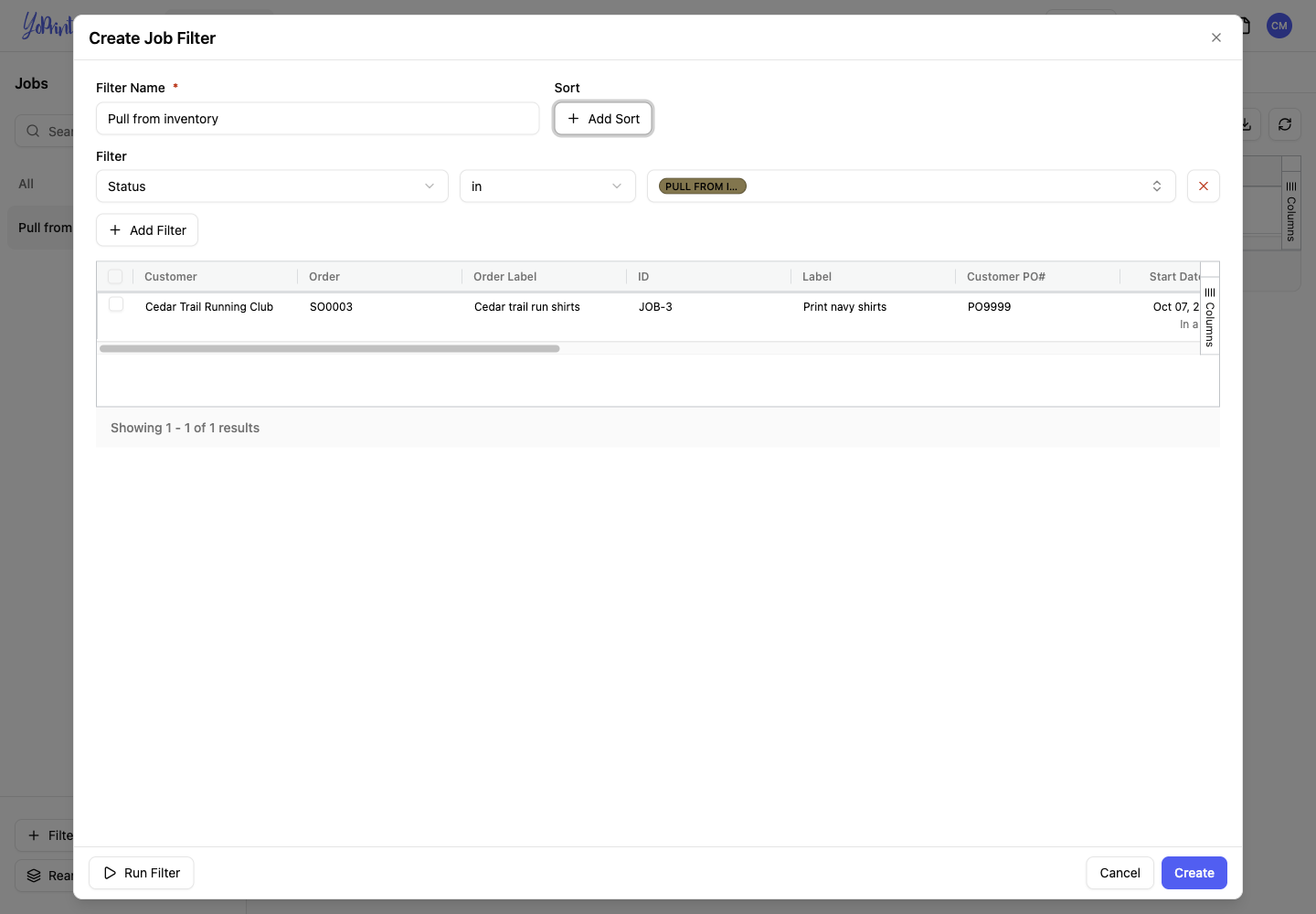
A job in this view is ready for your team to gather its blanks. The job details show the products and quantities needed.
Open a job from a filter
With a saved job filter selected, open a matching job to review its blanks and tasks.
-
Double-click the job in the ID column.
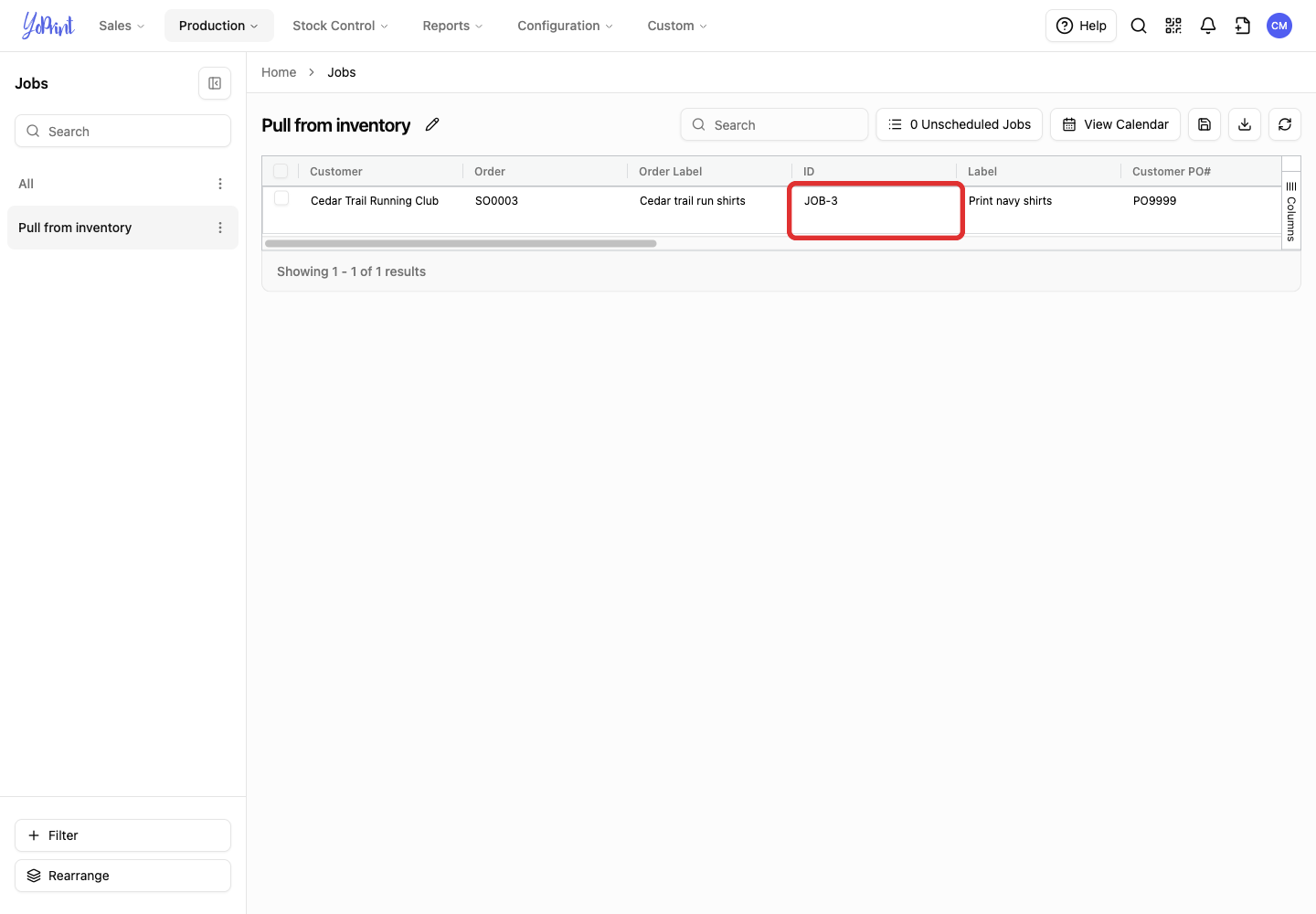
To give the work to a team member, follow Assign someone to a task. For example, assign the Screen Printing task to the person who will print the shirts.
Filter tasks by person, type, or progress
Use the Tasks list to find work assigned to you, a particular teammate, or a type of production work.
-
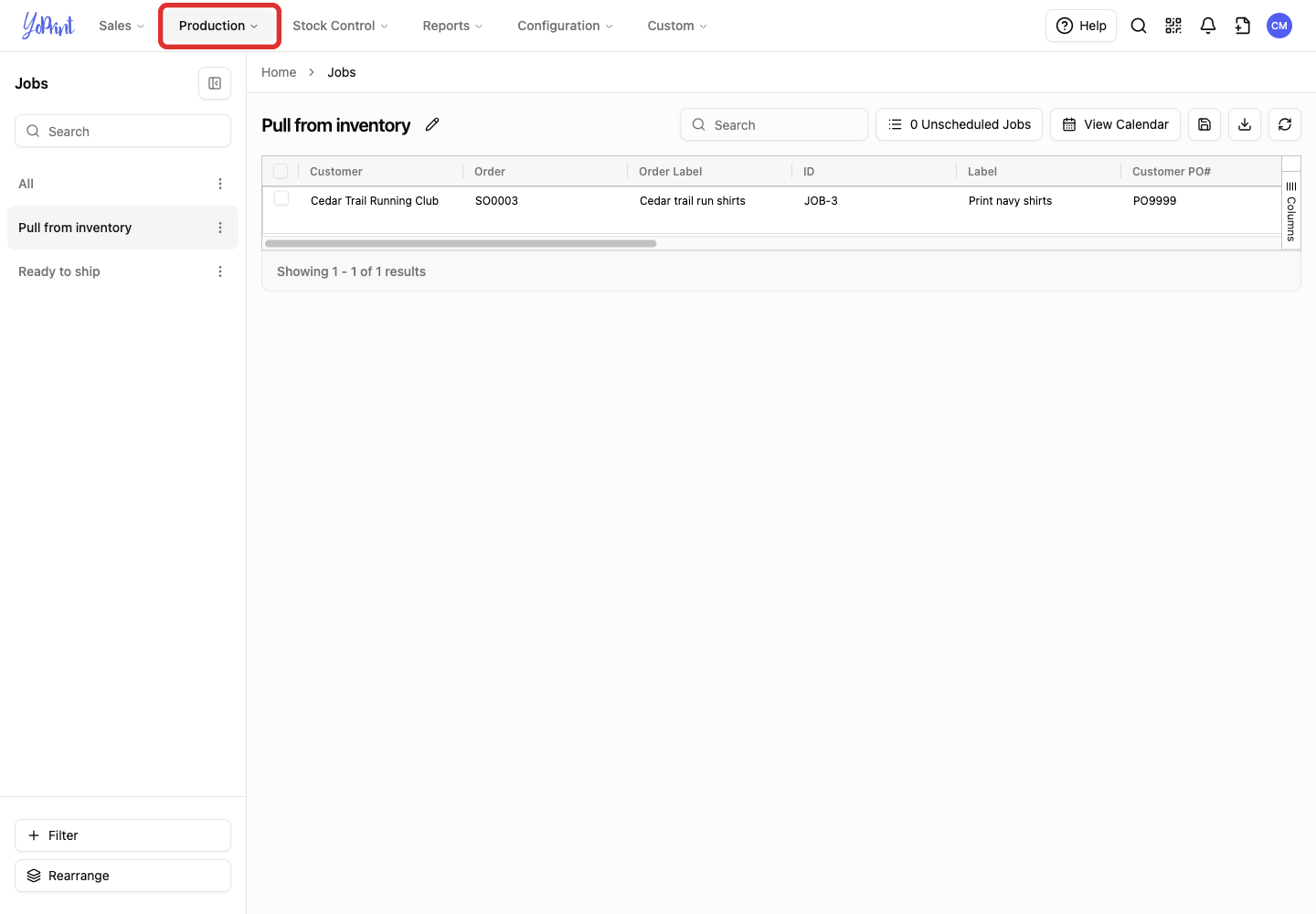
Open Production.
-
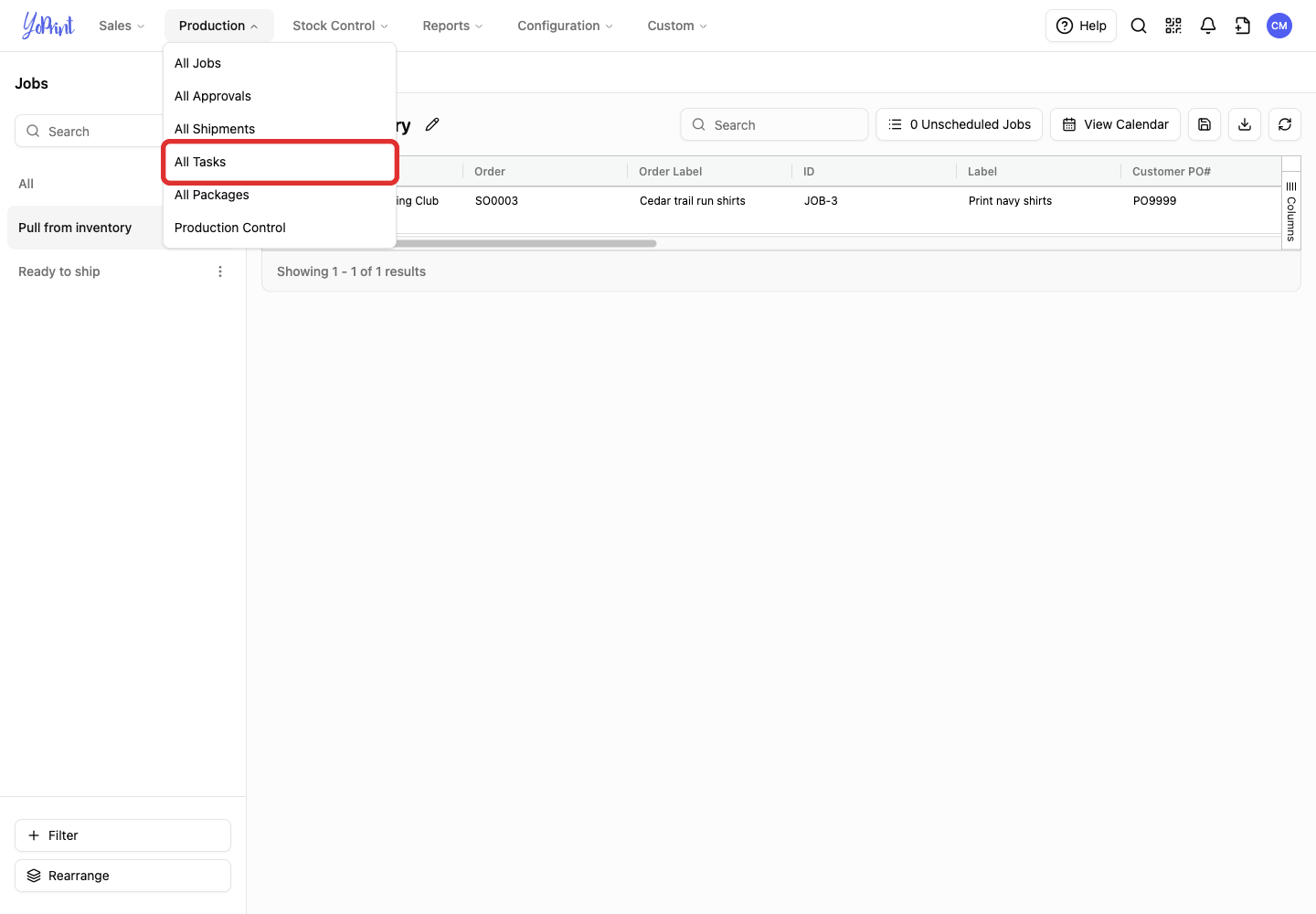
Select All Tasks.
-
Click + Filter in the sidebar.
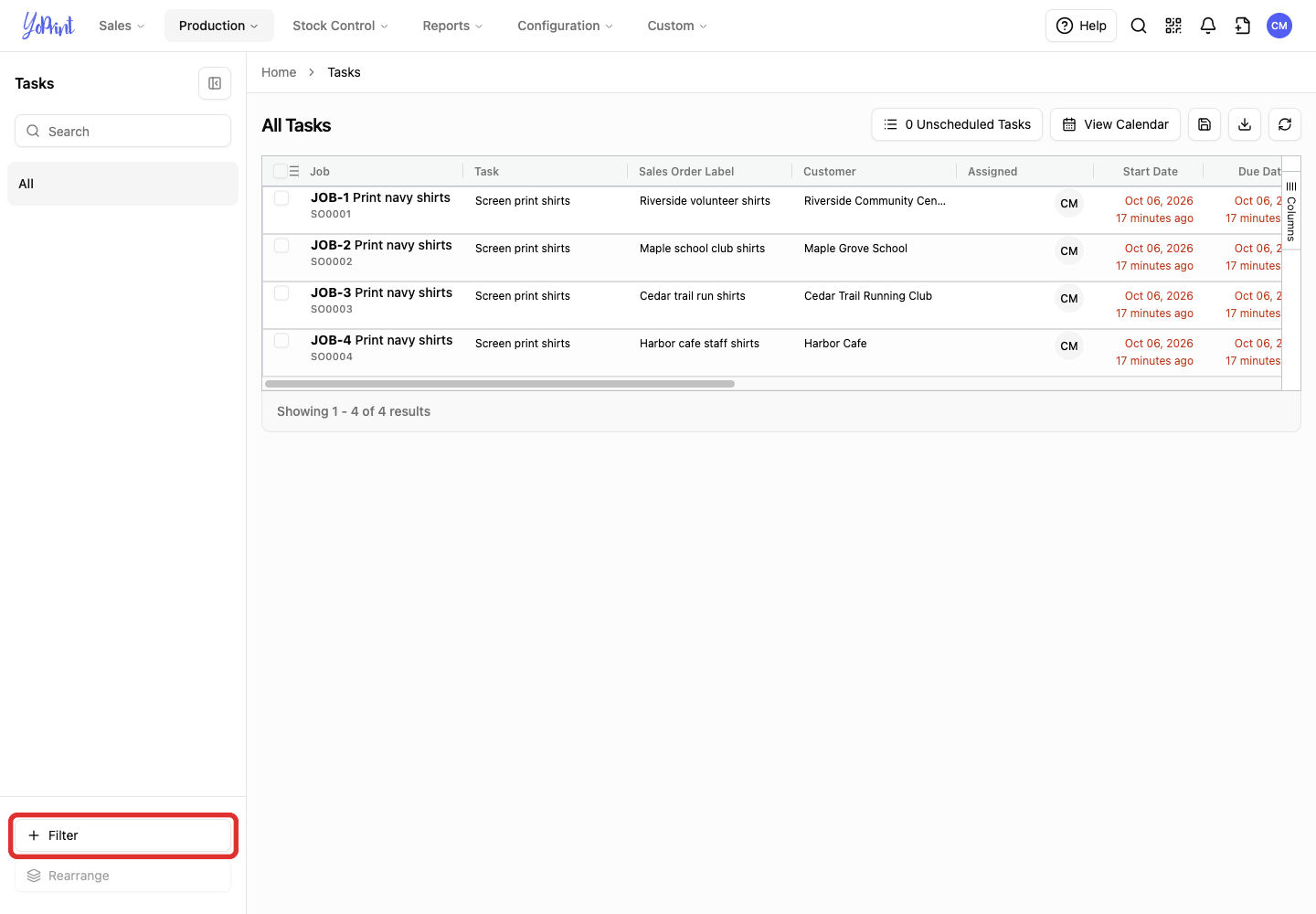
Build and save each task filter using the same steps as the first walkthrough. Here are four useful examples.
| Filter name | Condition | What it shows |
|---|---|---|
| My tasks | Assigned To Me == True | Tasks assigned to the person who is signed in. |
| Screen printing tasks | Task Preset in Screen Printing | Tasks that use the Screen Printing preset. |
| Casey tasks | Assigned in Casey Morgan | Tasks assigned to Casey Morgan. Choose a person from your own team. |
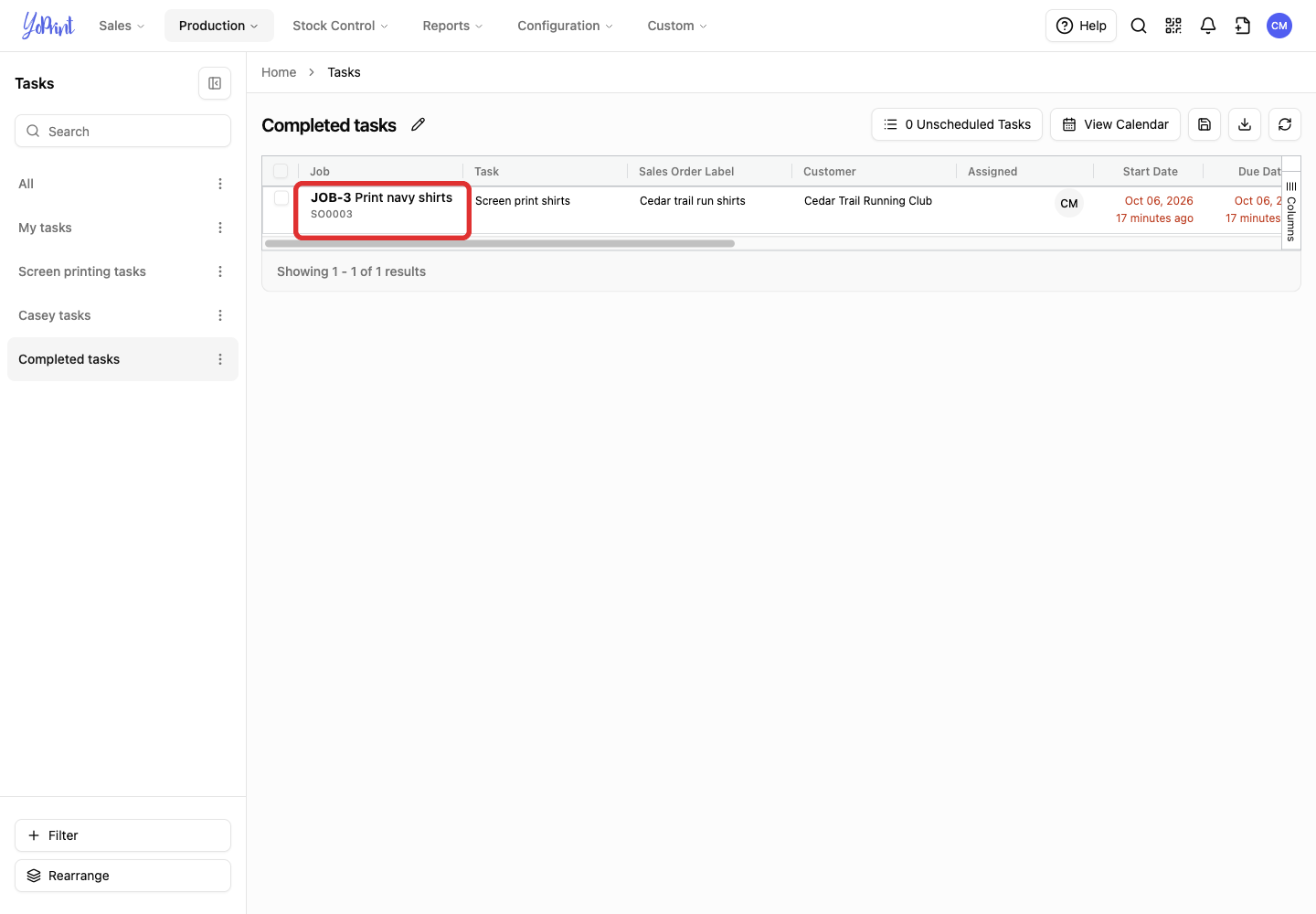
| Completed tasks | Status Type in Completed | Tasks with a completed status type. |
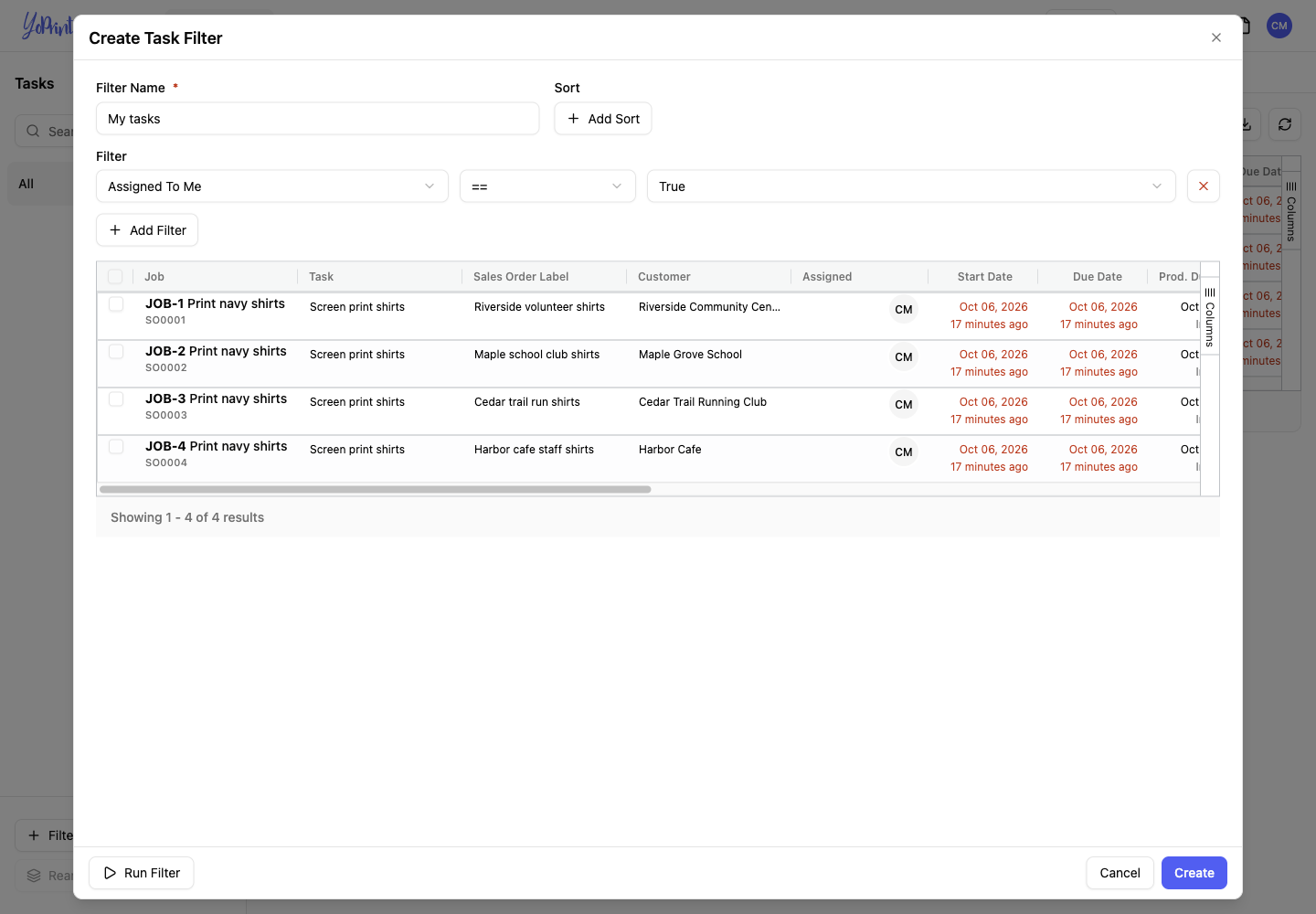
Assigned To Me follows the signed-in user; Assigned lets you choose a specific teammate. Task Preset finds a type of task, so it can include work assigned to different people.
When you finish a task, change its status to the appropriate completed status for that task. The Completed tasks filter helps you find that work again.
Review completed work and find jobs ready to ship
A completed task is a good prompt to check the job, but make sure the rest of the work is done too. From the Completed tasks filter, review the job's tasks before marking the job ready to ship.
-
Double-click the Job cell for the completed task.
-
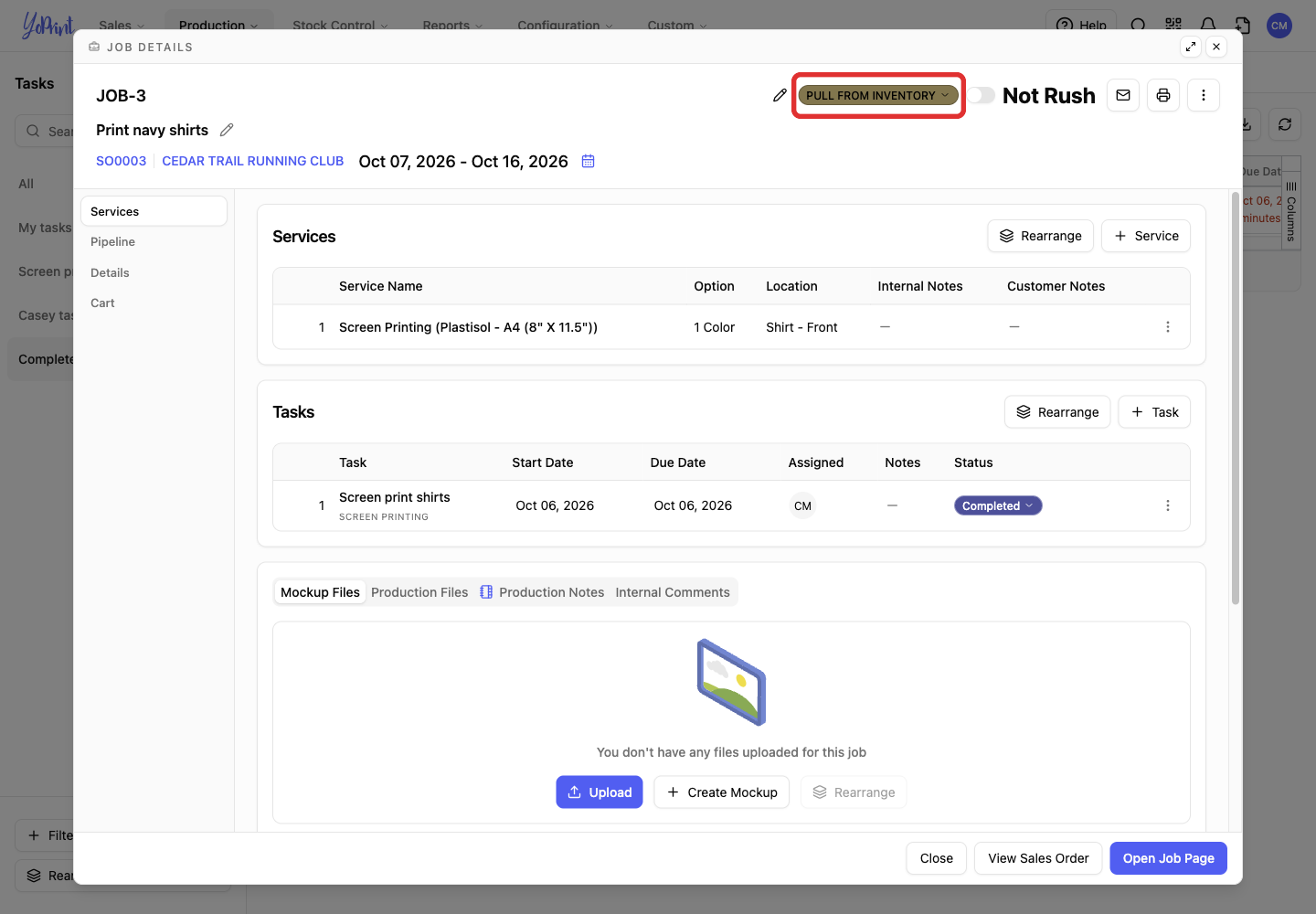
When the job is ready, open its job status menu.
-
Choose Ready to Ship.
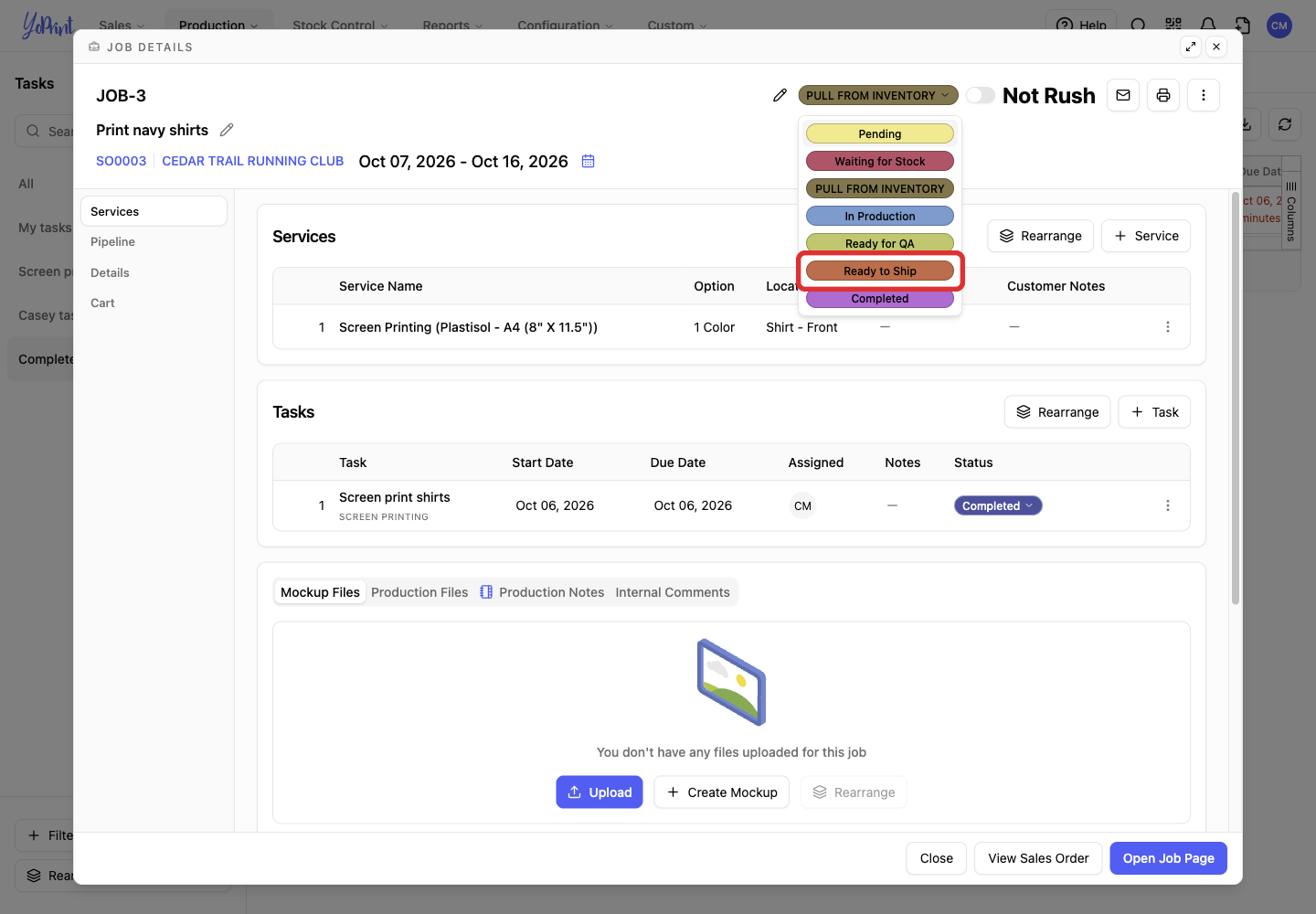
The person handling shipping can use a saved filter on Jobs with Status in Ready to Ship. Give it a name such as Ready to ship, then test and save it like the other job filters.
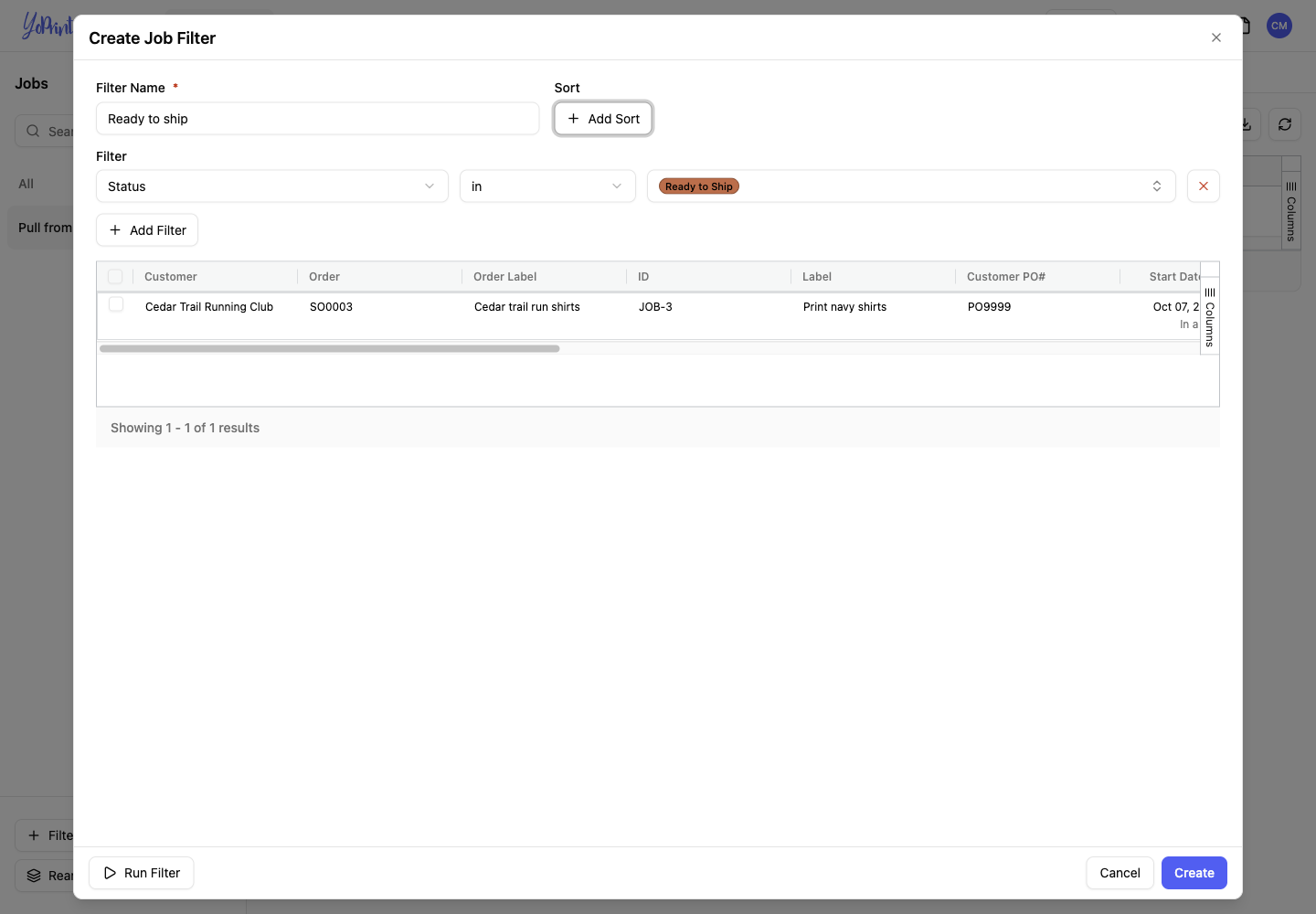
Save separate filters for the people and stages your shop needs, then return to them from the relevant list's sidebar.
Find unpaid invoices and open their orders
The Invoices list also has filters. Its payment-related fields include Payment Status, Deposit Due Date, and Full Amount Due Date.
-
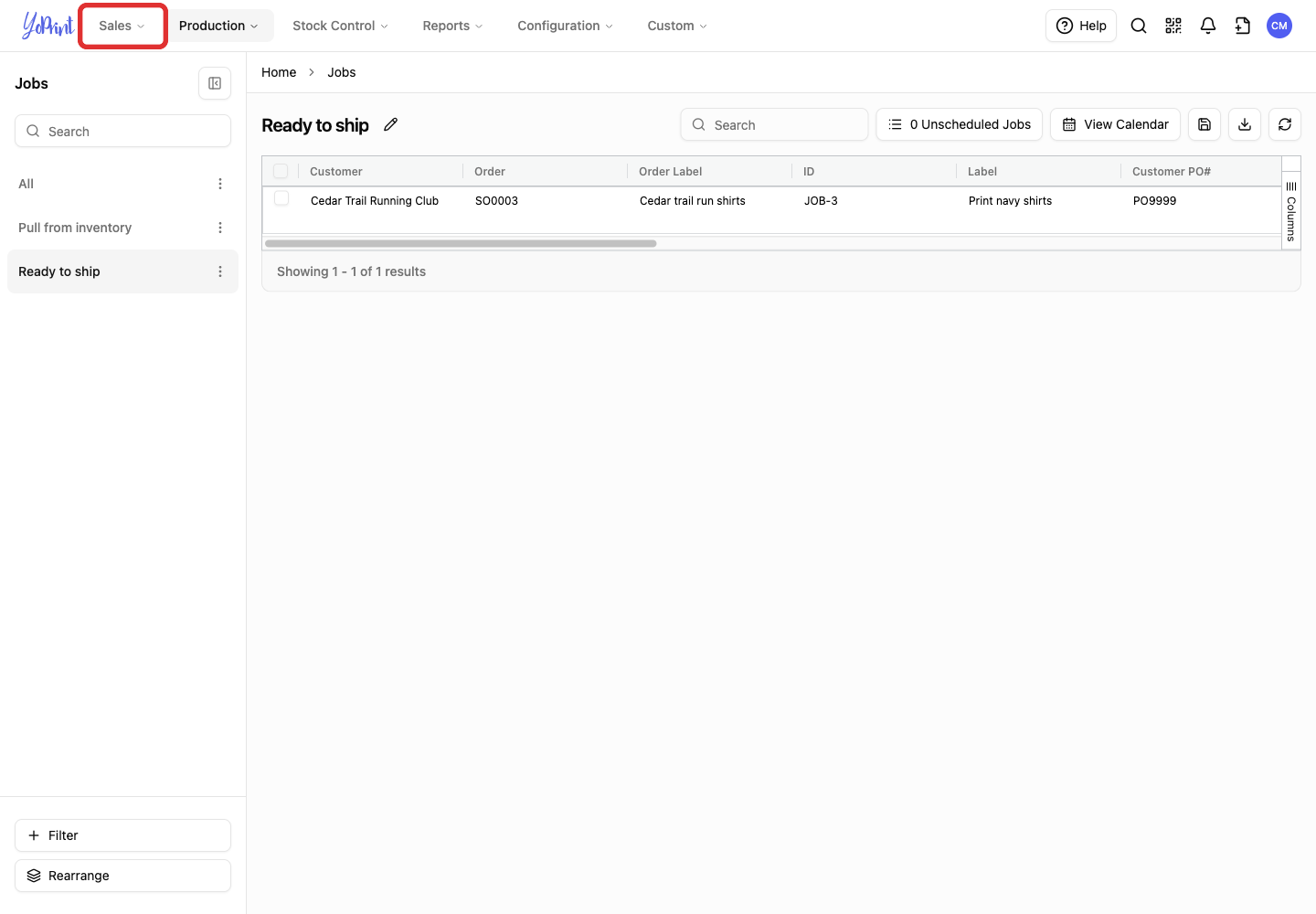
Open Sales in the top menu.
-
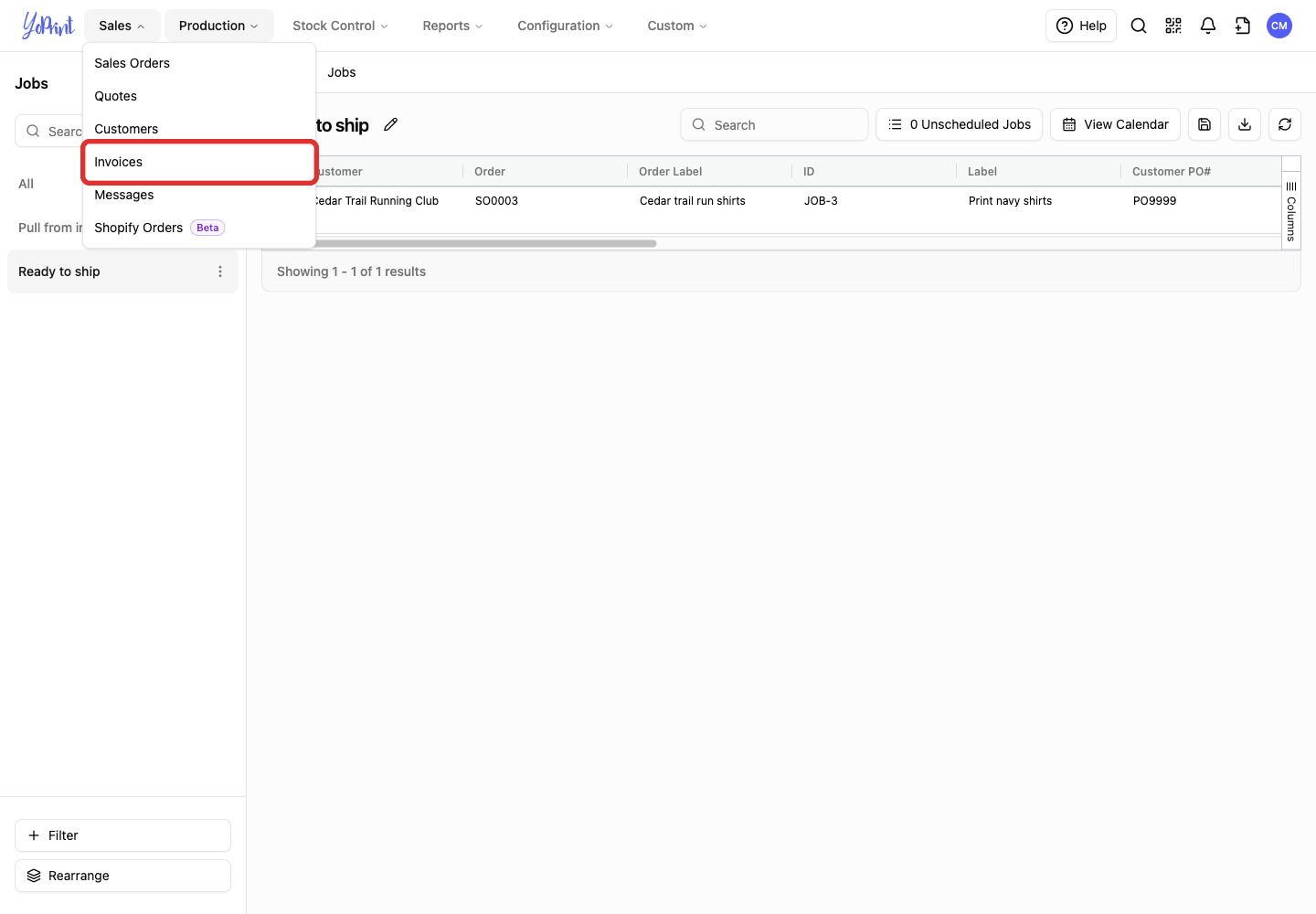
Select Invoices.
-
Click + Filter in the sidebar.
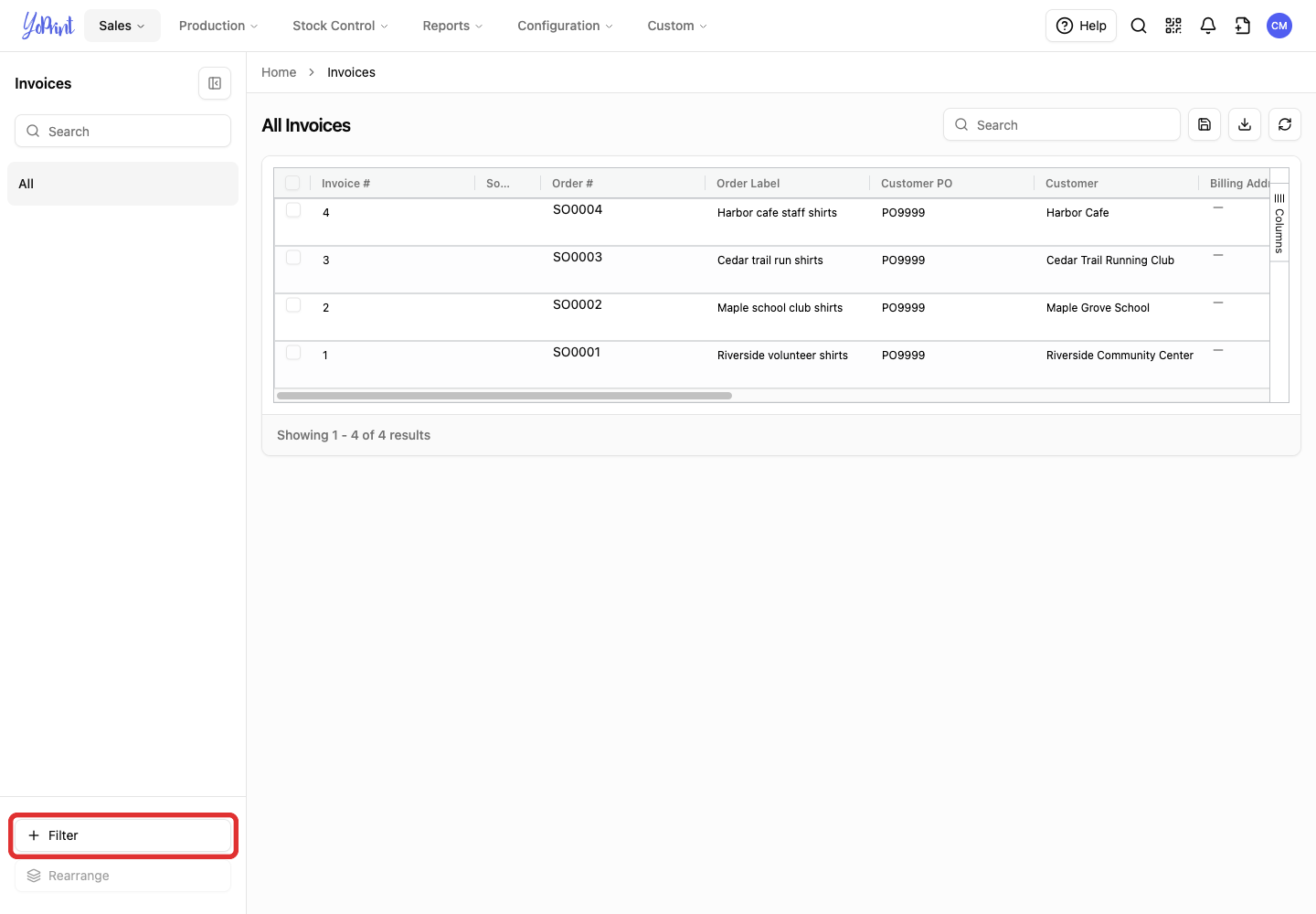
Use Payment Status == Unpaid for an Unpaid invoices filter. Test and save it using the same controls as the first walkthrough.
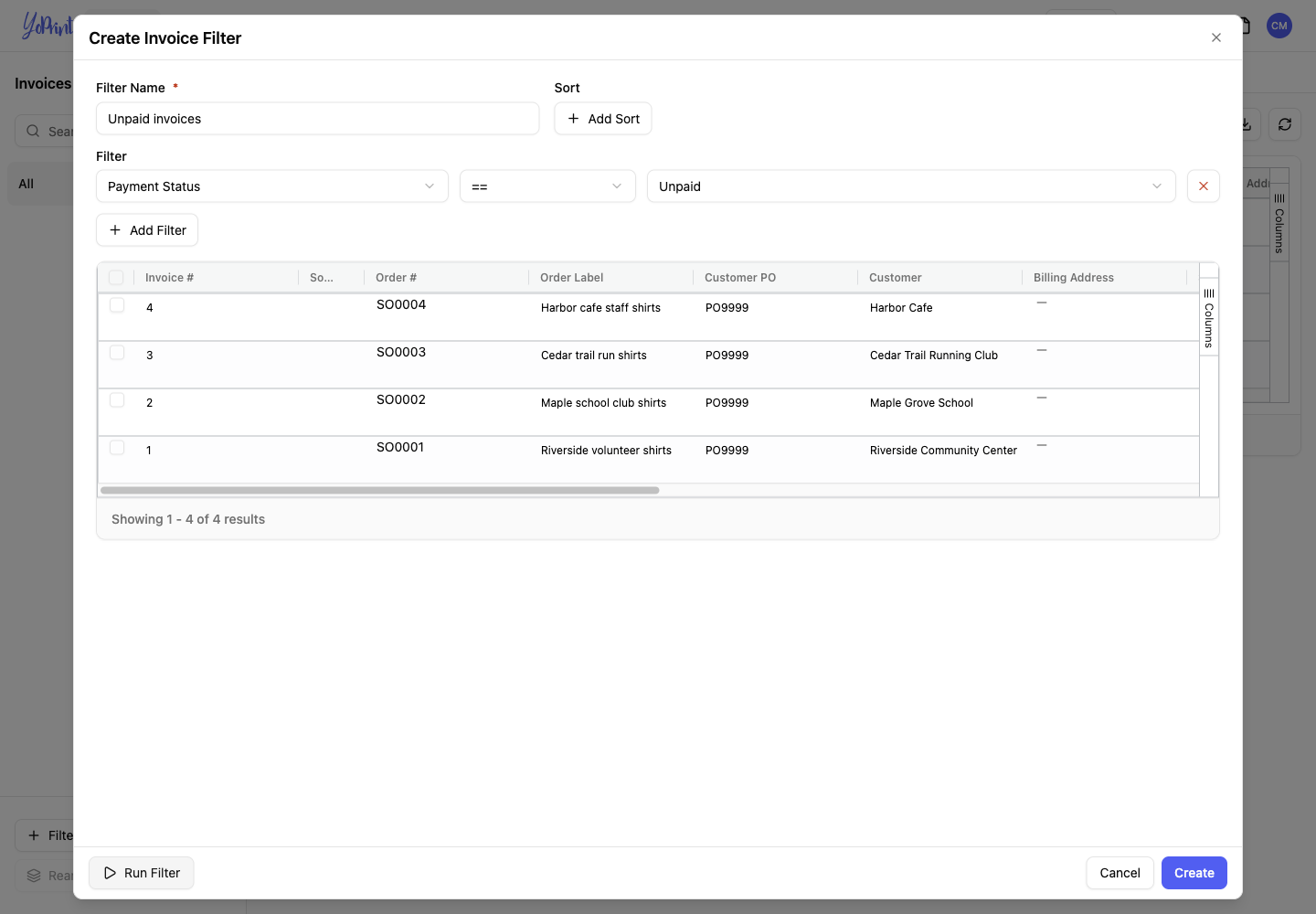
To focus on overdue amounts before following up, use the Overdue deposits or Overdue balances examples on the Sales Orders list. You can also review the invoice's payment due date and balance when you open it.
Follow up from an invoice
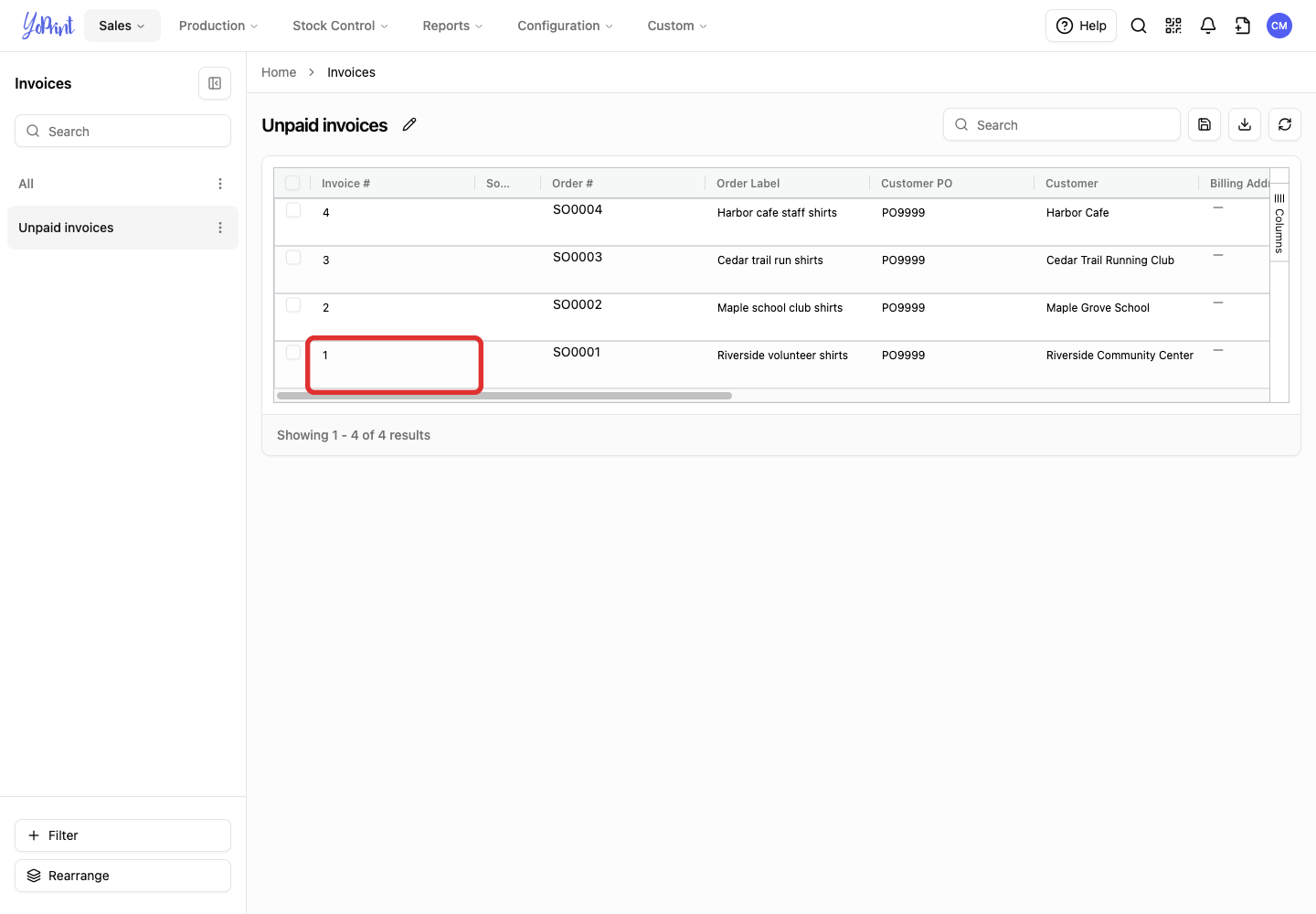
With Unpaid invoices selected, open an invoice to review what is owed.
-
Double-click the invoice number.
-
Click View Sales Order to open the related order.
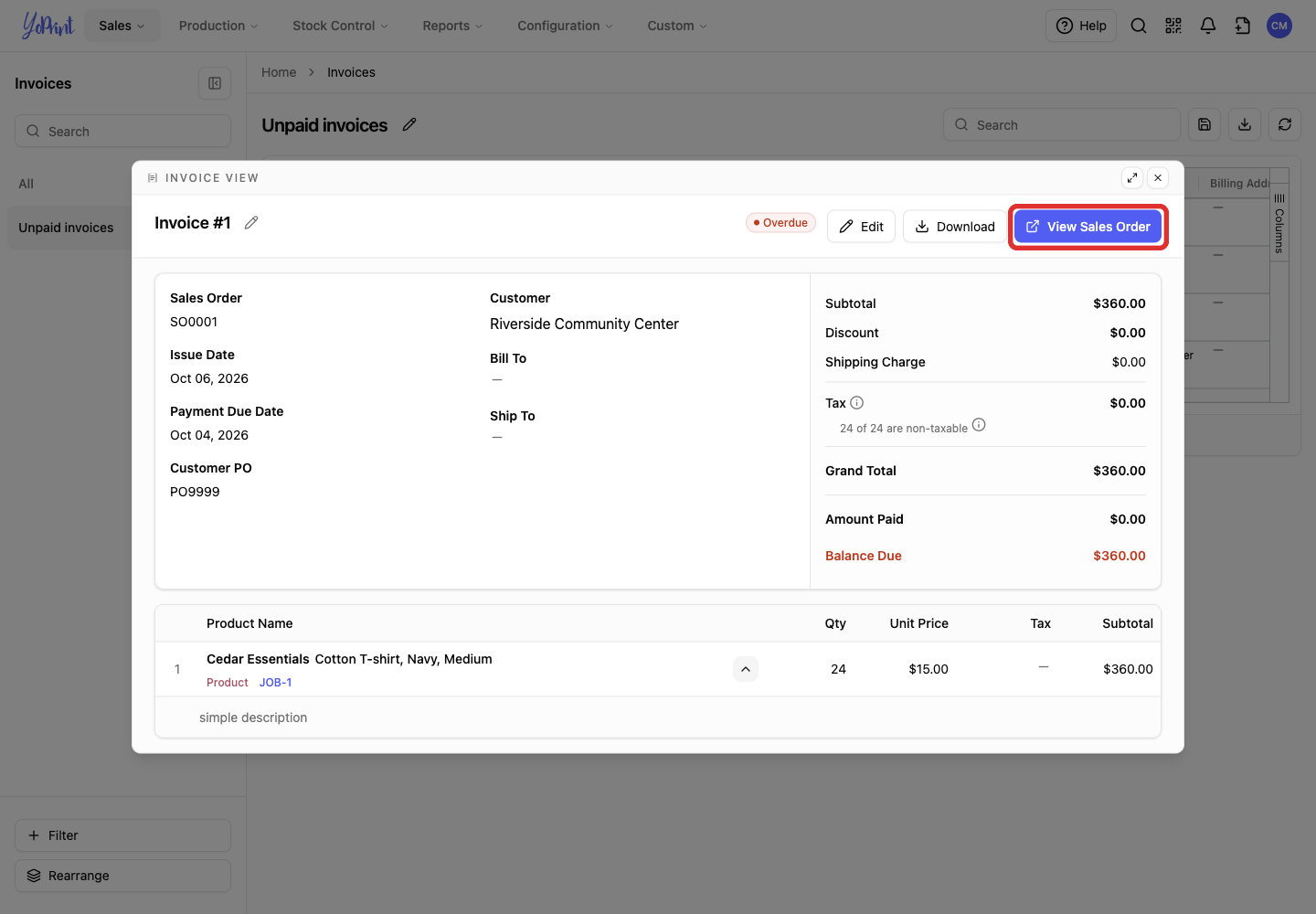
From the order, follow Send a payment request to remind the customer about payment.
Edit a saved filter
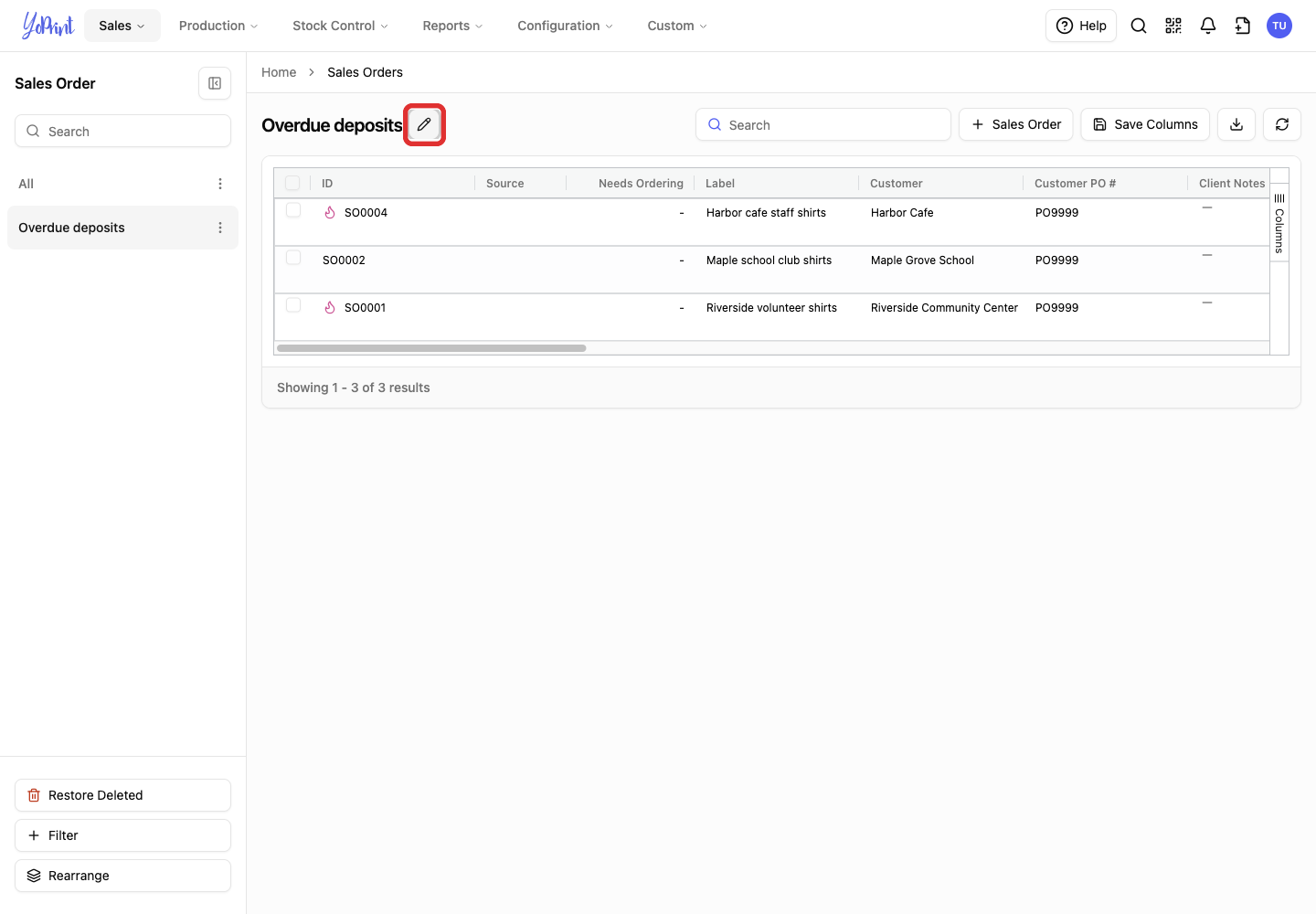
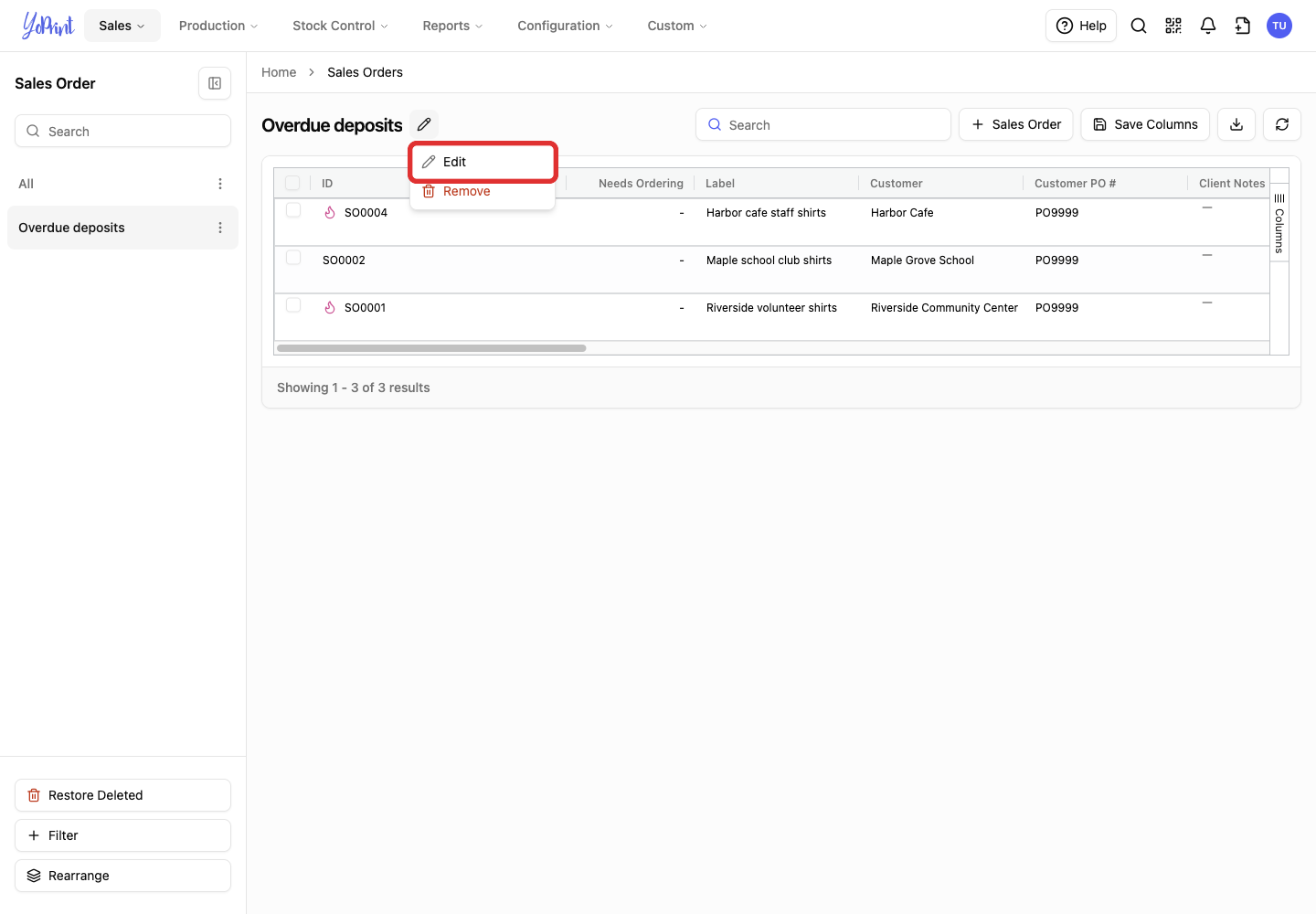
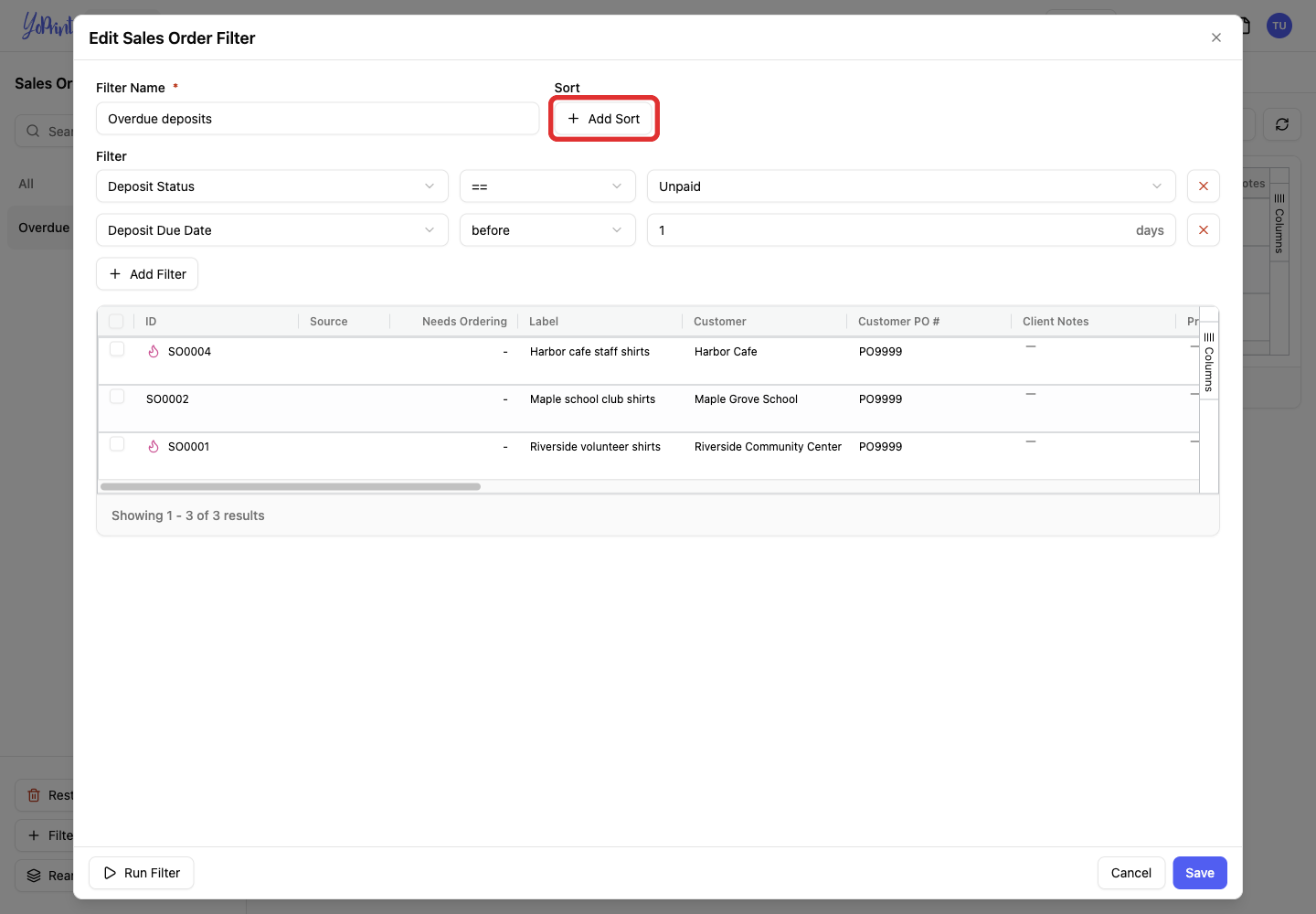
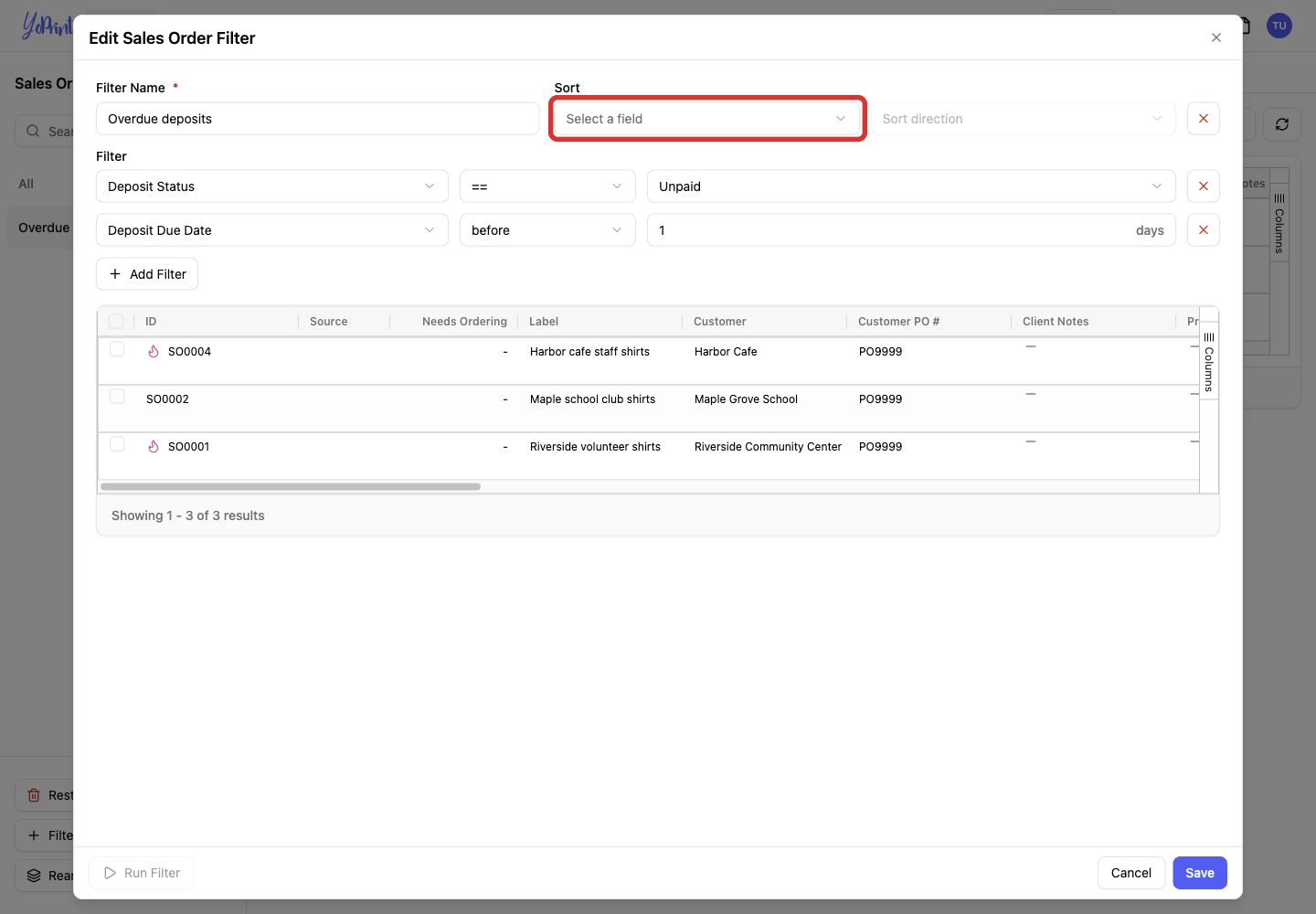
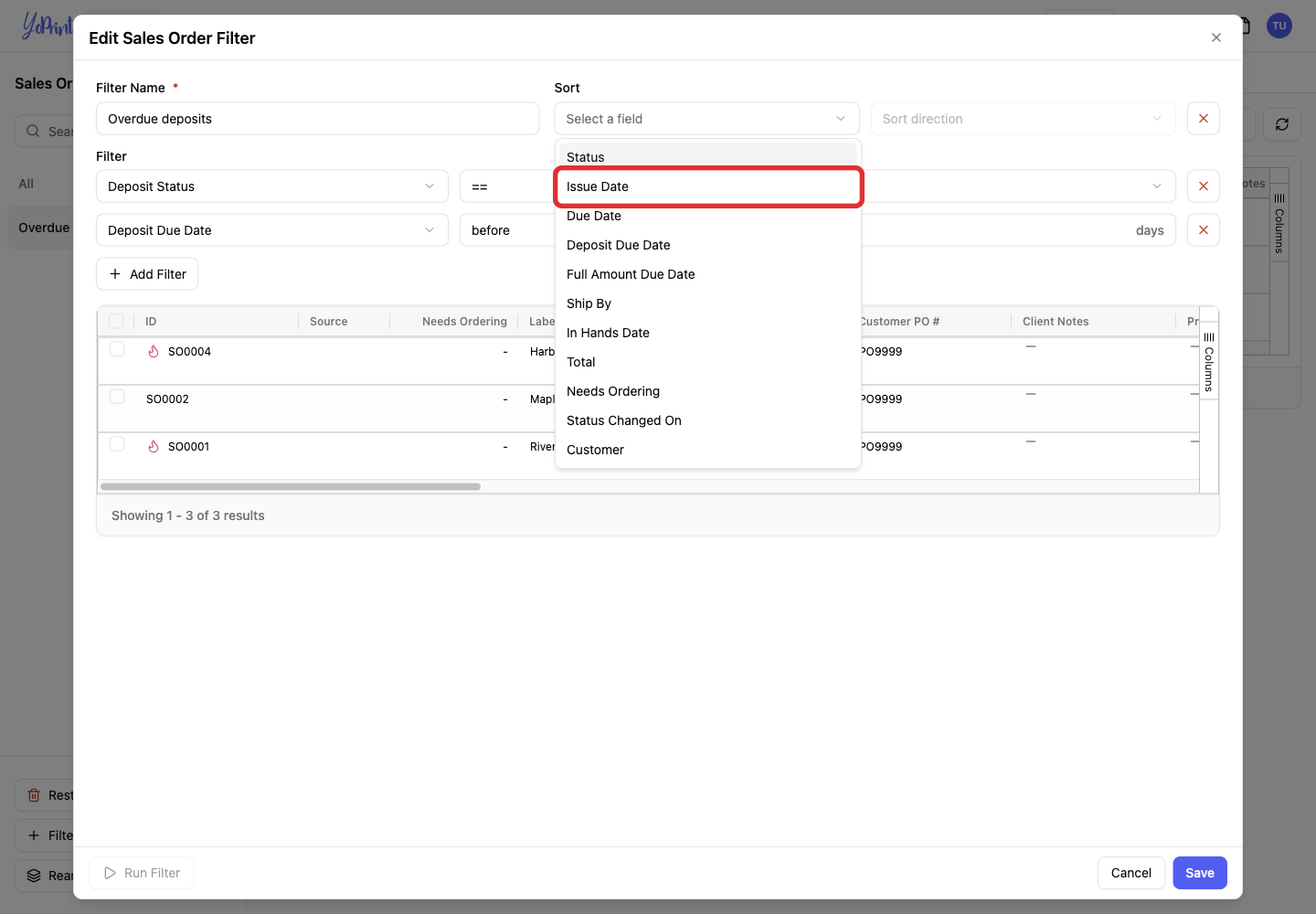
Open a saved filter first. You can change its name, conditions, or sort order. This example sorts the matching orders by issue date, newest first.
-
Click the pencil beside the filter name.
-
Choose Edit.
-
Click Add Sort.
-
Open Select a field.
-
Choose Issue Date.
-
Open the sort direction.
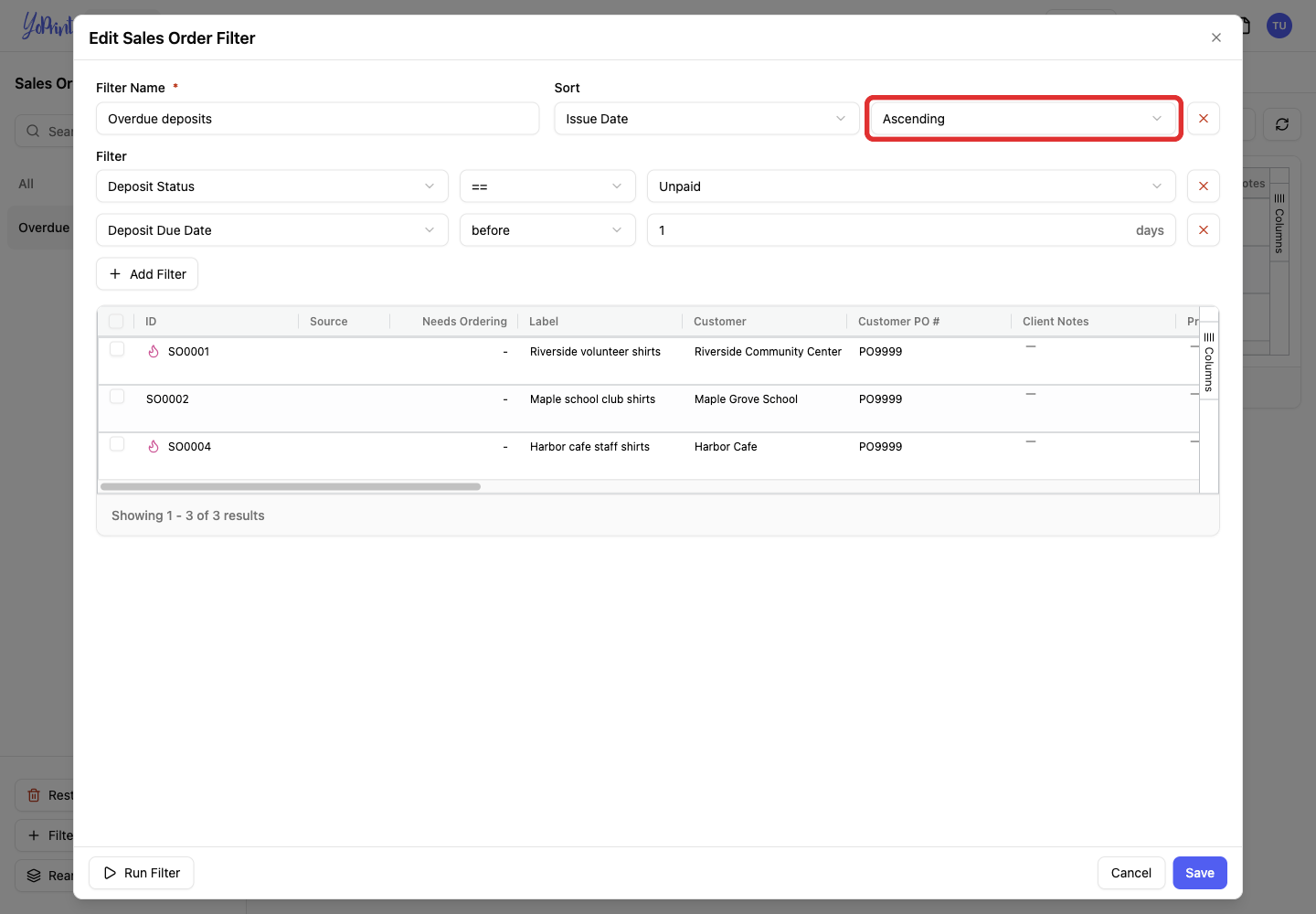
-
Choose Descending.
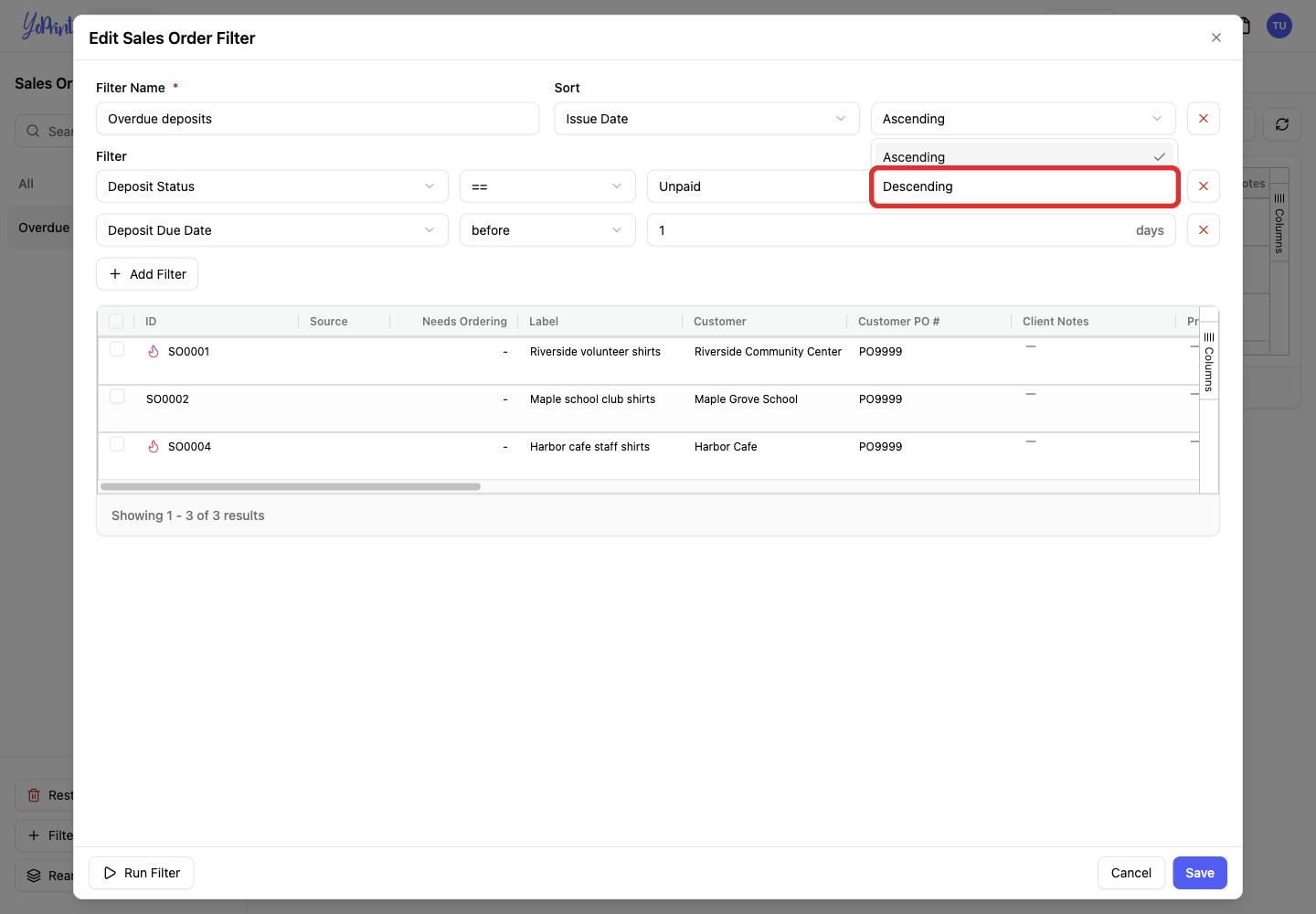
-
Click Save to keep the changes.
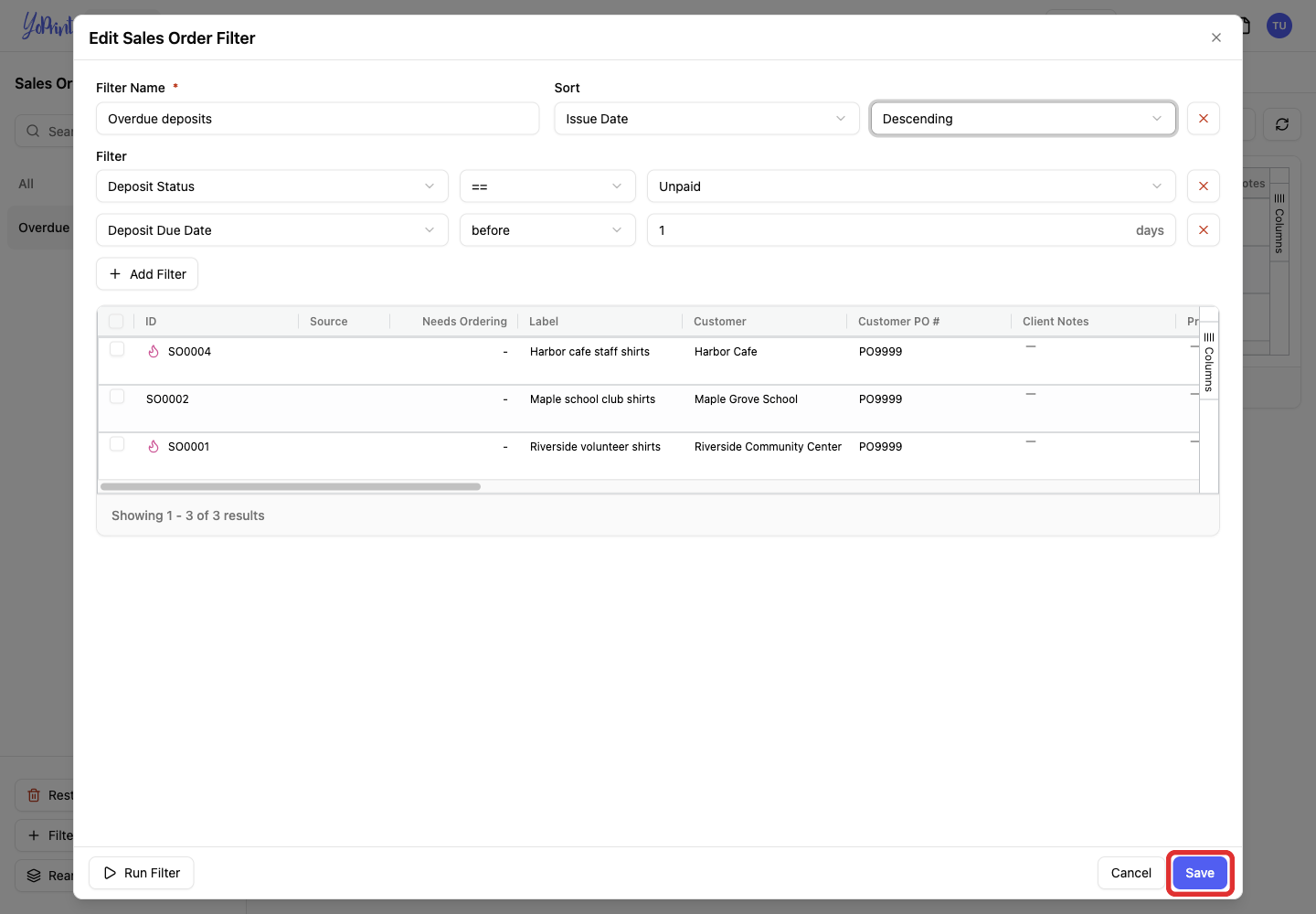
Remove a saved filter
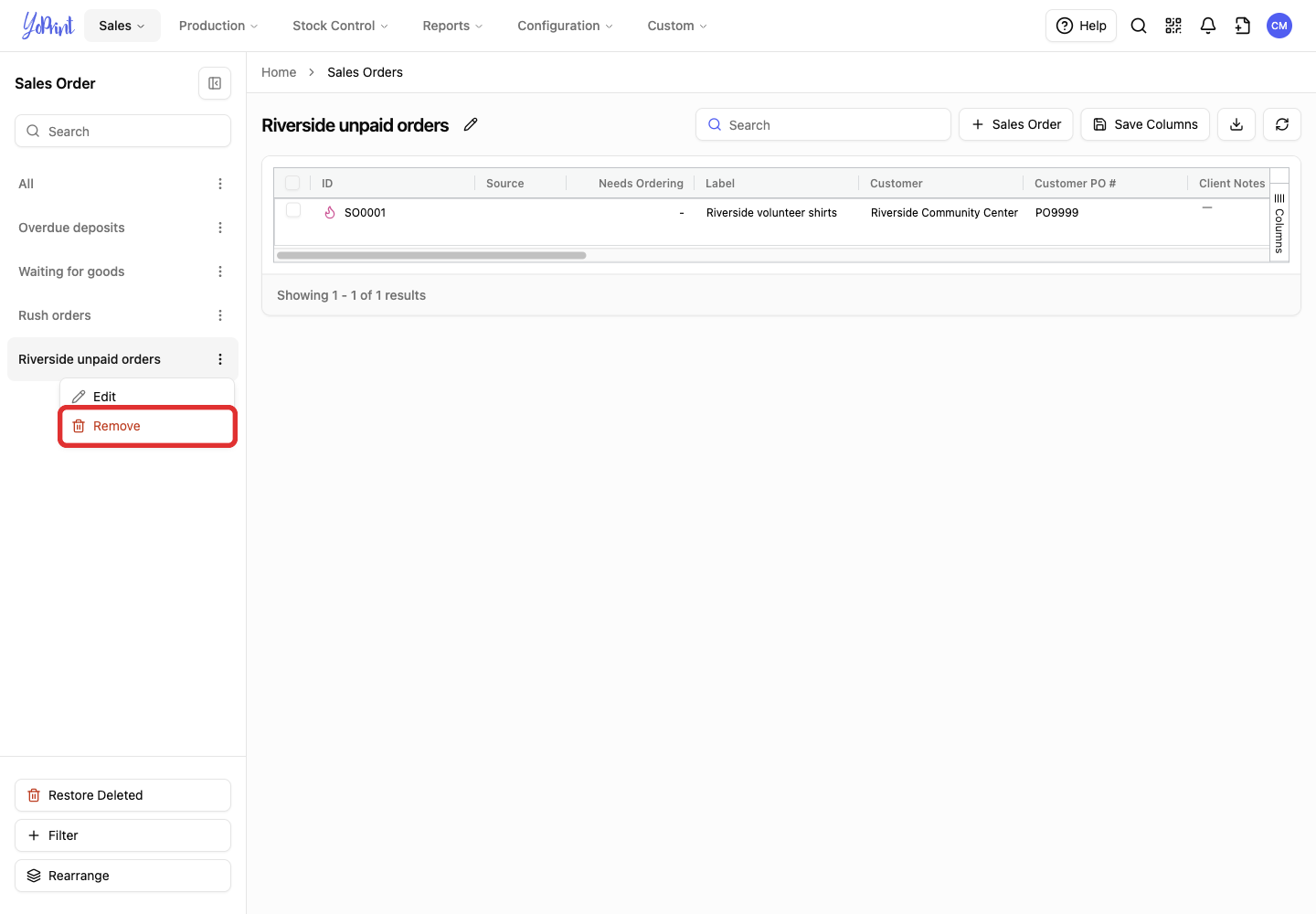
Remove a saved filter when you no longer need that view. This removes the filter, not its matching orders, jobs, or tasks. You can create it again if you need the same conditions later.
-
Click the three-dot menu (⋮) beside the saved filter in the sidebar.
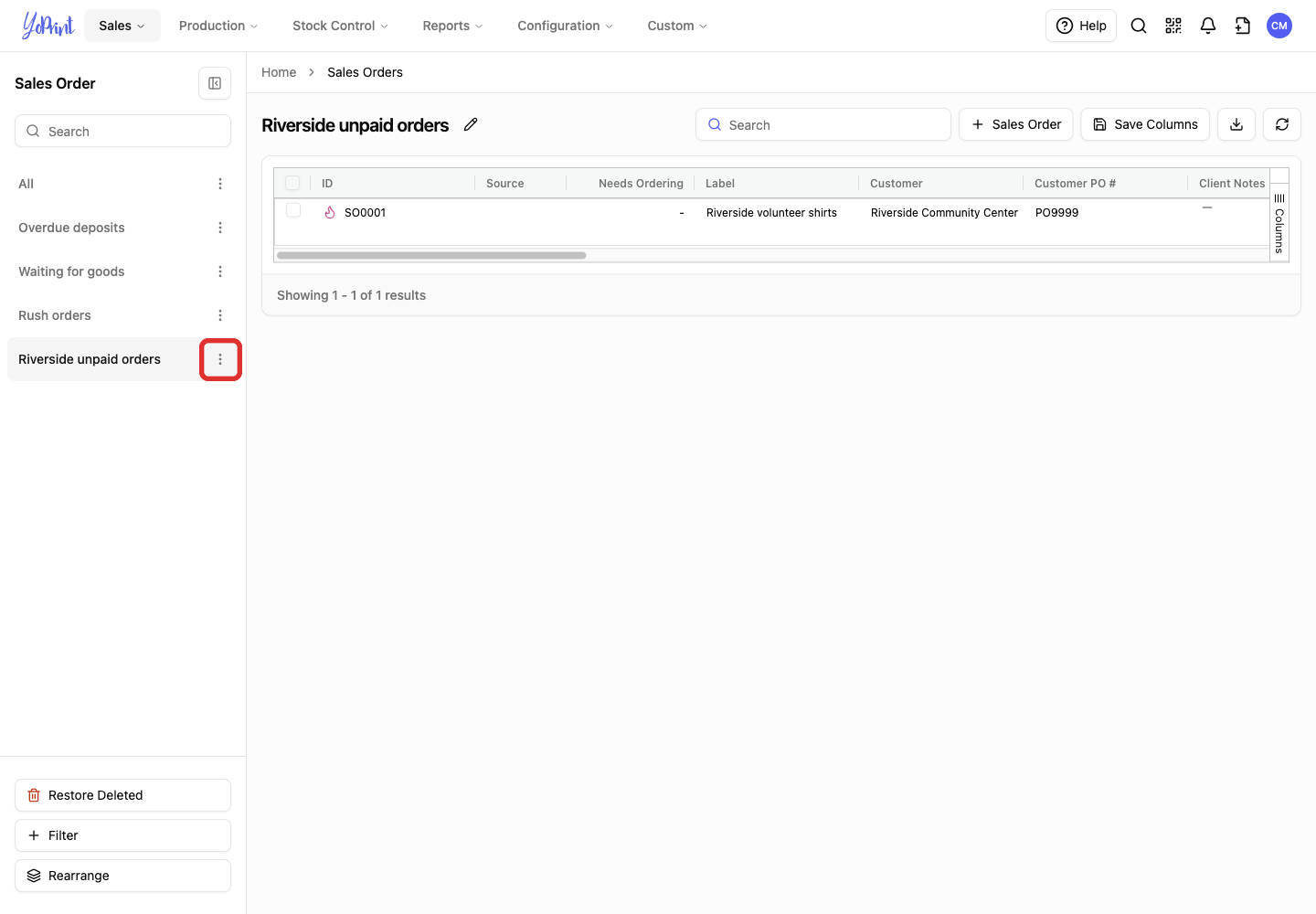
-
Choose Remove.
-
Click Remove in the confirmation dialog.
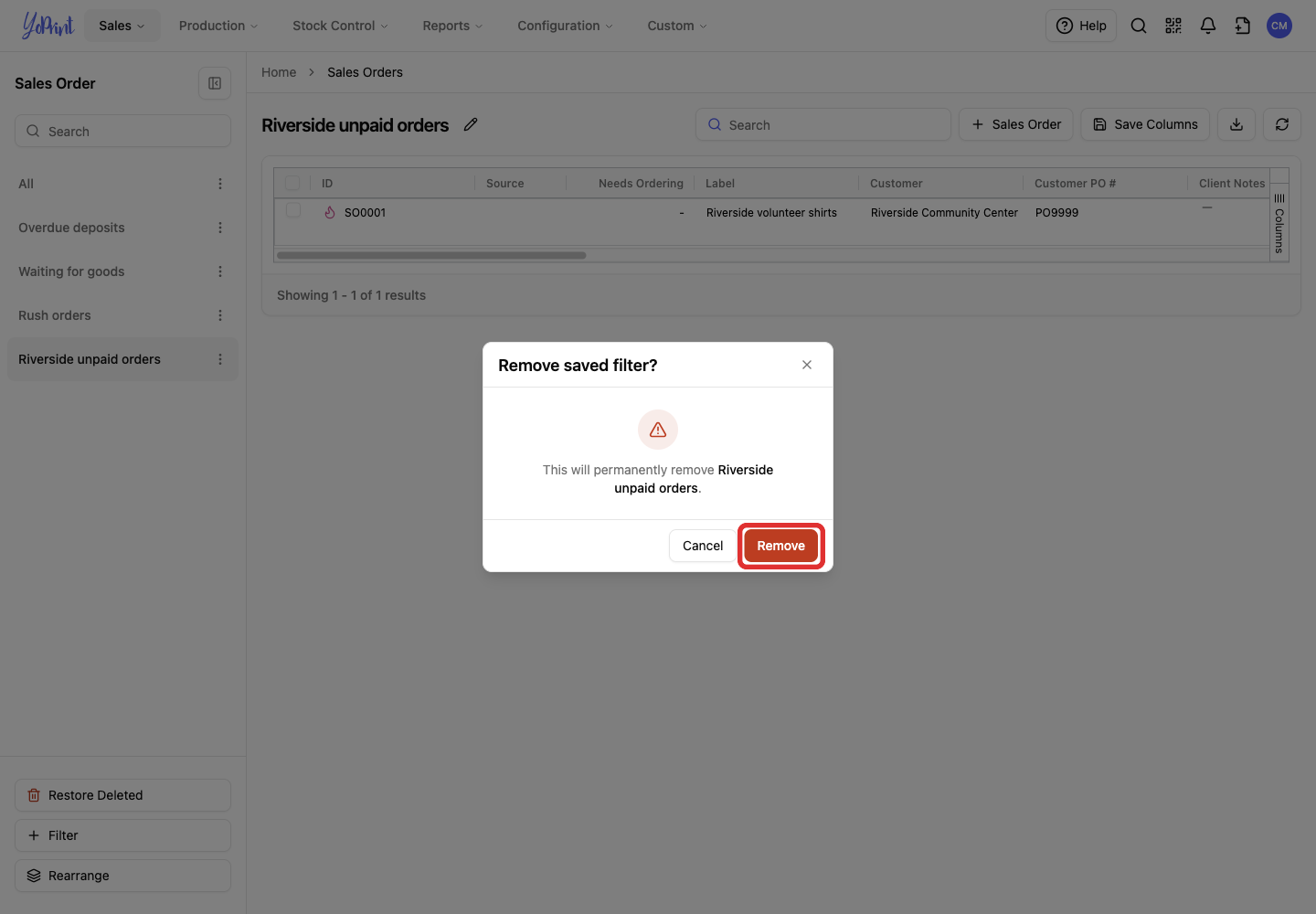
The filter disappears from the sidebar. To change a filter instead, choose Edit from the same ⋮ menu or use the pencil beside its name.
Watch the filter walkthroughs
These videos show payment and production examples. Some labels and screens have changed; use the written steps above for the current controls.