Set Up Tax Presets in YoPrint
In this article
A tax preset is a tax rate your shop can save and reuse on sales orders and invoices. You can set up a single flat percentage, or combine multiple named rates that add together, such as state and local taxes.
Automatic on the tax presets list calculates dynamic real-time sales tax based on customer delivery addresses and your registered tax nexus locations. In contrast, tax presets apply fixed manual percentages that you configure yourself. To learn how automated sales tax works and when to use it, see Automatic Sales Tax.

Open Tax Presets
-
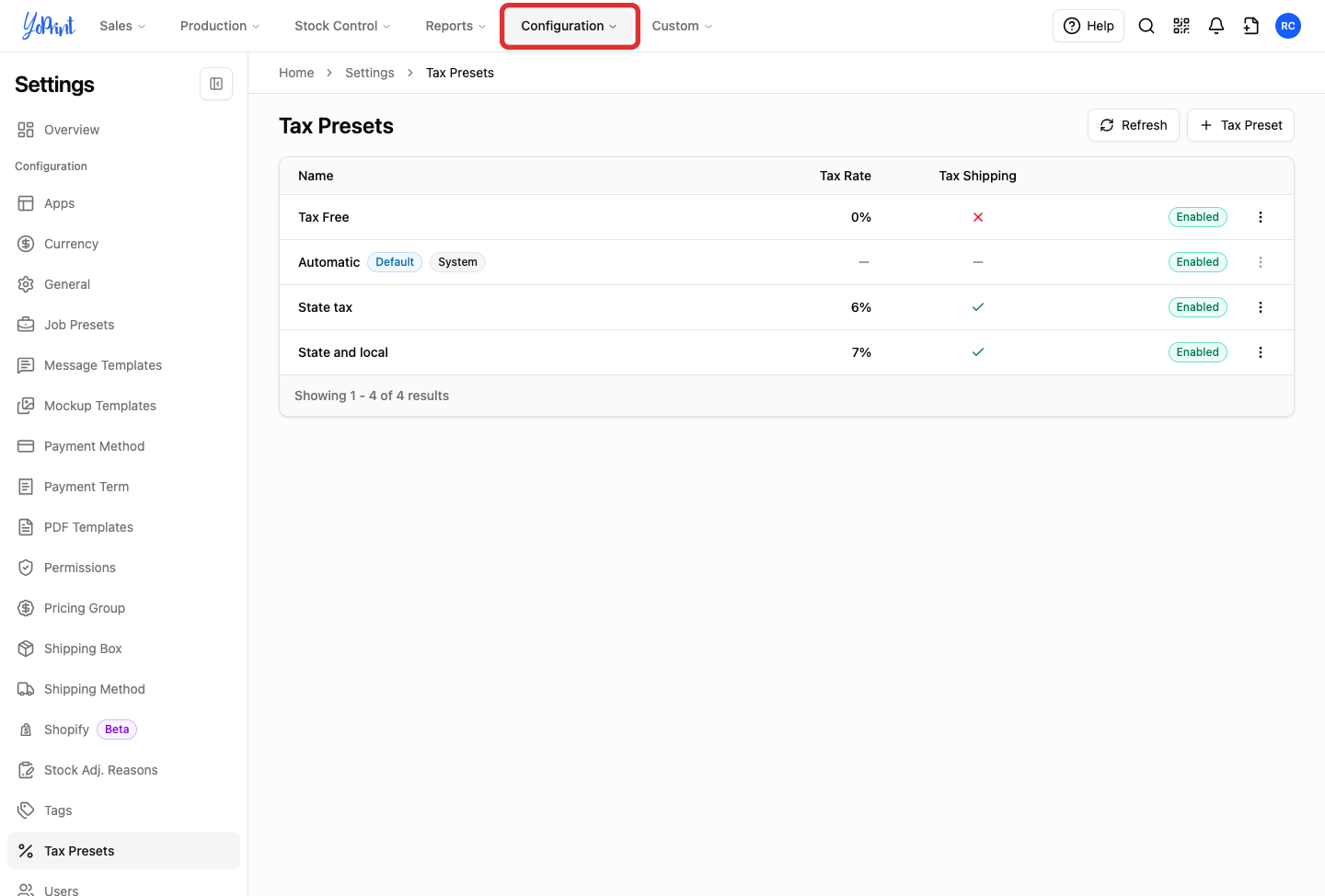
In the top navigation bar, click Configuration.
-
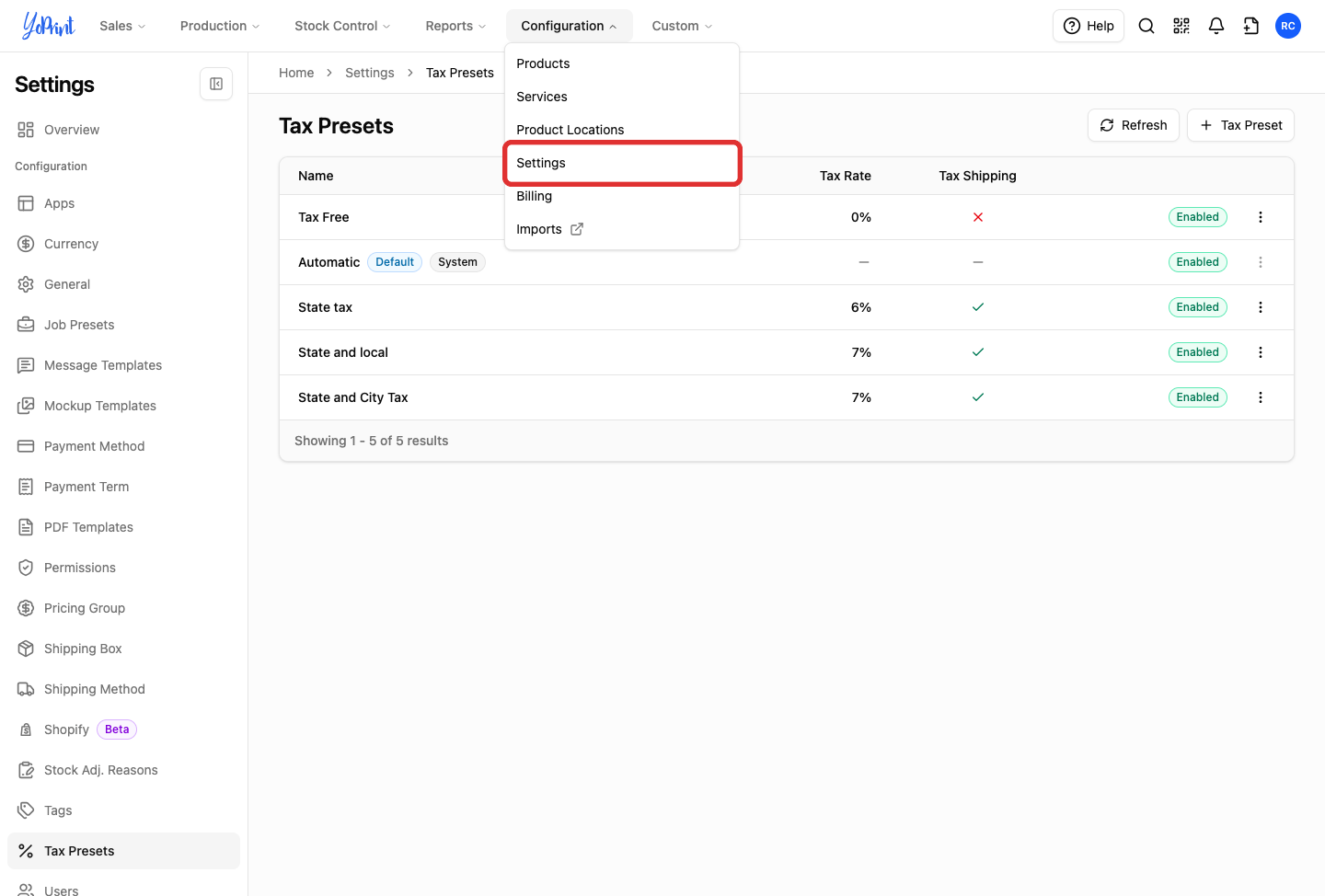
Click Settings.
-
Click Tax Presets.
The list displays your presets along with two built-in options: Tax Free and Automatic.
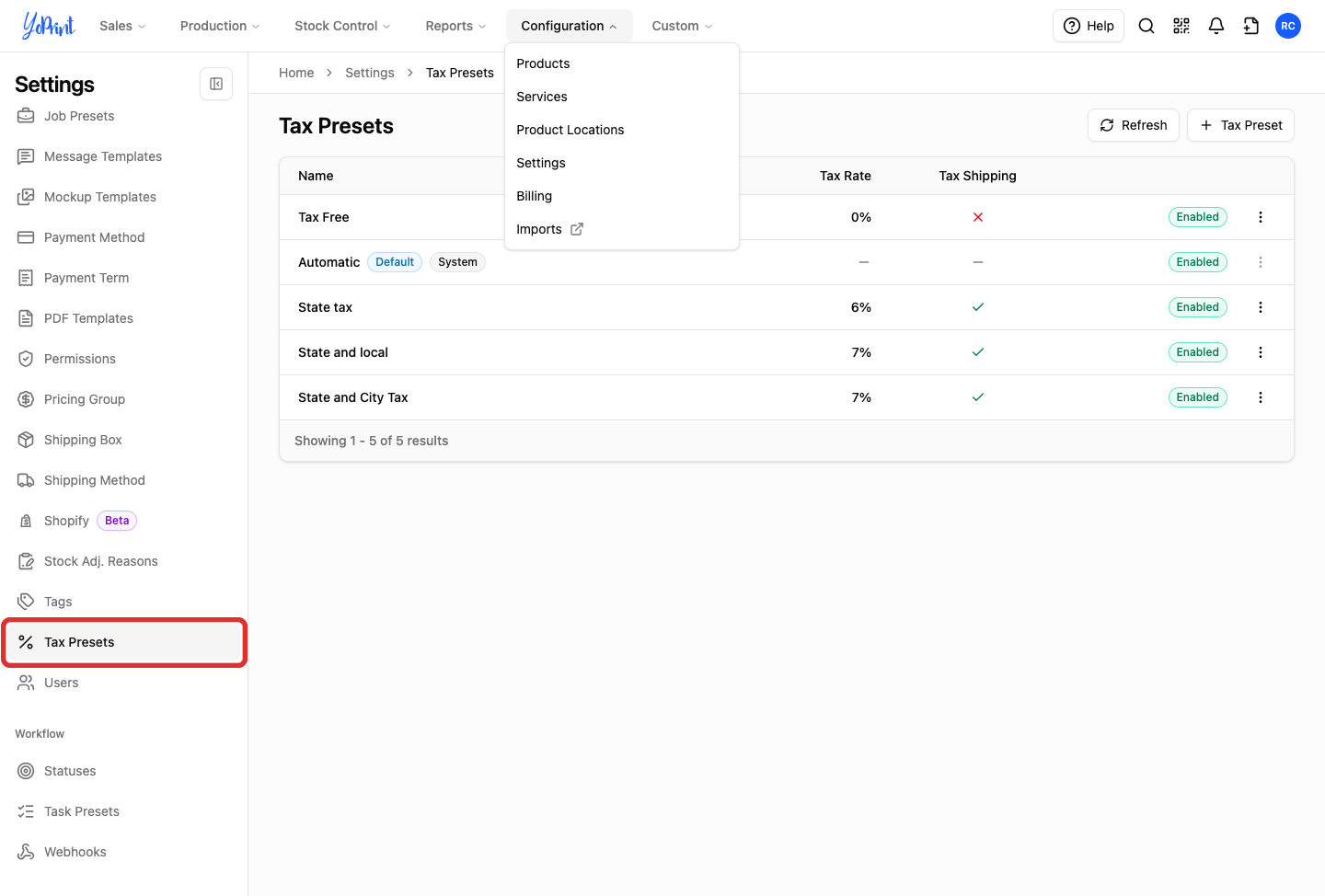
Automatic carries a System badge. Its rate displays as a dash because it calculates tax dynamically per order address rather than using a fixed percentage. While set as the Default, its action menu remains locked; you cannot edit, disable, or remove it.
Create a single-line preset
-
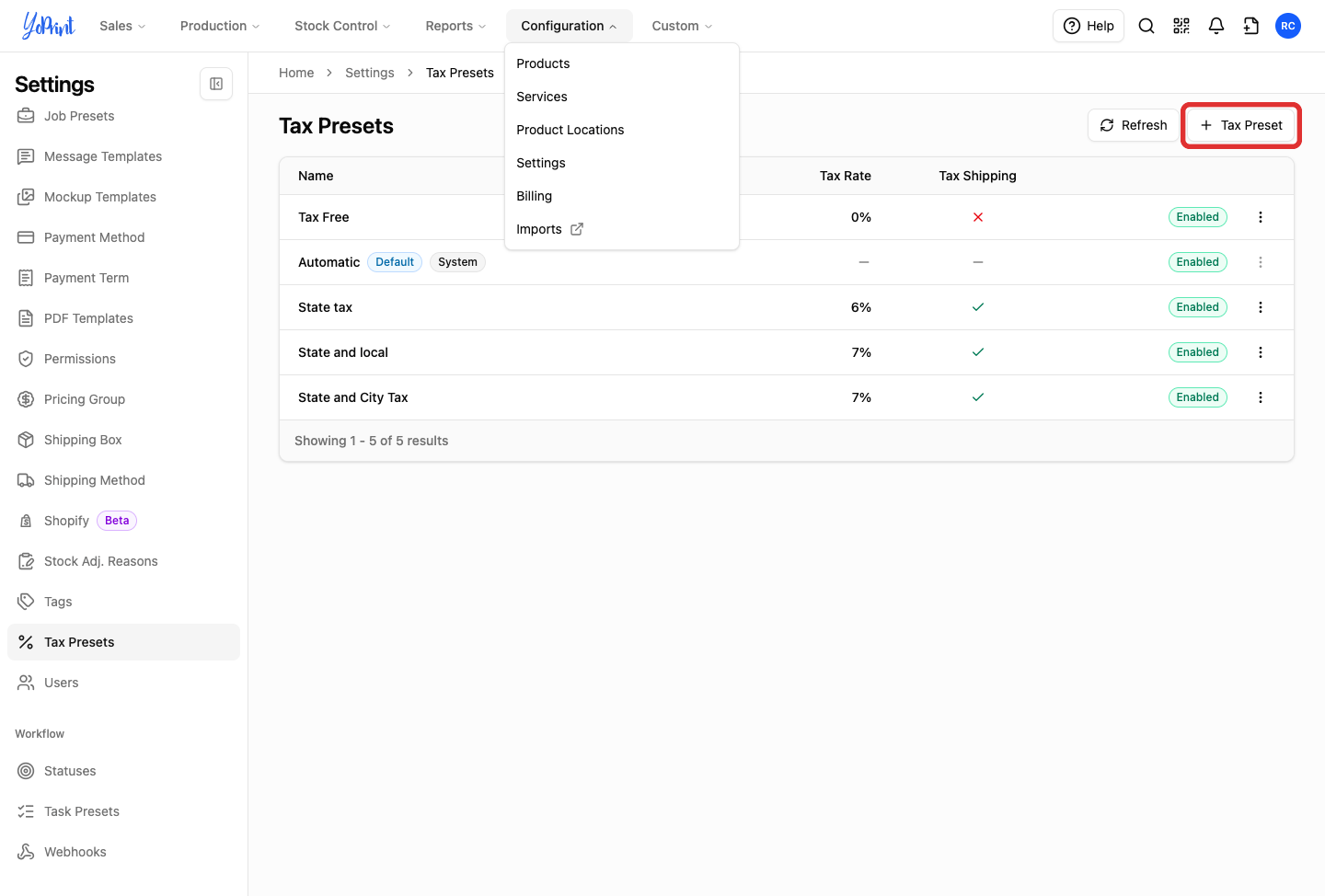
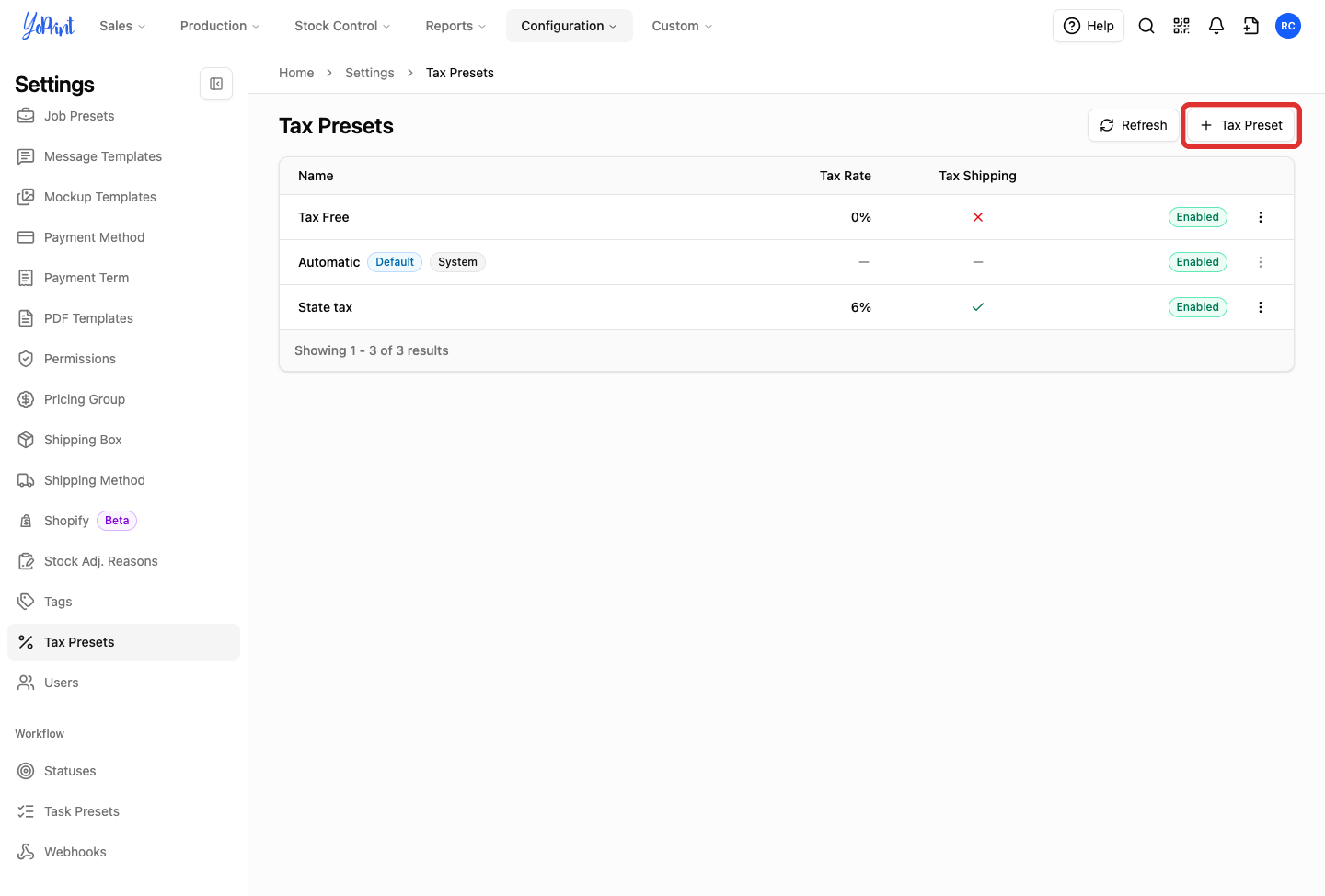
Click + Tax Preset.
-
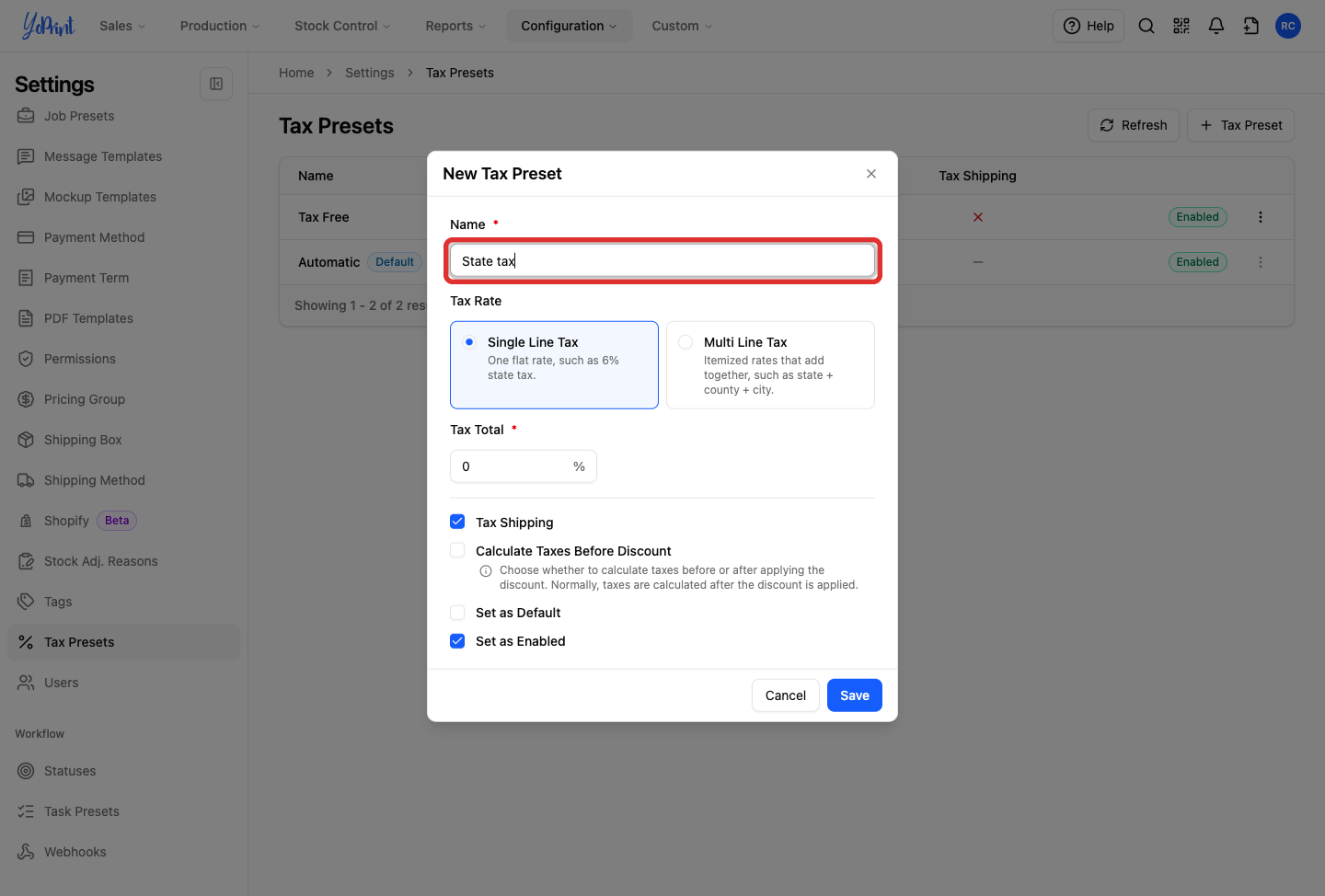
Enter a name for the preset.
-
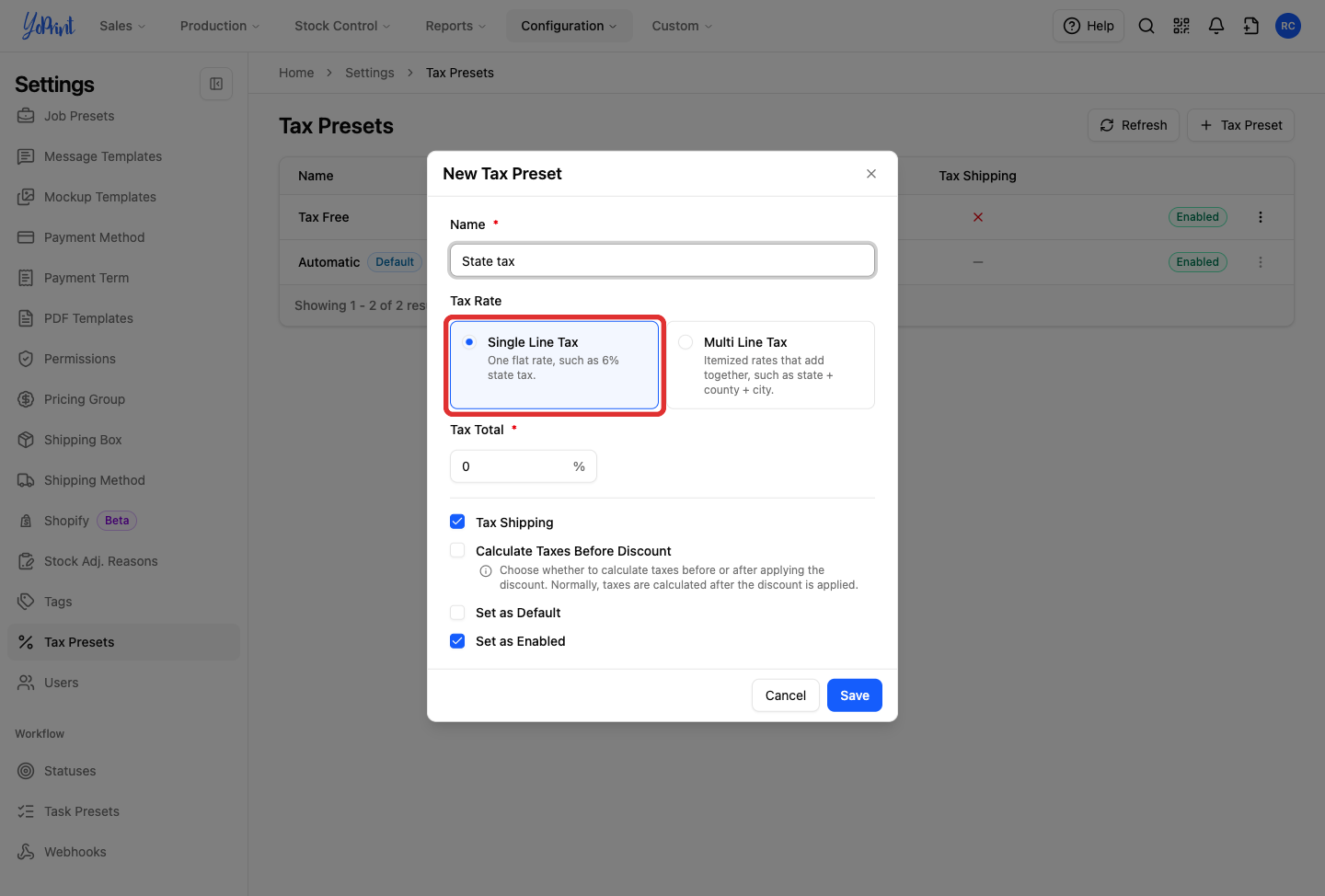
Leave Single Line Tax selected.
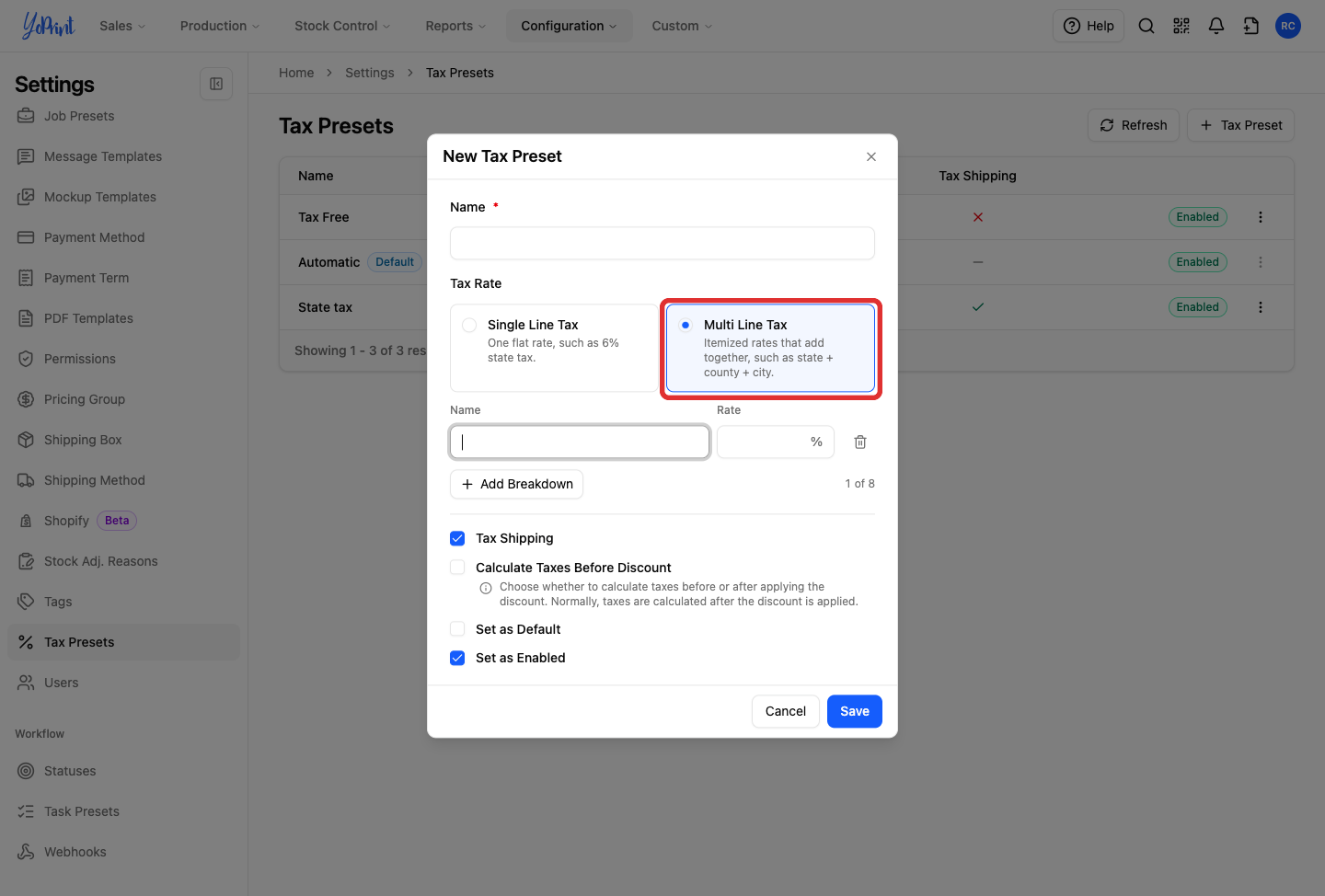
Single Line Tax applies one flat rate to the order.
-
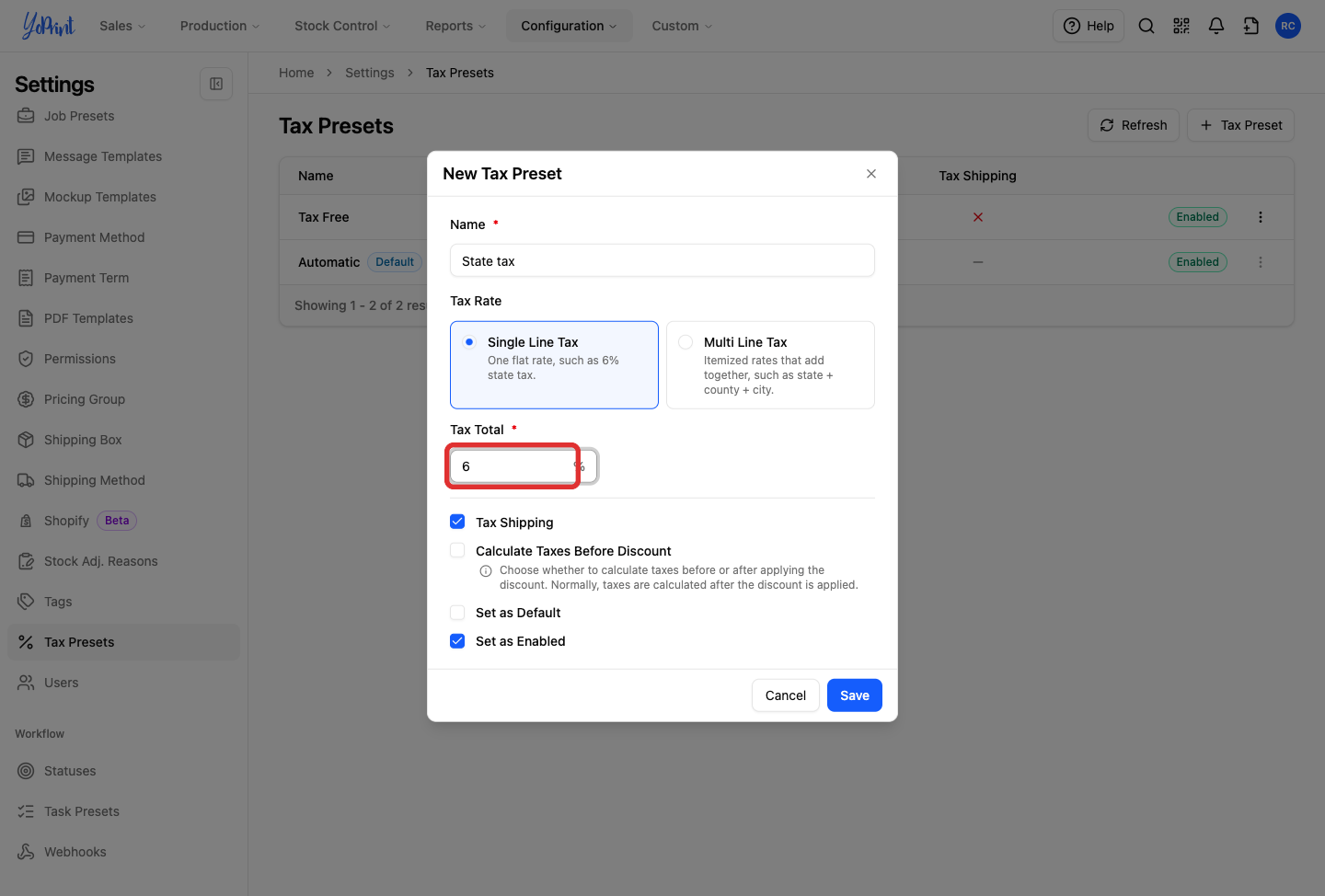
Enter the percentage in Tax Total.
-
Choose whether to tax shipping fees.
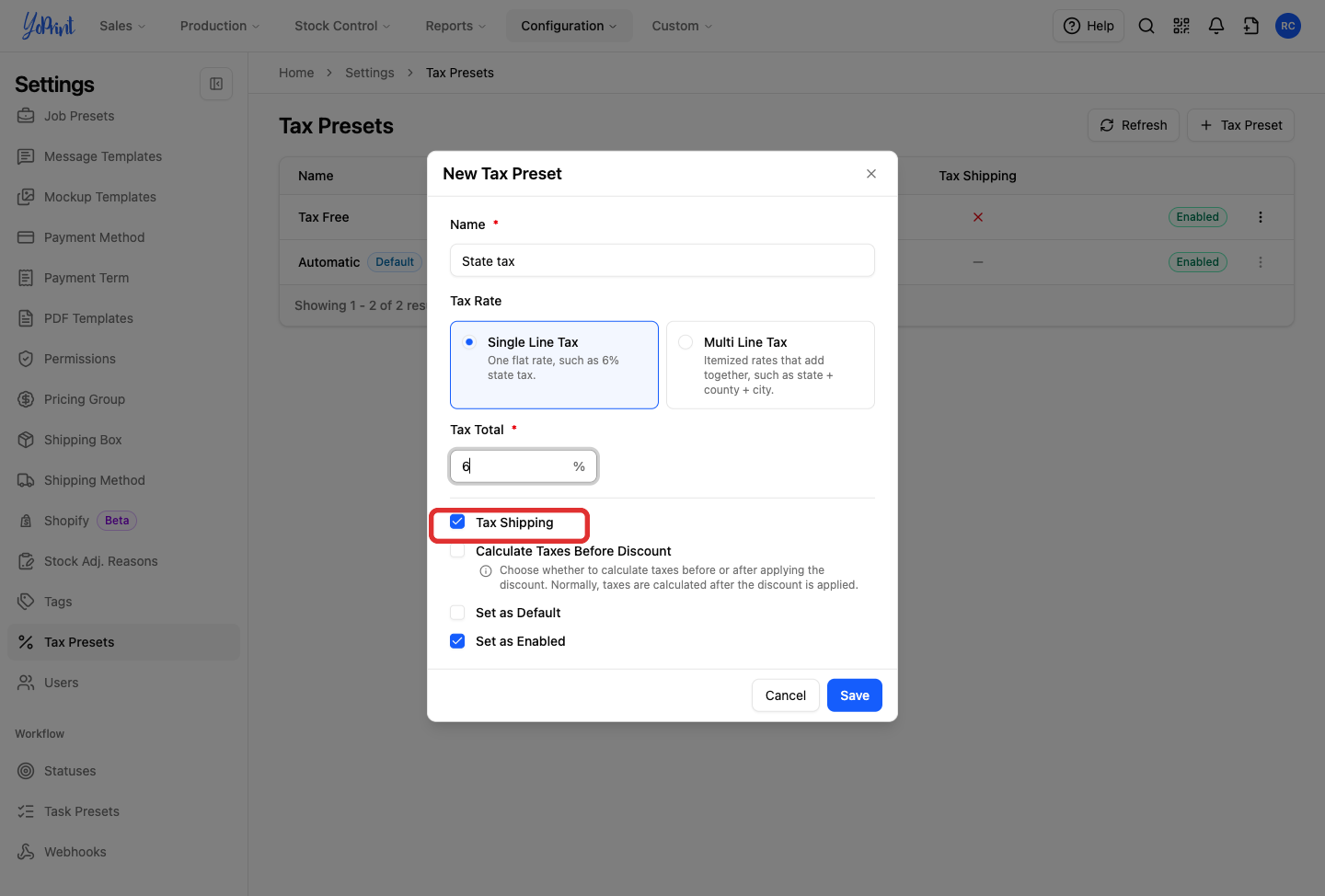
When turned on, YoPrint includes your shipping fee in the taxable subtotal and taxes it at your preset rate. Leave Tax Shipping turned on if your jurisdiction taxes shipping charges, or turn it off if shipping is non-taxable. New presets start with Tax Shipping on.
-
Choose how discounts affect tax calculation.
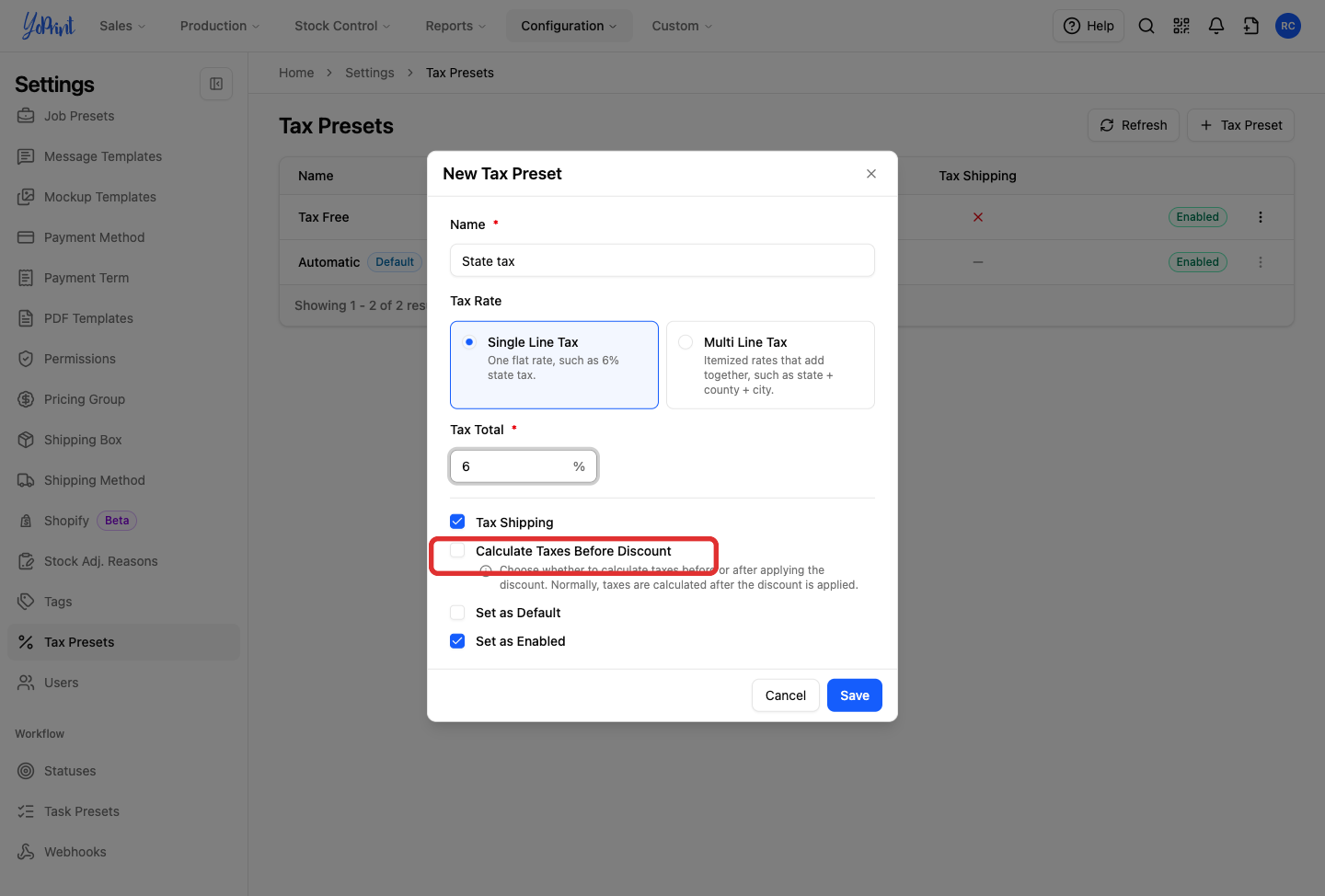
Most businesses calculate sales tax after discounts are applied. Keep this setting turned off to tax the discounted subtotal. Turn it on only if your tax jurisdiction requires charging tax on the full pre-discount amount.
-
Set whether this preset is the default and keep it enabled.
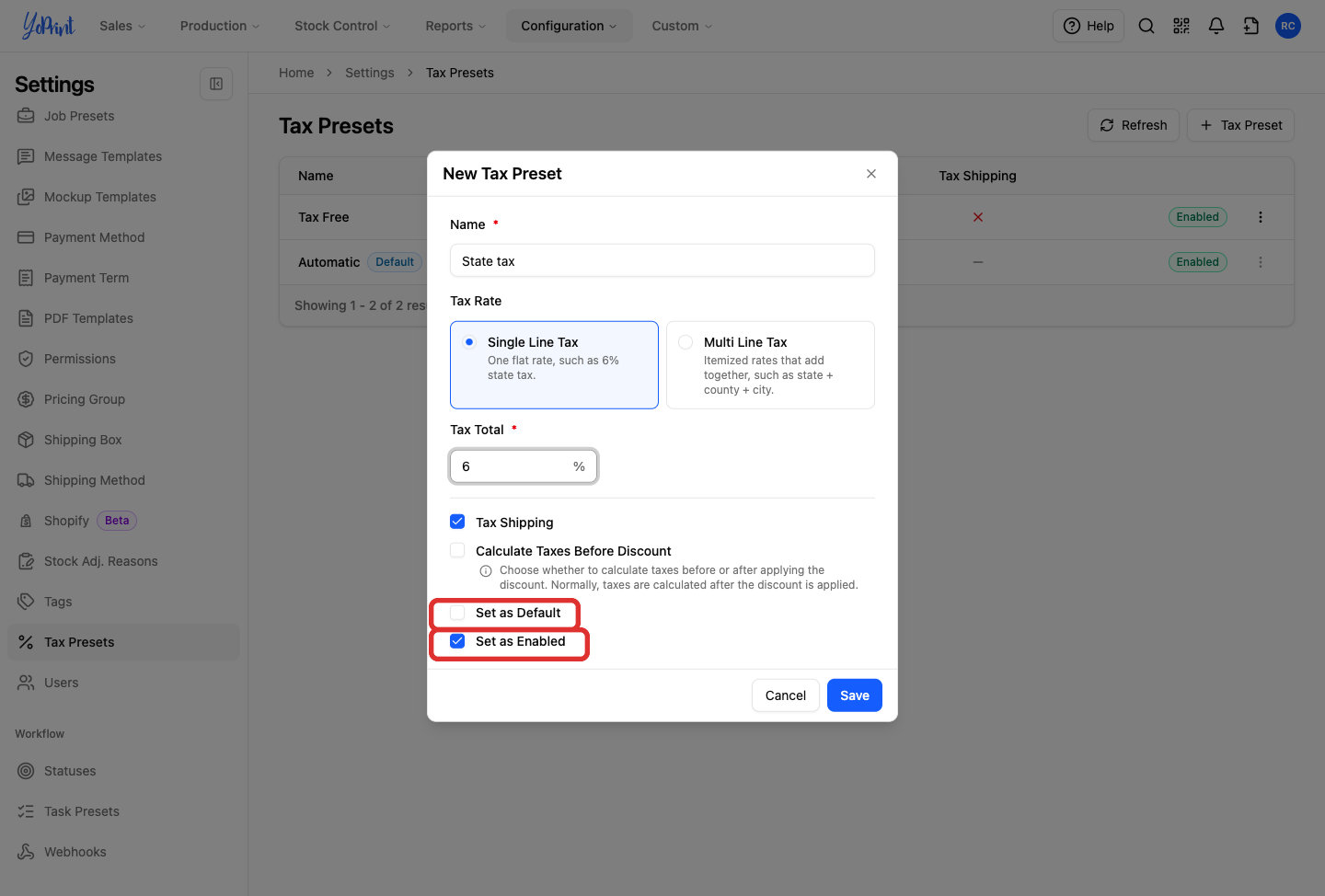
Turn on Set as Default if you want new quotes, orders, and invoices to start with this preset. Setting a default preset replaces Automatic on new orders. Existing drafts and completed orders retain their current tax settings. Keep Set as Enabled turned on so team members can select this preset.
-
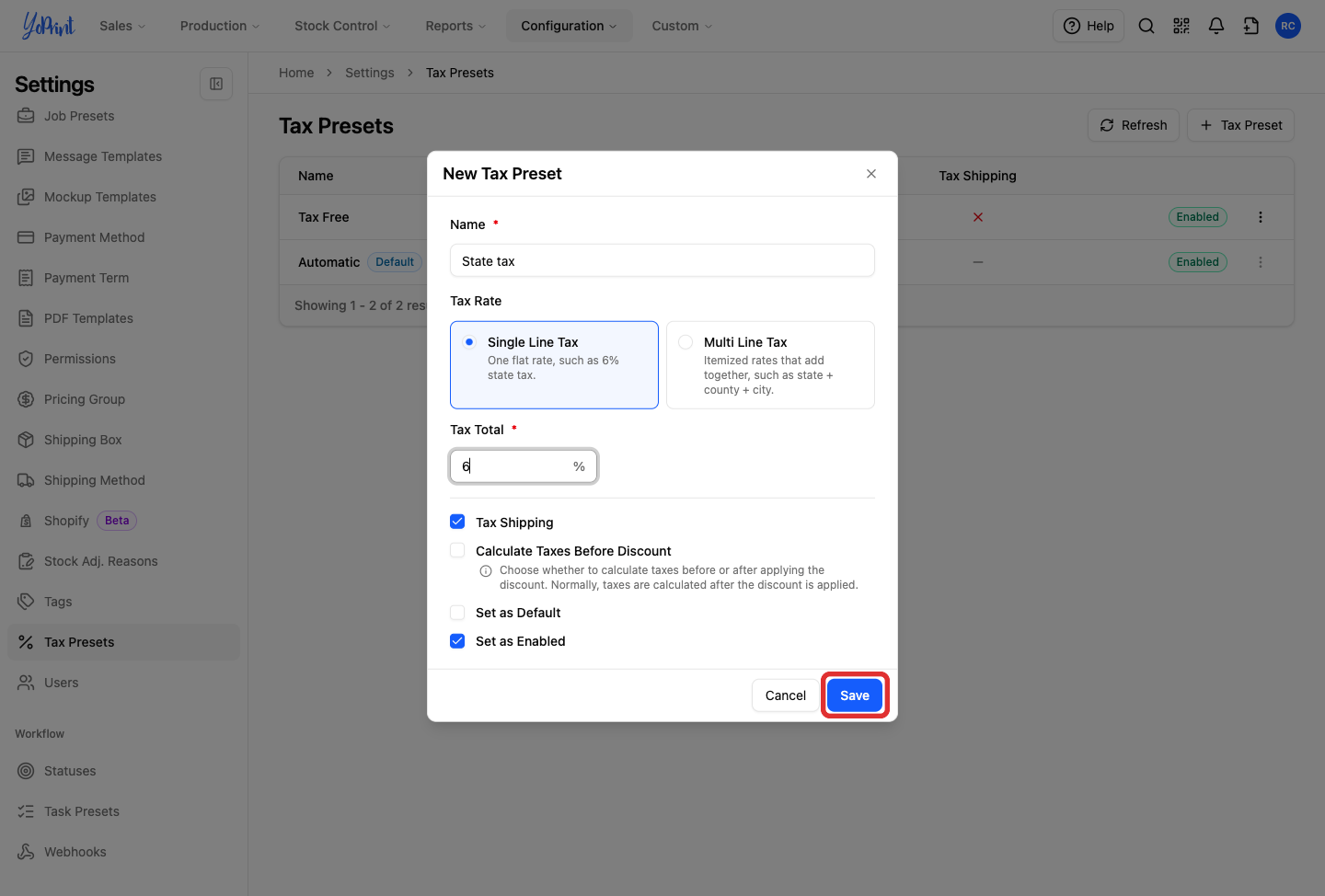
Click Save.
-
Find your new preset in the Tax Presets list.
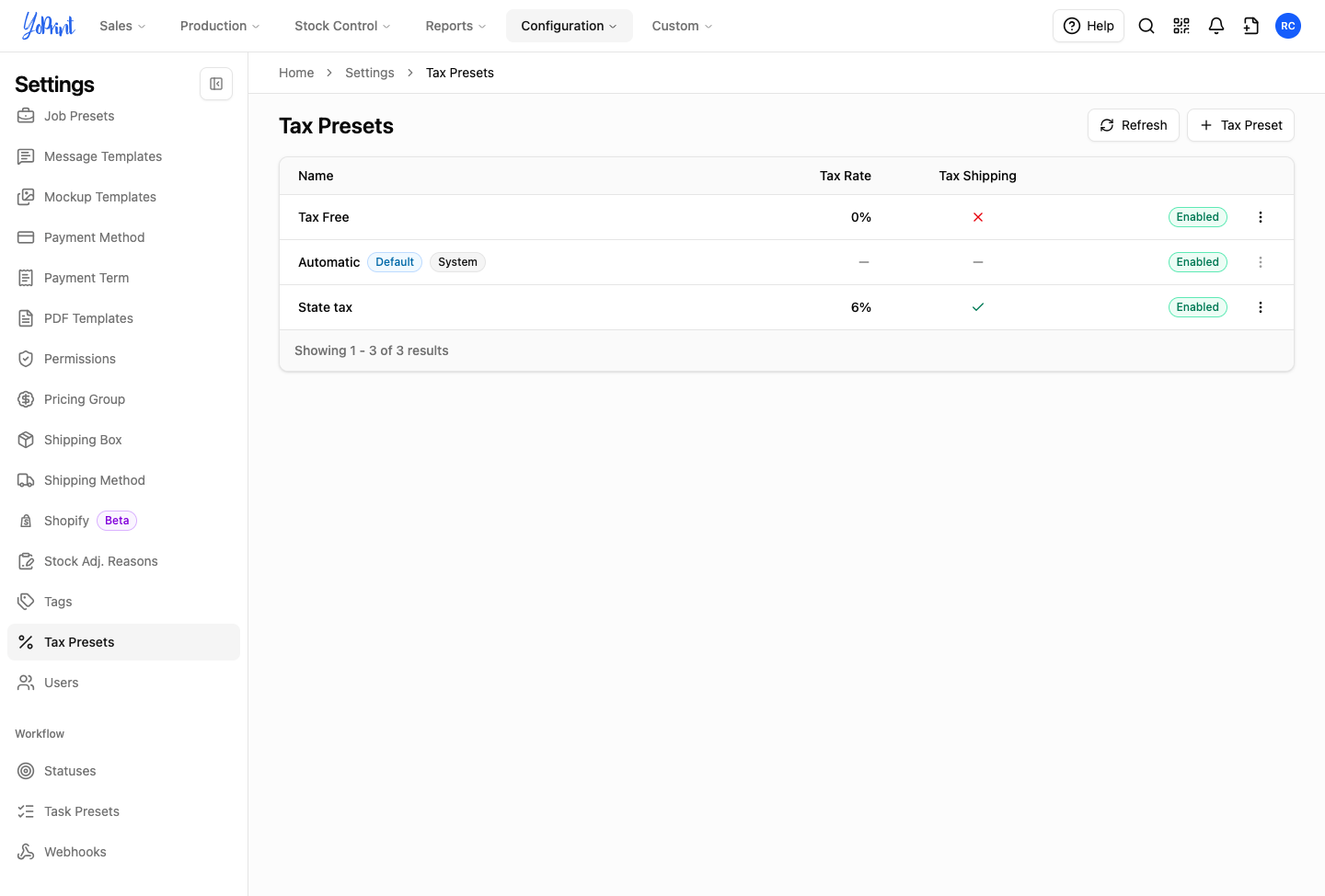
The list displays the percentage. A checkmark in the Tax Shipping column indicates shipping is taxed; an X indicates shipping is non-taxable.
Create a multi-line preset
-
Click + Tax Preset.
-
Select Multi Line Tax.
-
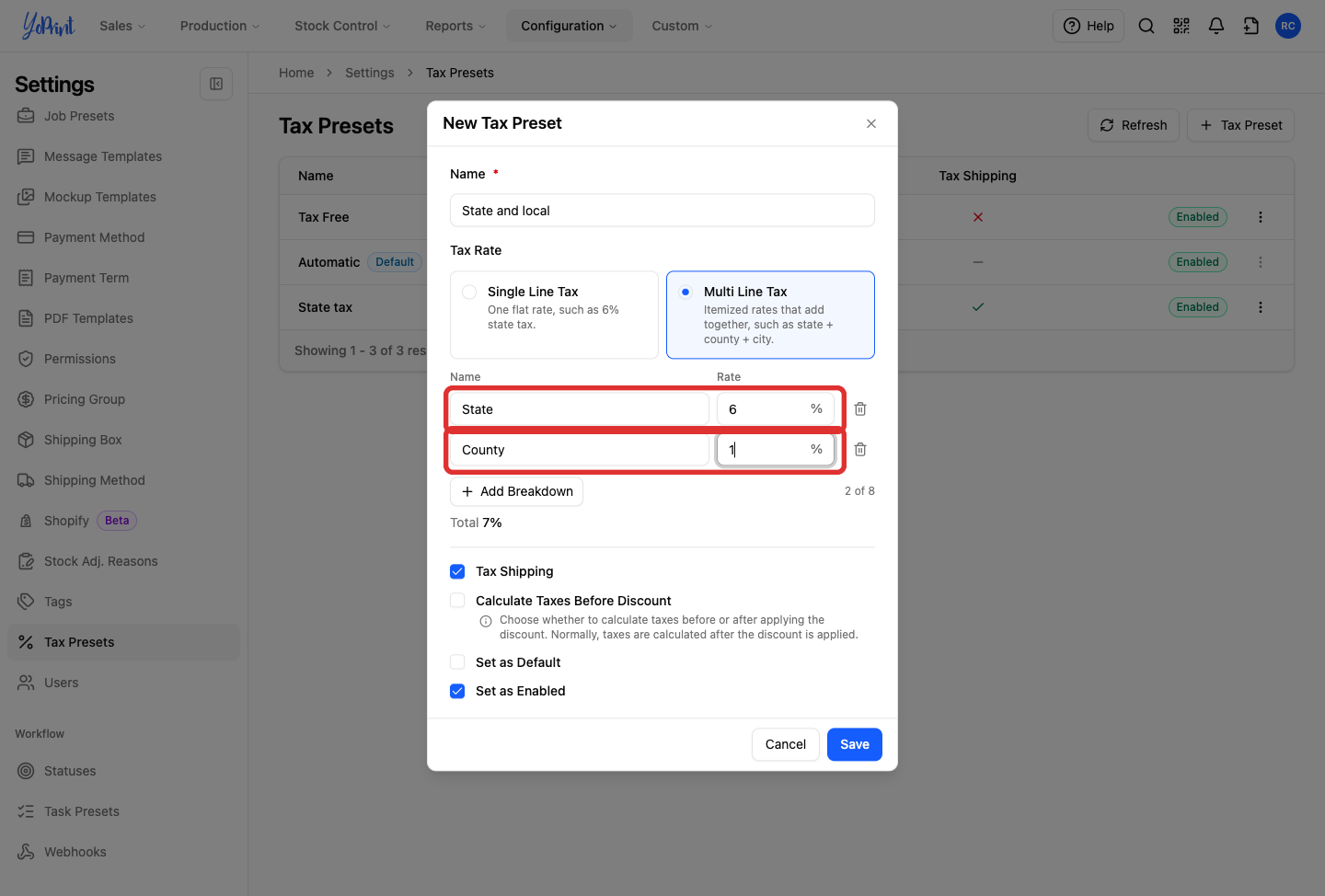
Enter the preset name, then enter a name and rate for each tax line.
-
Click Add Breakdown to add another line.
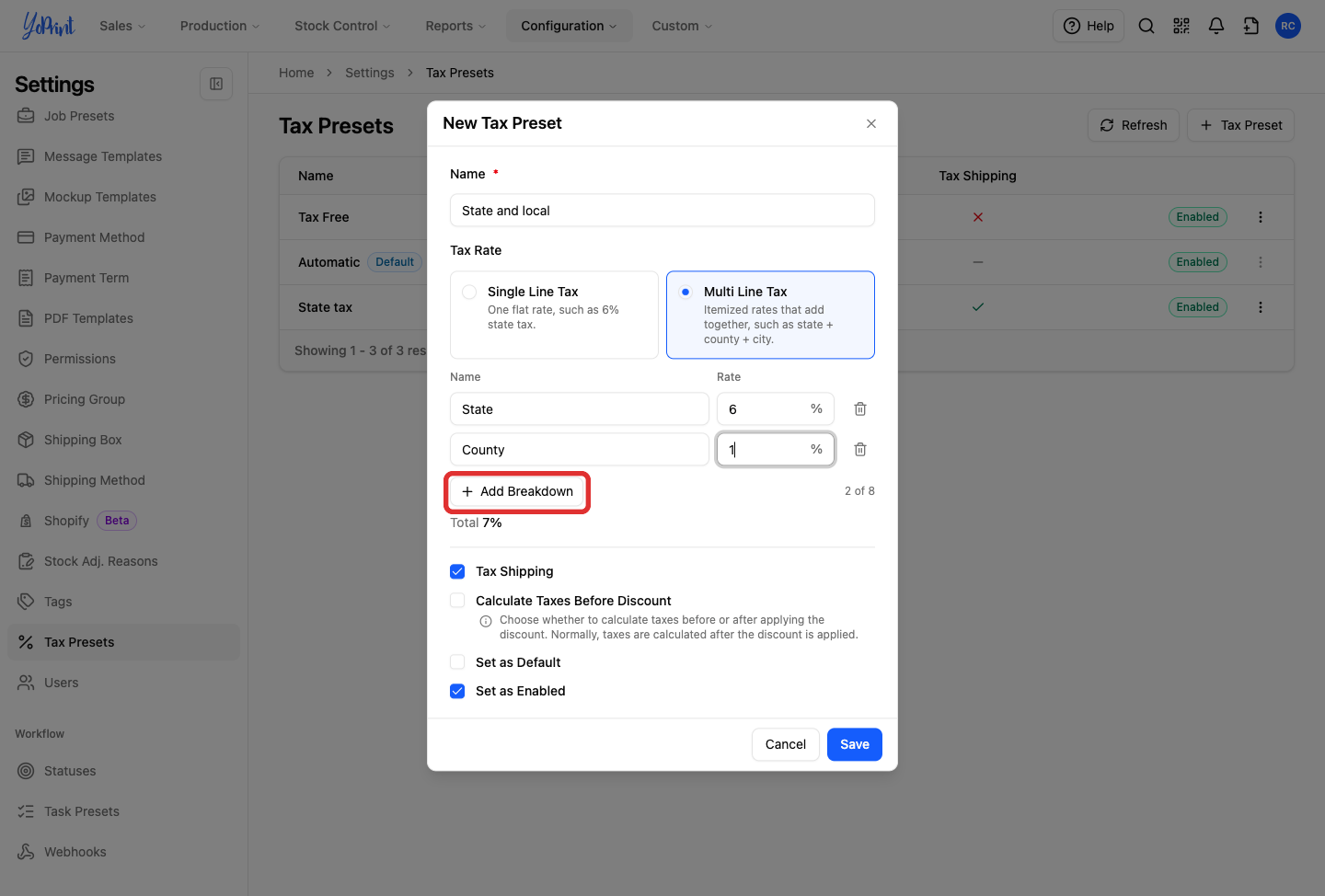
You can add up to 8 rate lines in a multi-line preset.
-
Click Save.
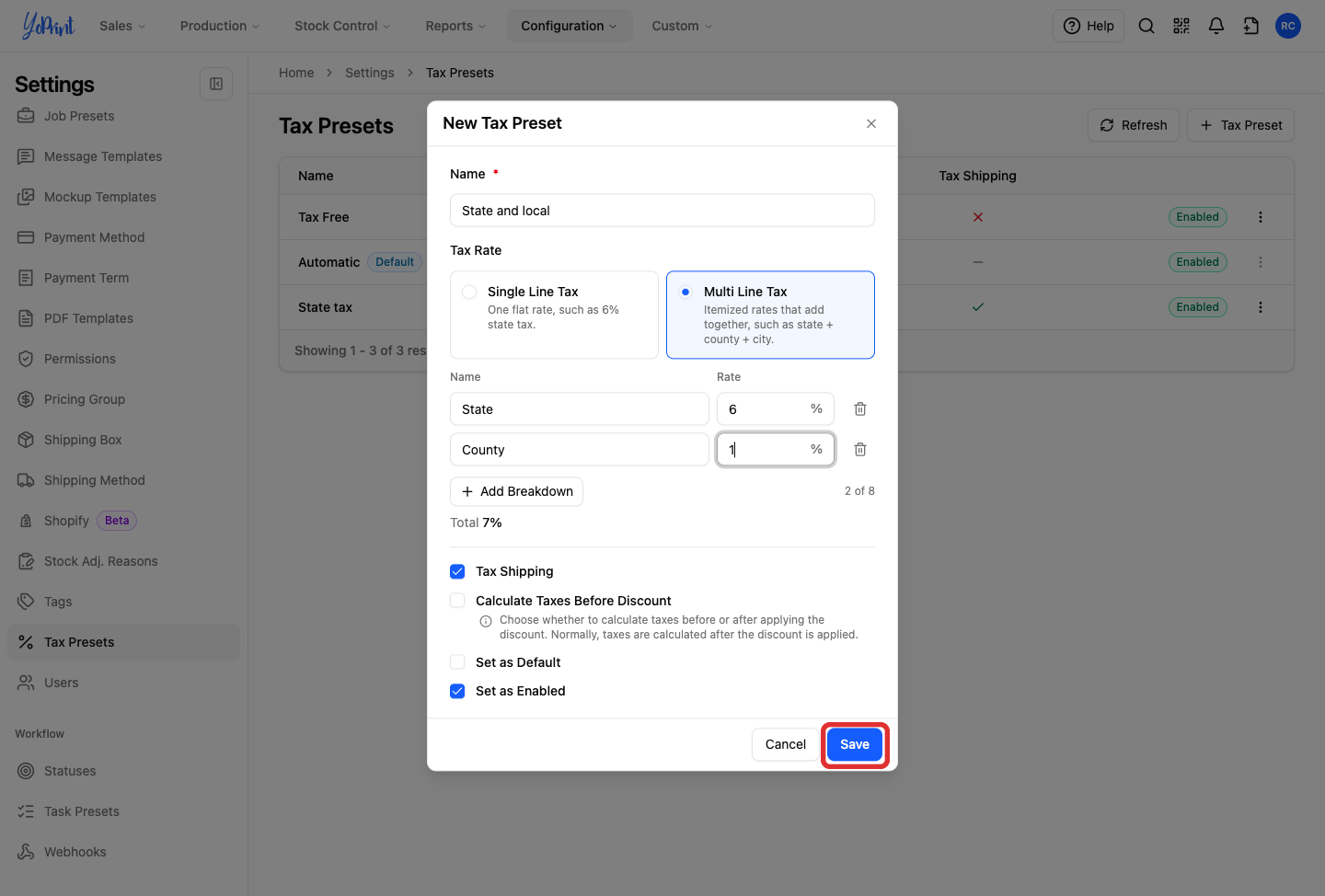
The list displays the total combined percentage. You can edit line names and rates at any time, but you cannot convert a preset between single-line and multi-line after saving. To switch between single and multi-line structures, create a new preset. Existing orders retain their saved rates when presets change.
Change a preset
-
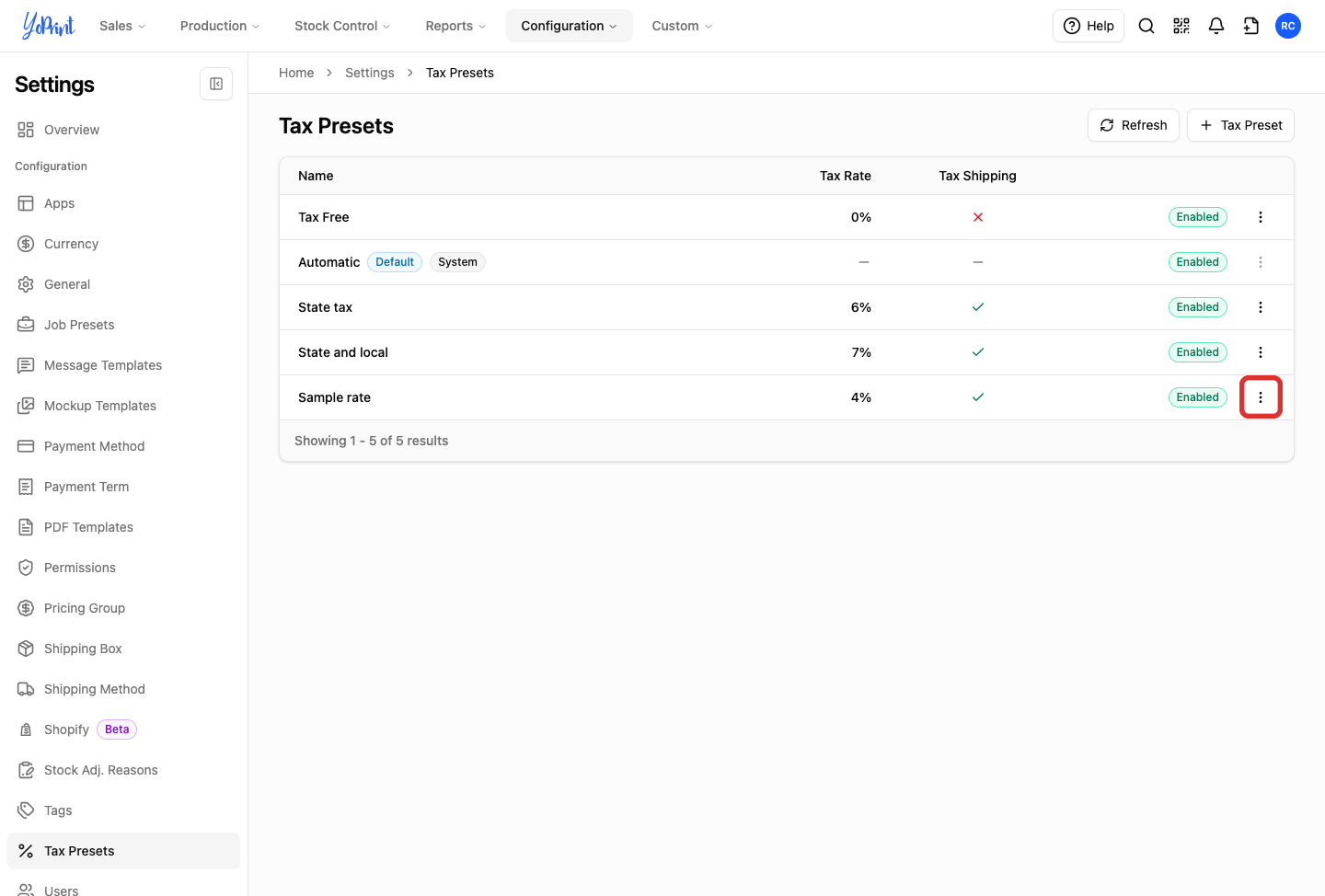
On the preset row, click More actions (three dots).
-
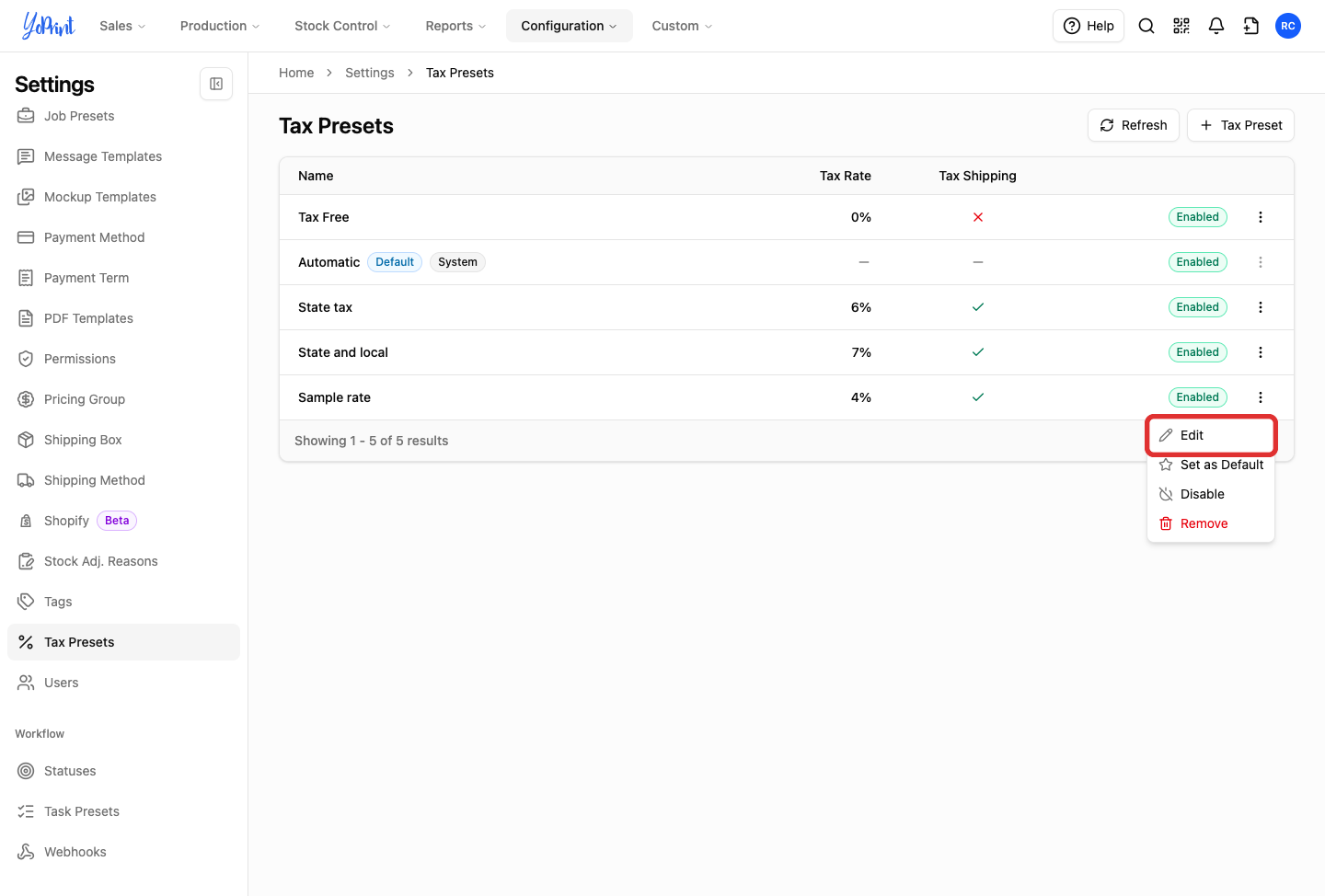
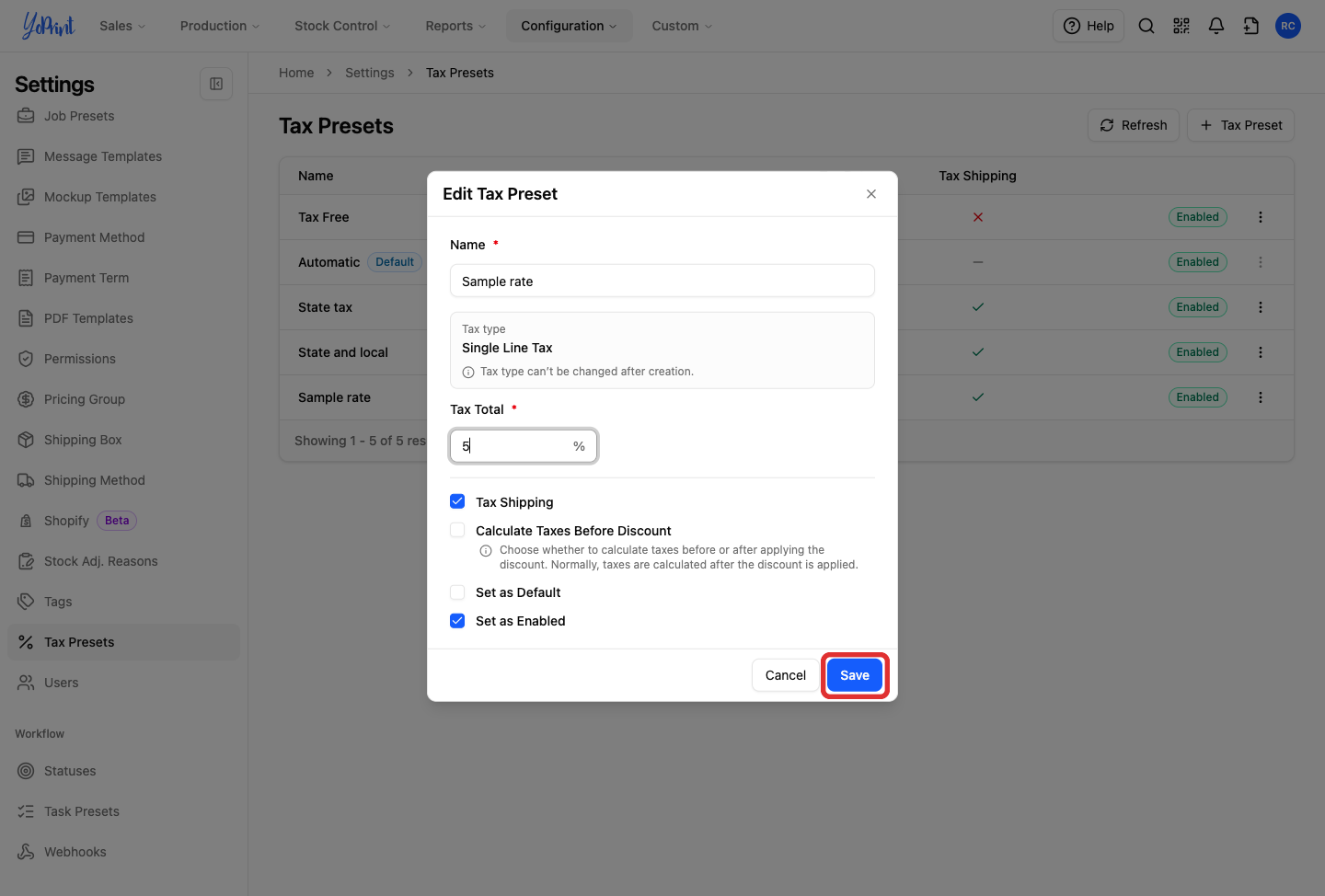
Click Edit.
-
Update the preset name or tax rate. For a single-line preset, update the percentage in Tax Total. For a multi-line preset, update the Rate for each breakdown line.
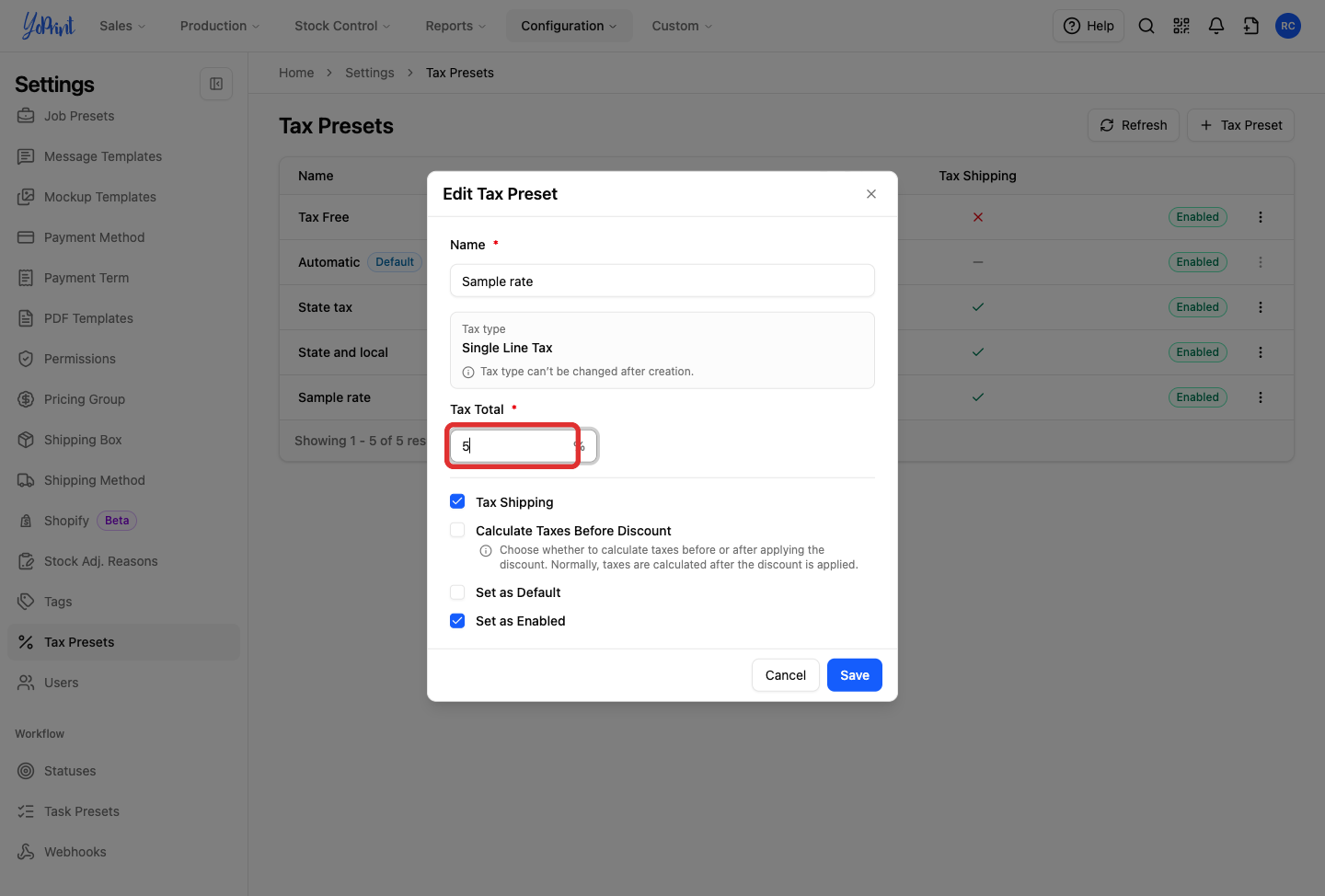
The tax type remains locked to your original selection and cannot be changed.
-
Click Save.
-
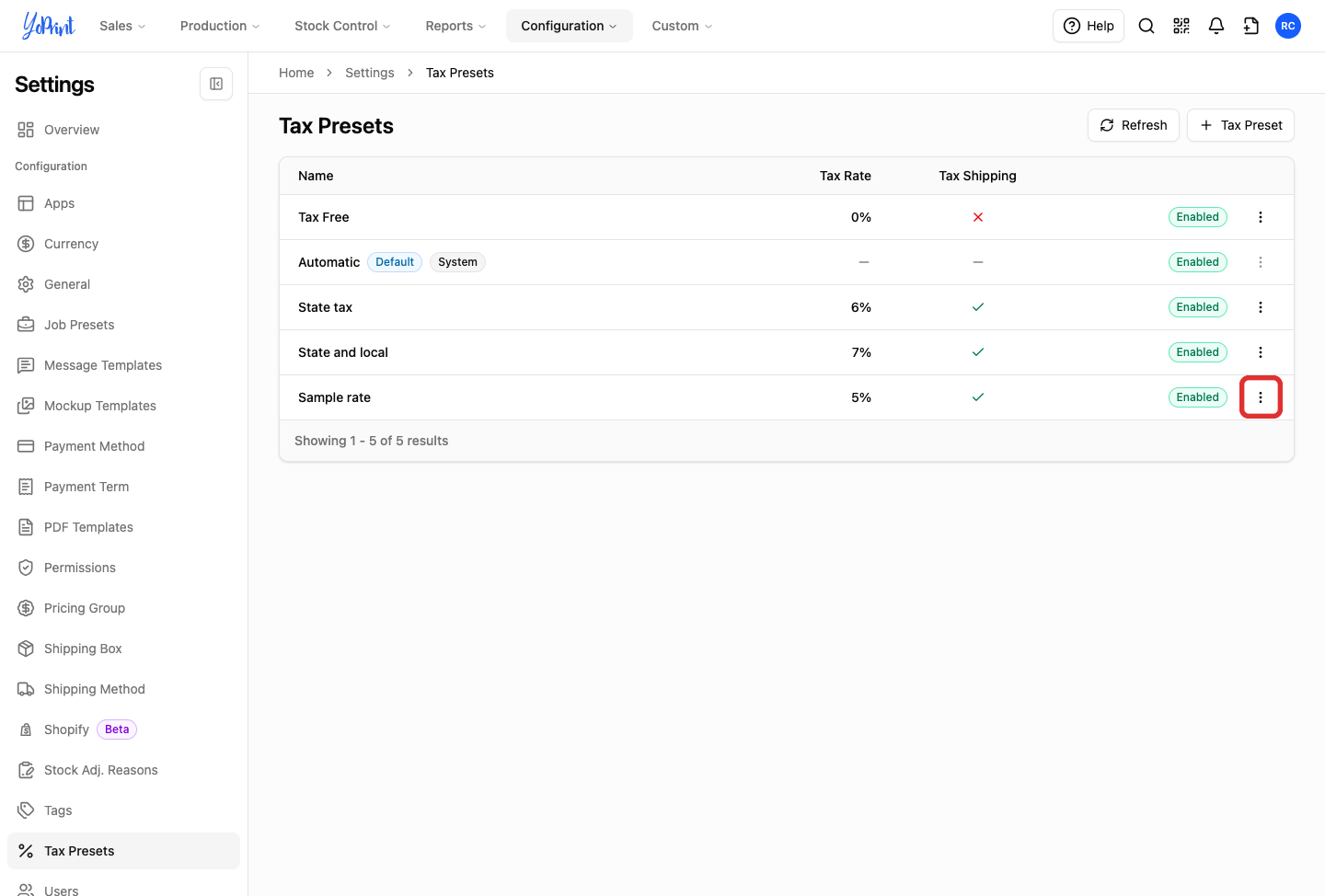
On the preset row, click More actions (three dots).
-
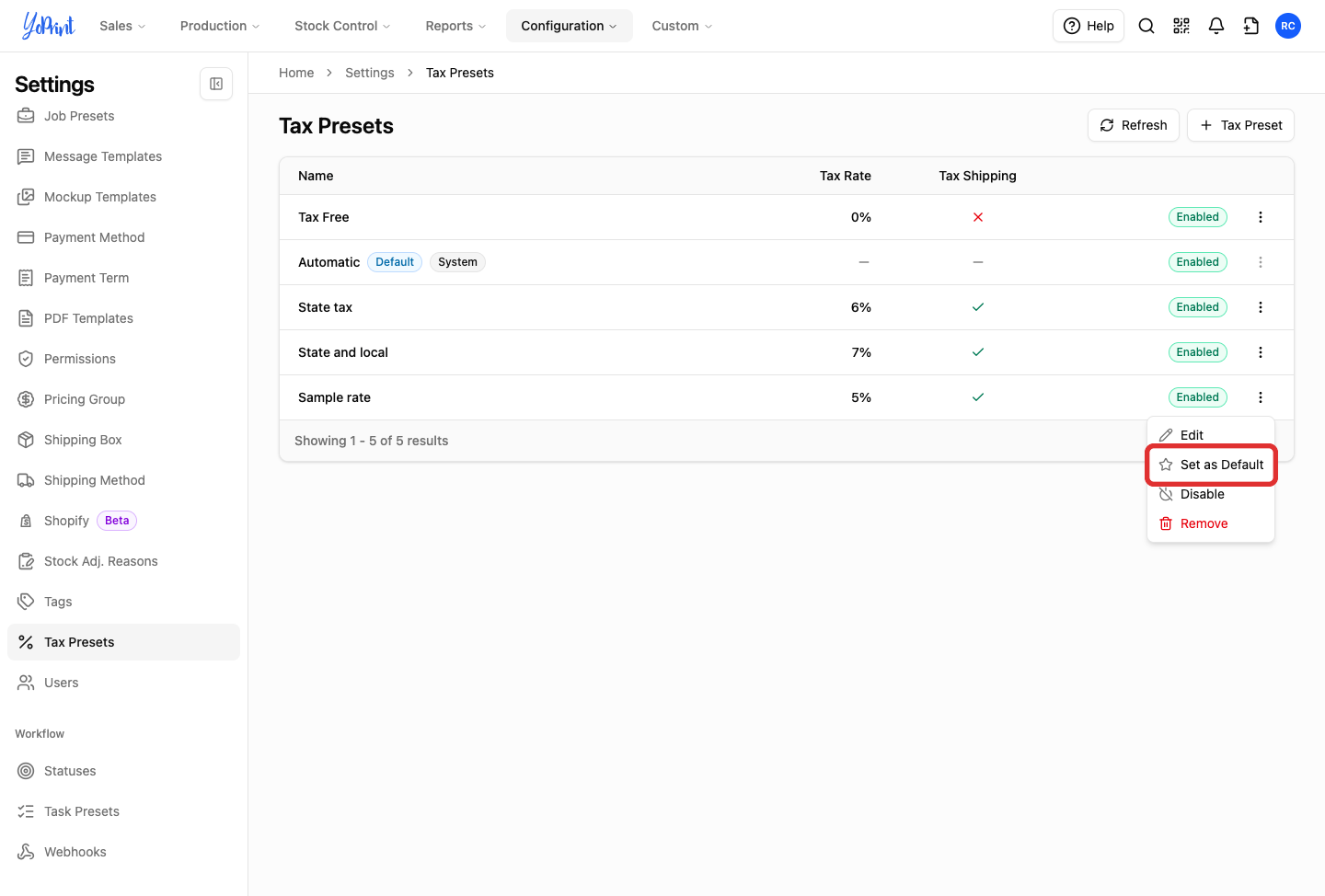
Click Set as Default to make this preset the default for your shop.
-
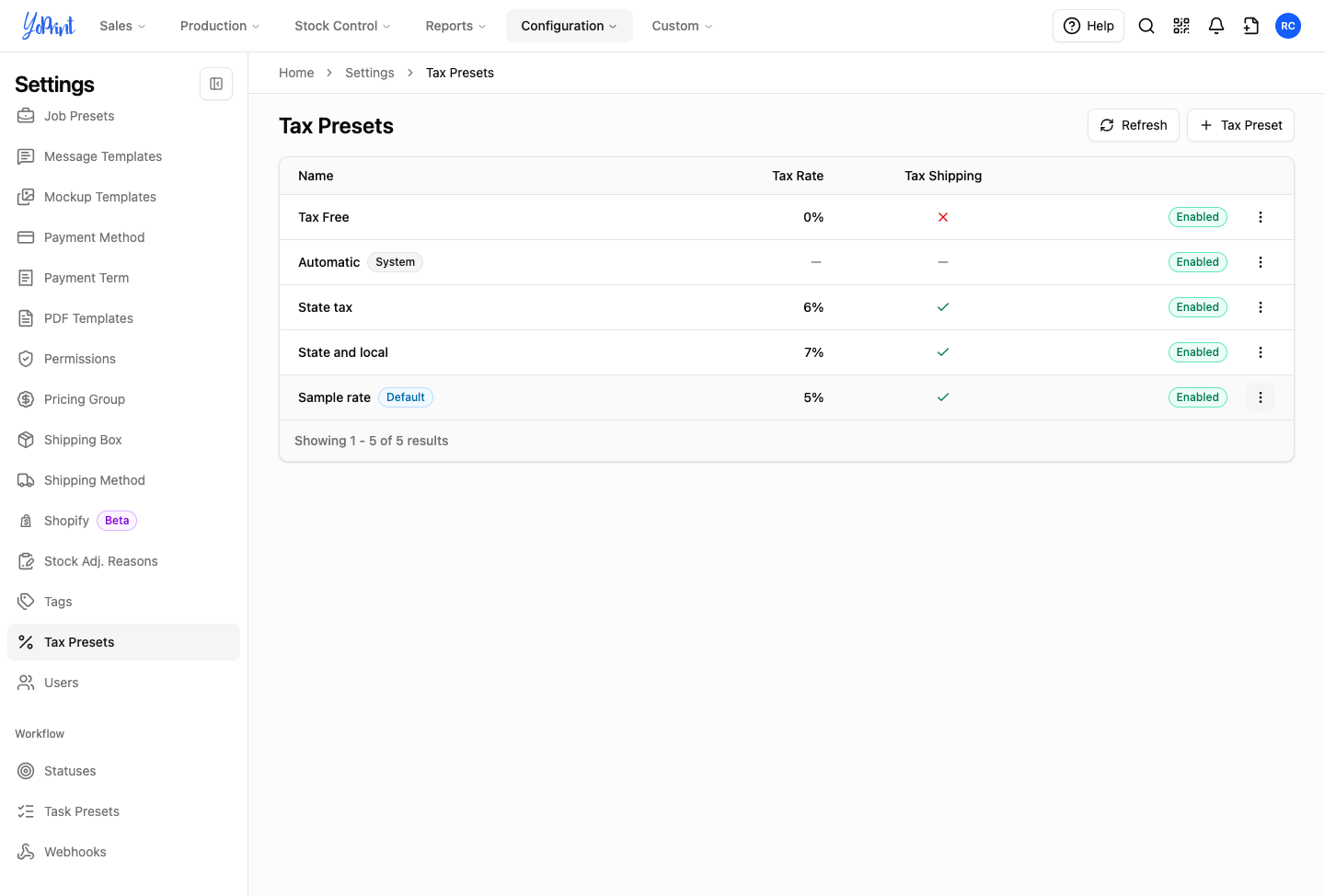
Confirm that the Default badge moves to the selected preset.
-
To restore Automatic as your default, click its More actions (three dots) button and select Set as Default.
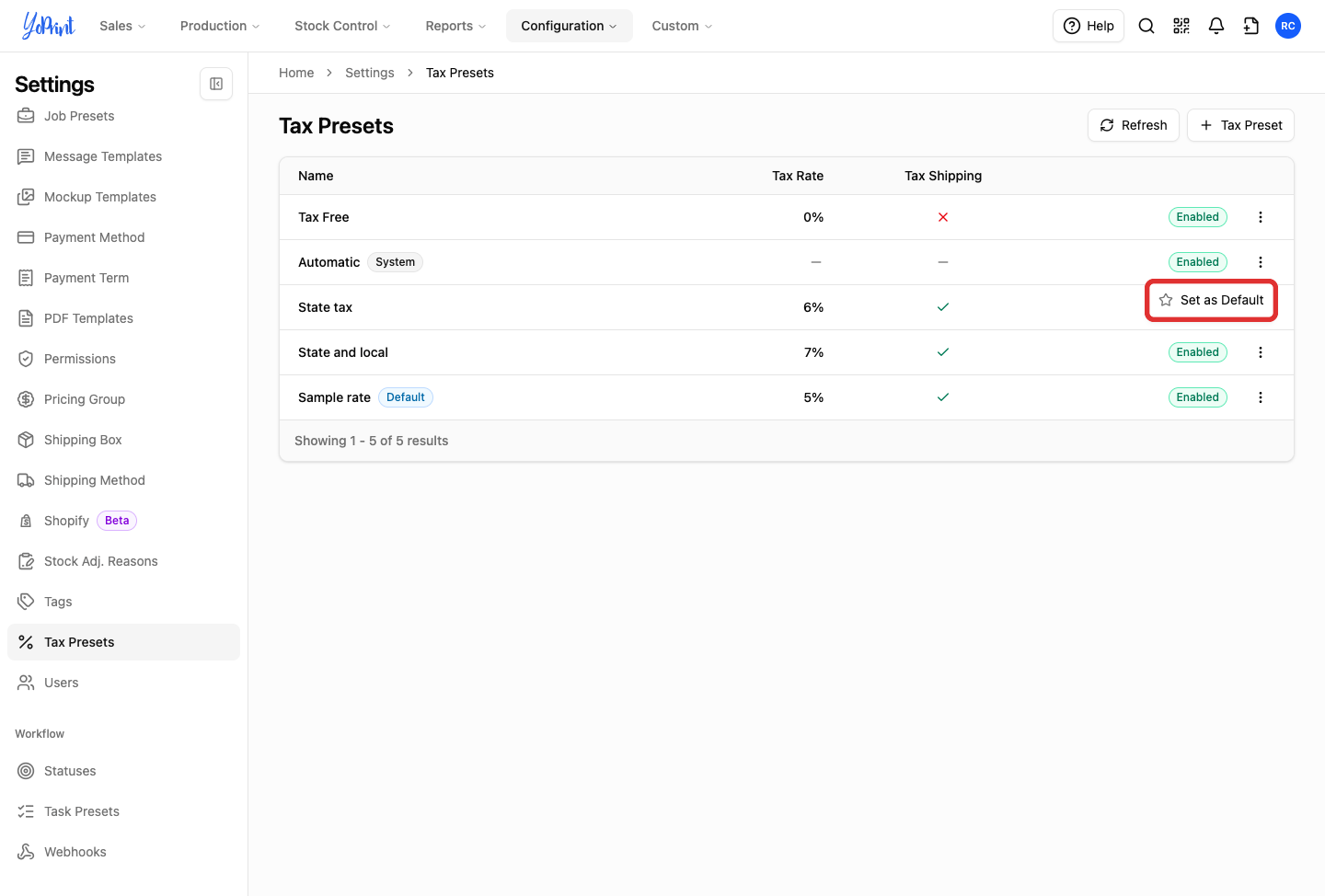
This menu appears only when Automatic is not currently the default. Set as Default is its only menu action.
-
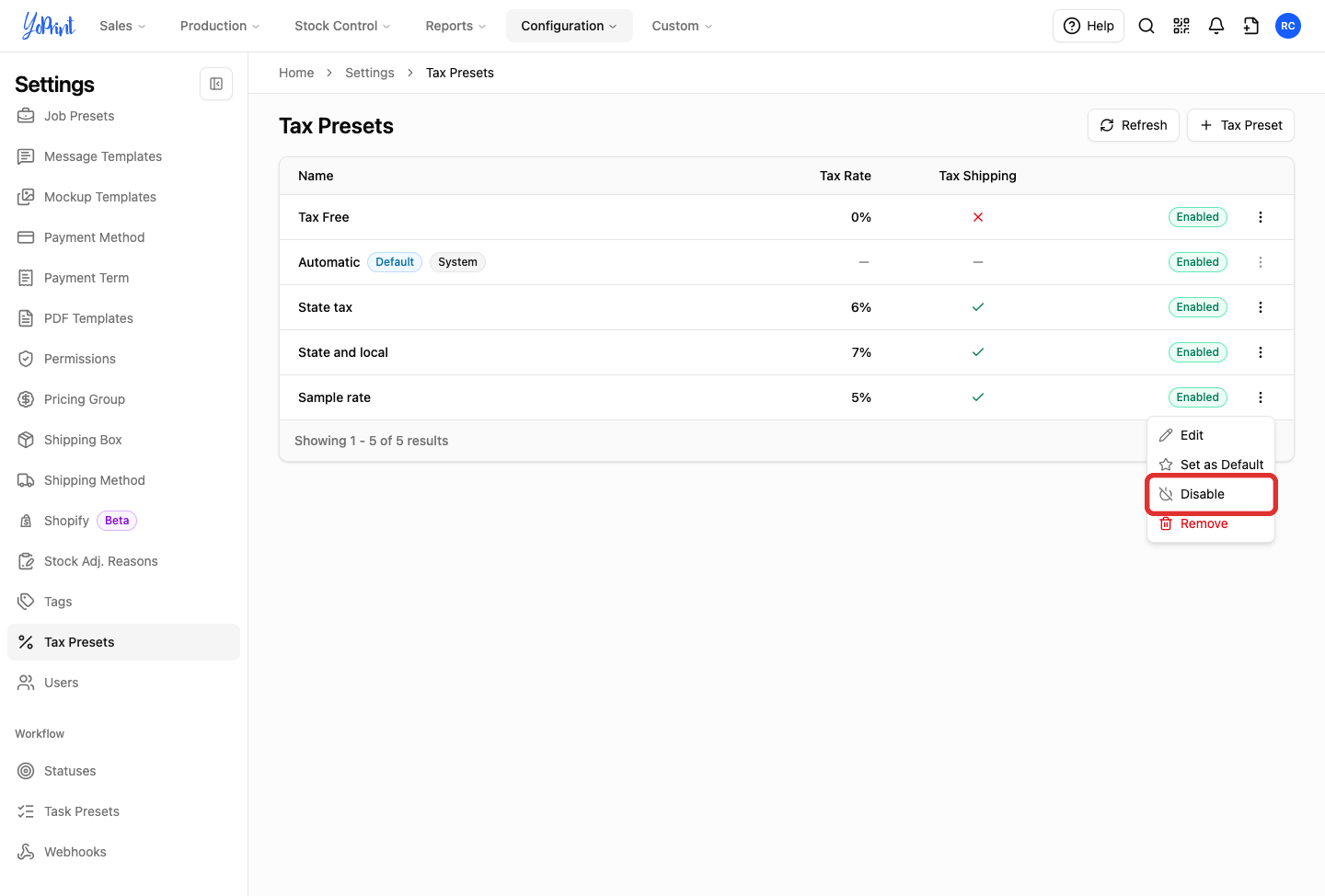
To turn off a preset temporarily, click its More actions (three dots) button and select Disable.
-
Confirm that the preset row displays Disabled.

To reactivate a disabled preset, click its More actions (three dots) button and select Enable.
-
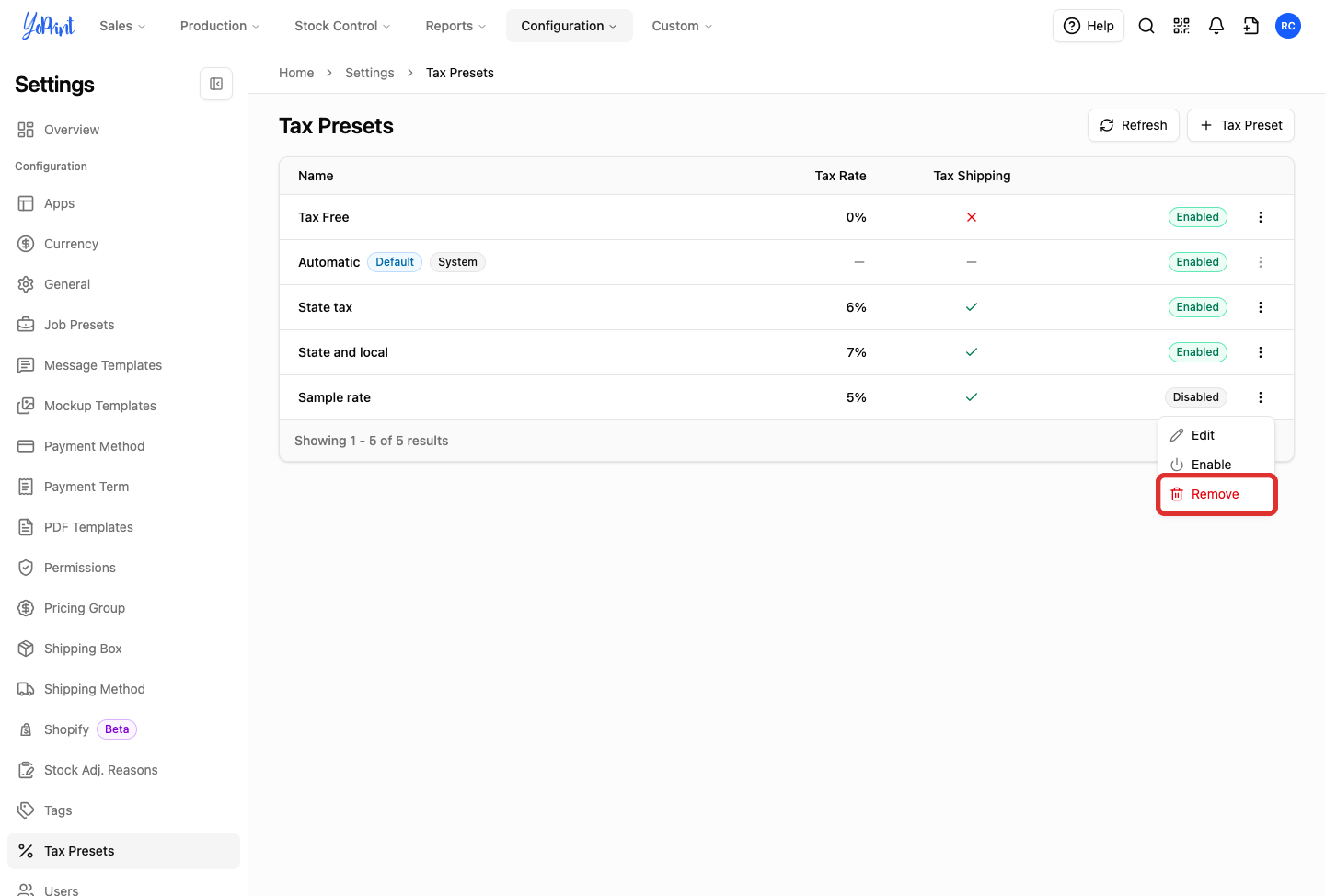
To delete a preset permanently, click its More actions (three dots) button and select Remove.
-
Click Remove on the confirmation dialog to confirm deletion.

Use the preset on an invoice
You apply tax presets directly on invoices. To open an invoice in the invoice editor, go to Sales > Invoices, click More actions (three dots) on the invoice row, and select Edit (or create an invoice from a sales order).
-
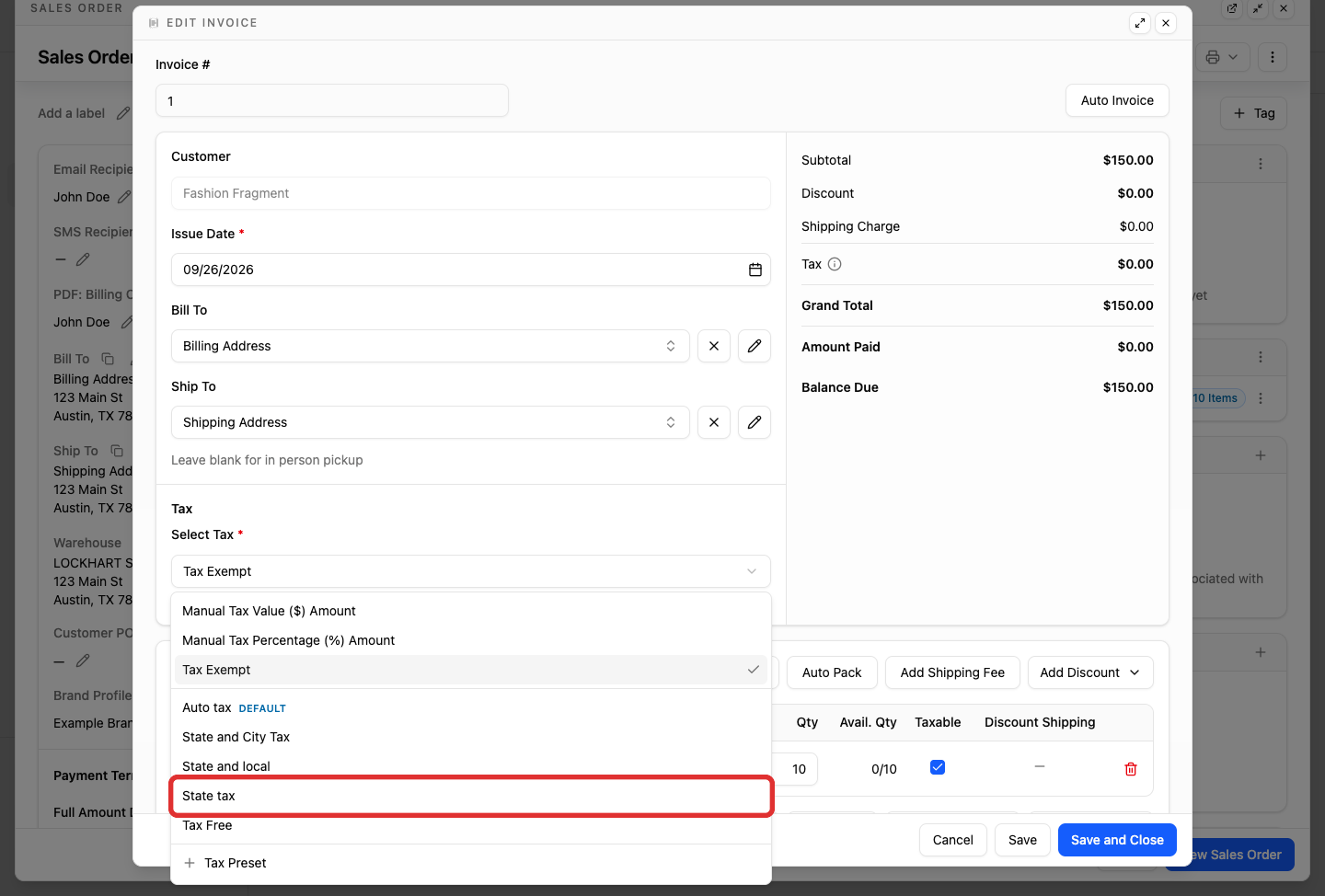
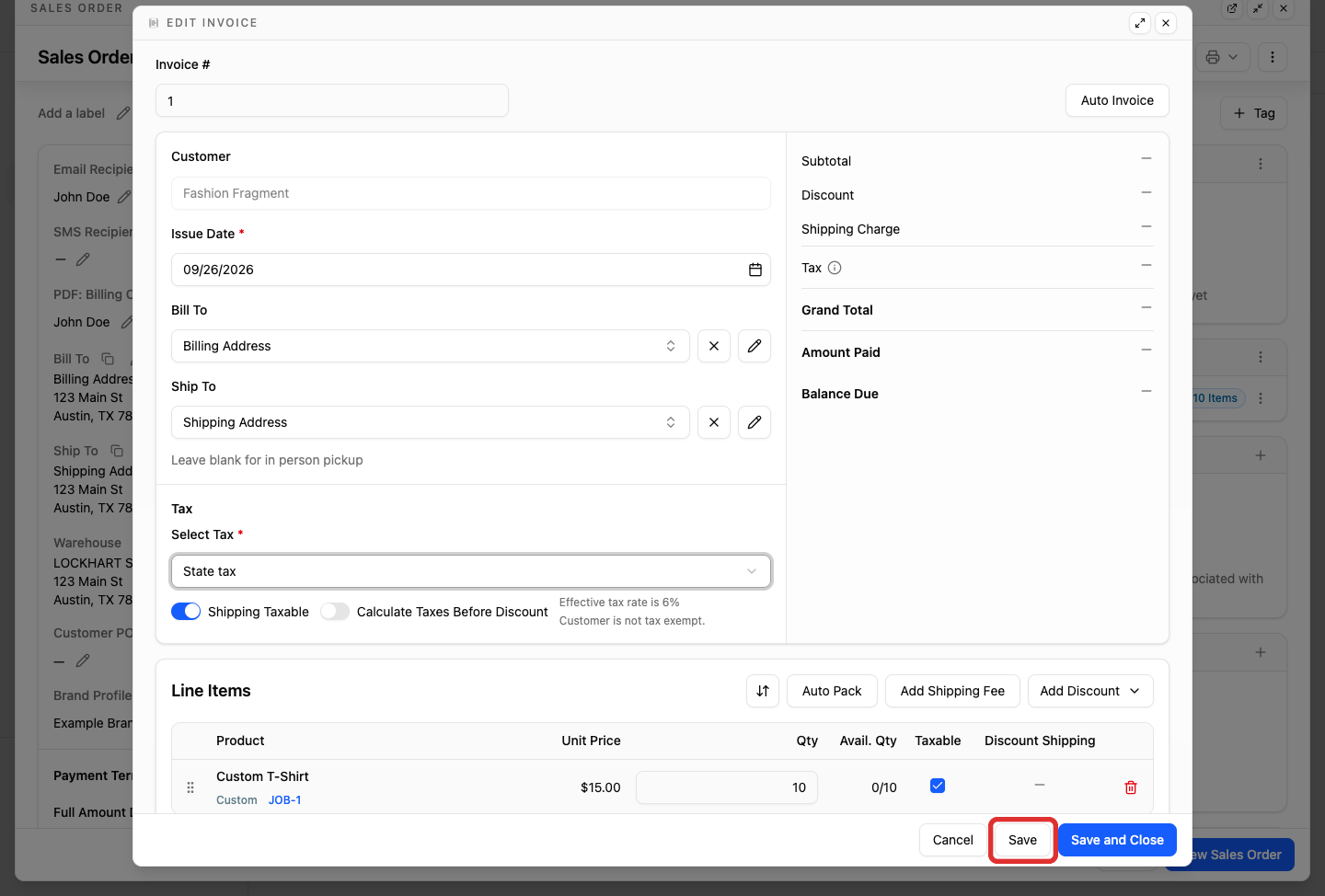
On the invoice form, open Select Tax and choose your preset.
-
Click Save.
-
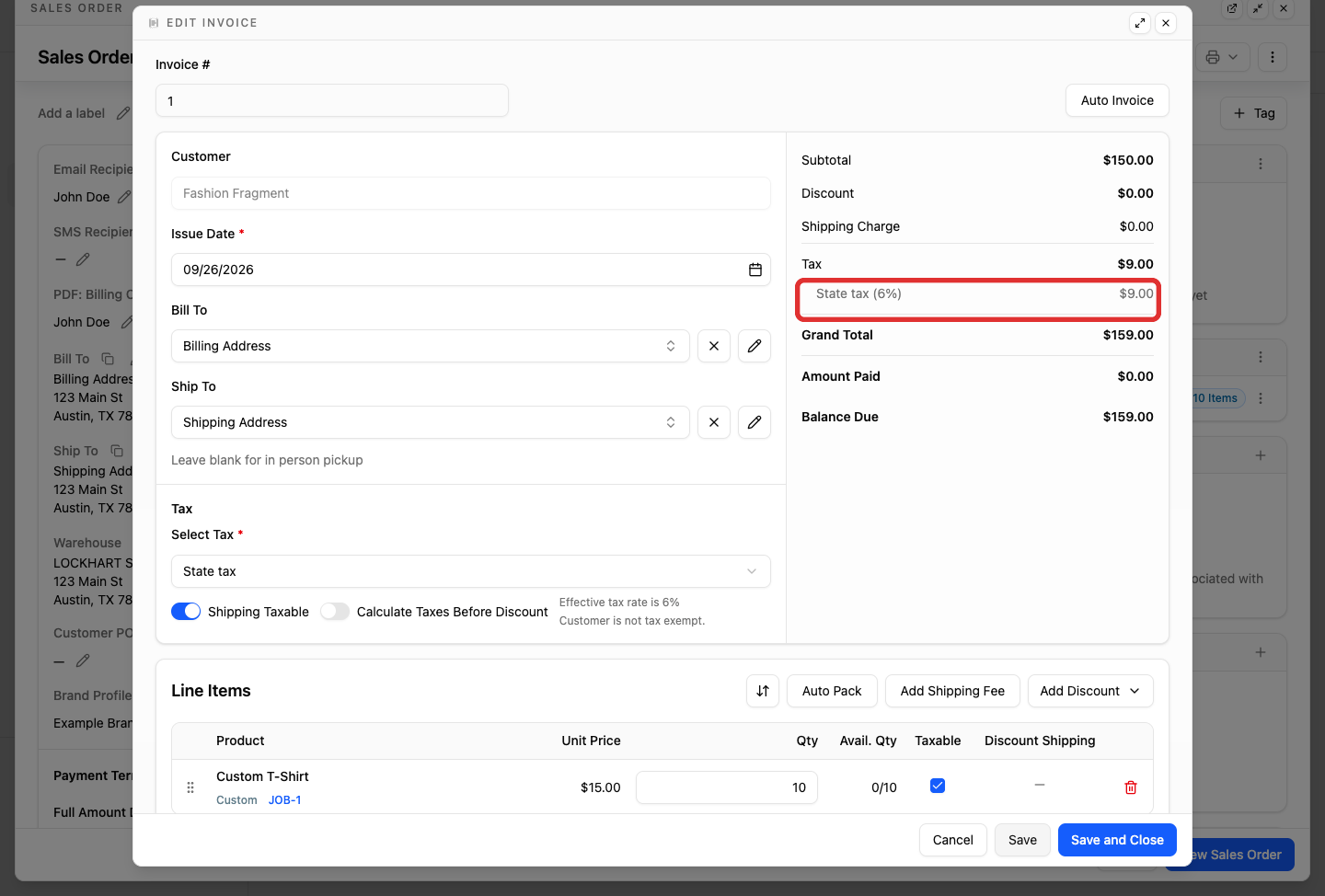
Review the calculated tax on the saved invoice.
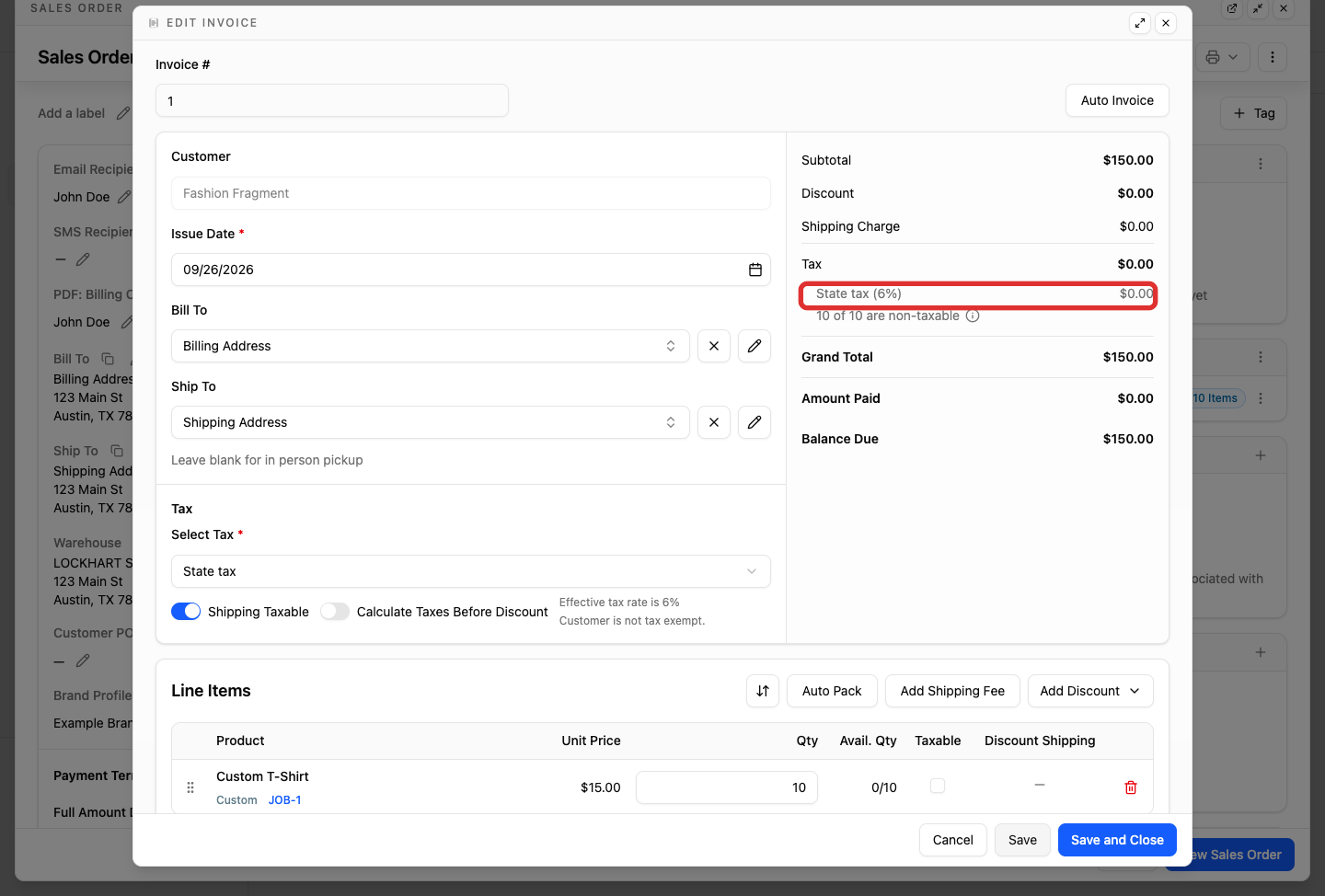
Clicking Save updates the calculations on the invoice form without closing the dialog. The invoice calculates the tax amount from your preset's percentage. Single-line presets show a single tax line (for example, a 6% state tax on a $150.00 subtotal calculates as $9.00 tax), while multi-line presets itemize each breakdown line separately.
Custom tax rates without presets
To apply a one-off tax rate or manual tax amount directly to an invoice without using a preset, see Edit Tax in an Existing Order.
Make one line non-taxable
If you closed the invoice editor after saving, go to Sales > Invoices, click More actions (three dots) on the invoice row, and select Edit.
-
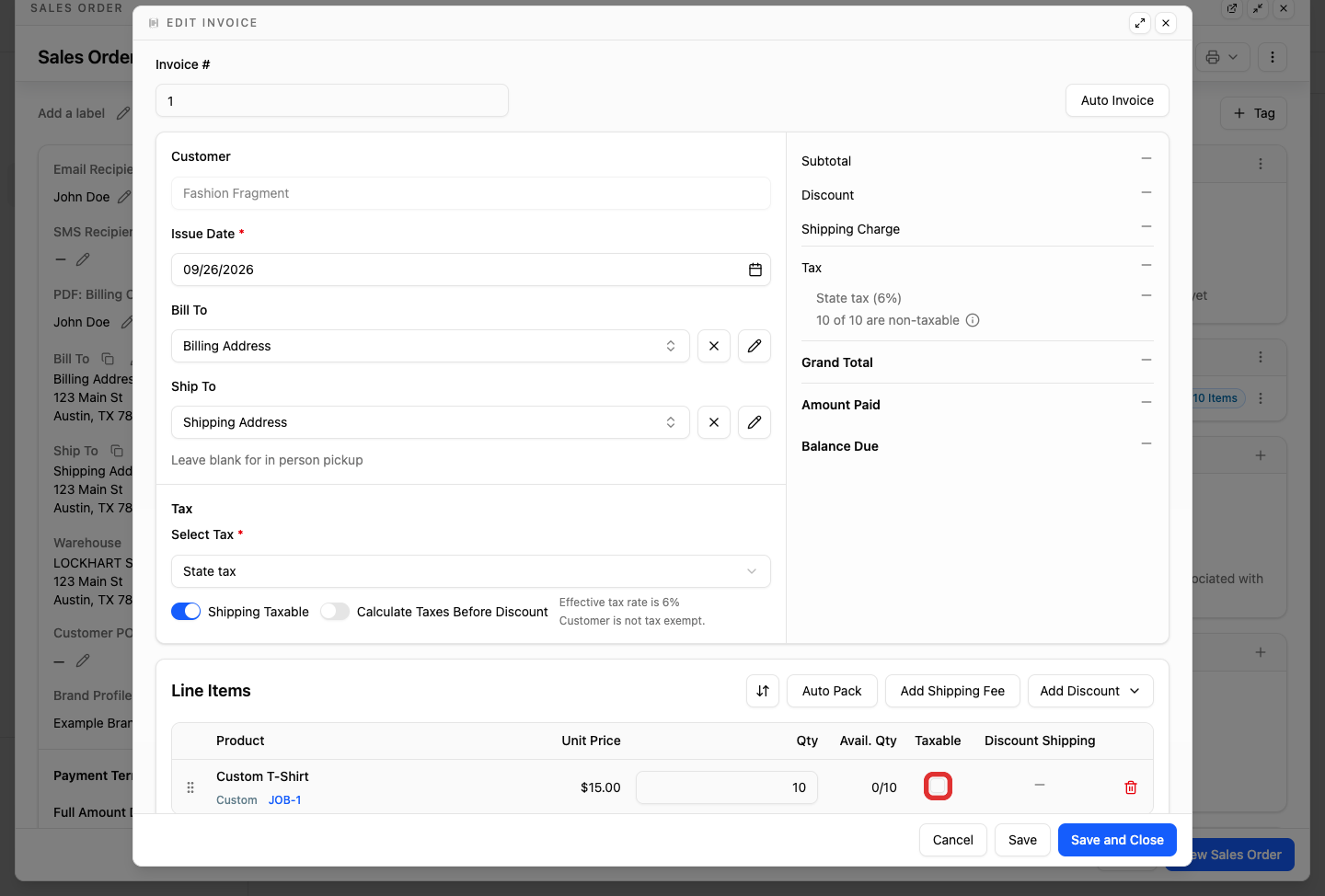
On the invoice, clear the Taxable checkbox on that line.
-
Click Save.
-
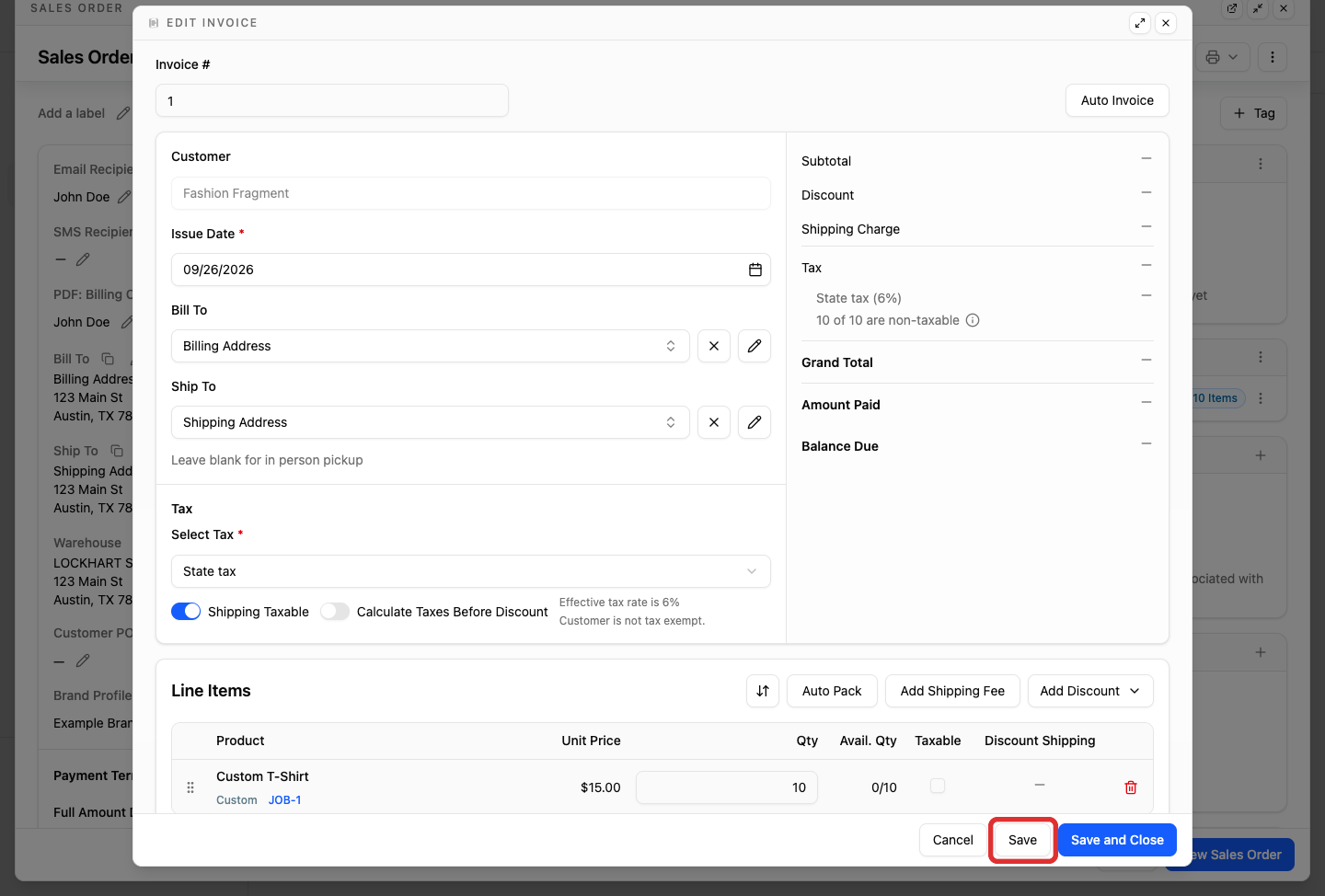
Review the updated invoice tax total.
The invoice excludes tax for that line item. When all items on an invoice are non-taxable, the tax total drops to $0.00.
-
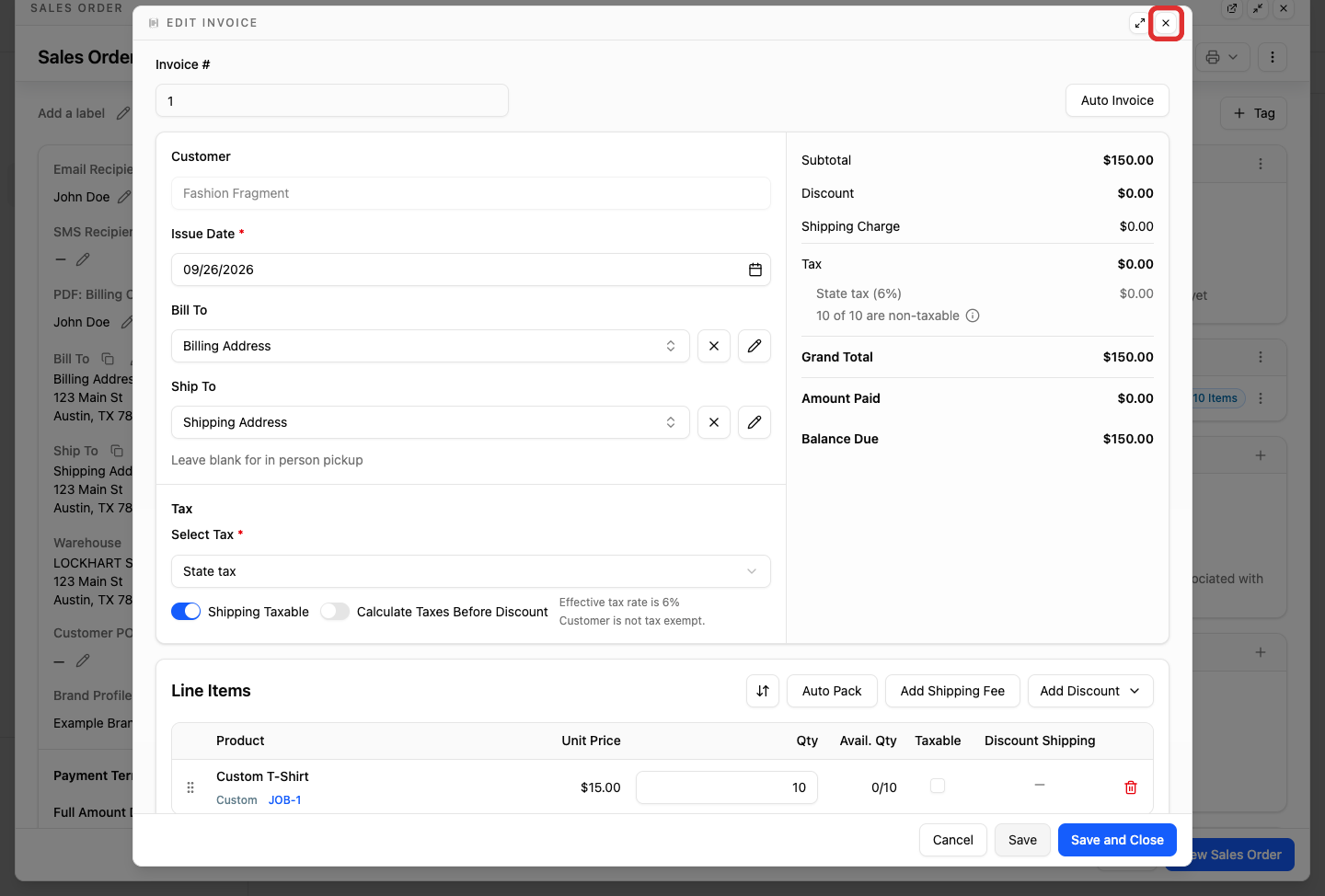
Click Close to dismiss the invoice dialog.
Mark a customer tax exempt
To set customer tax exemption, go to Sales > Customers, click More actions (three dots) on the customer row, and select View.
-
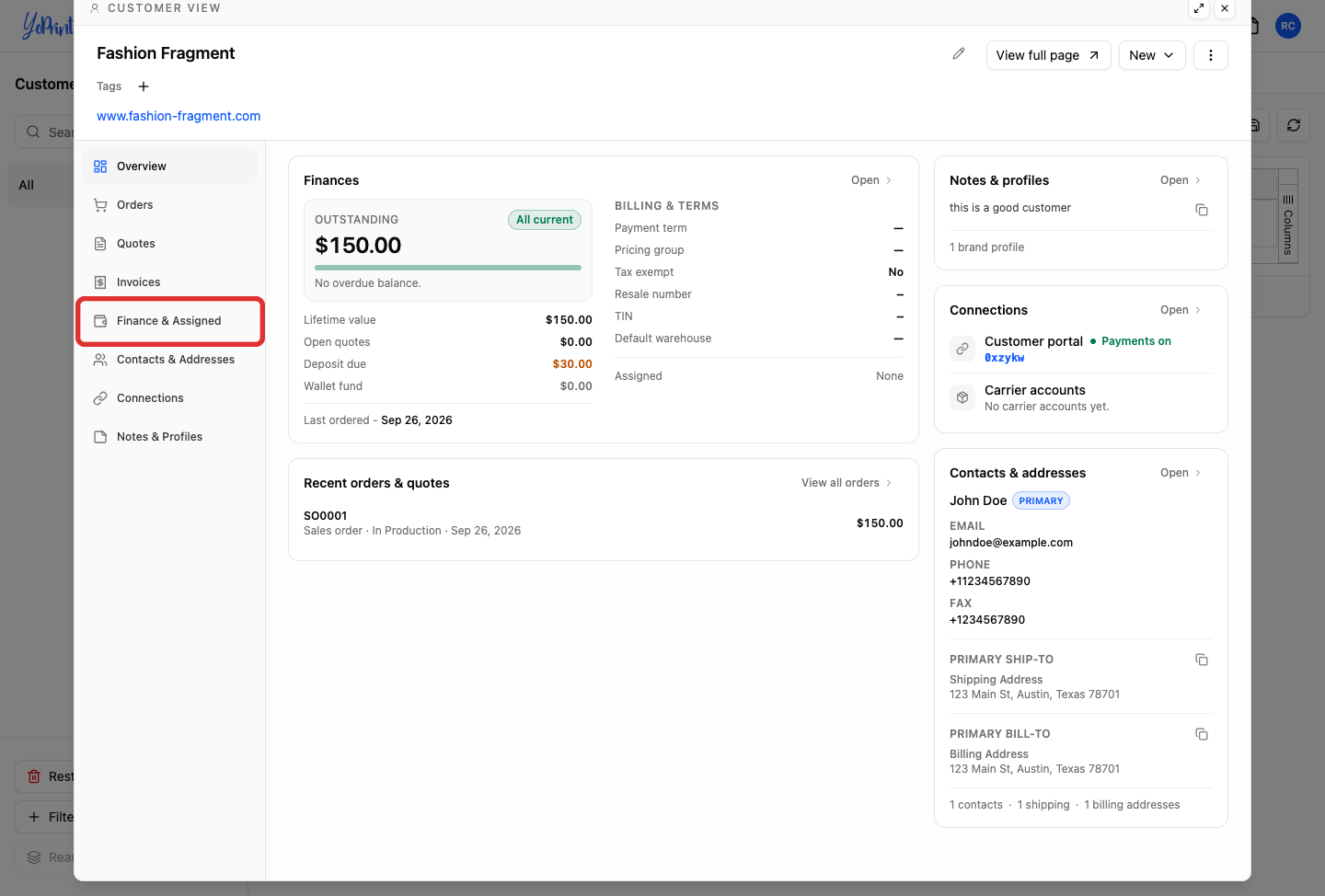
On the customer profile, click Finance & Assigned.
-
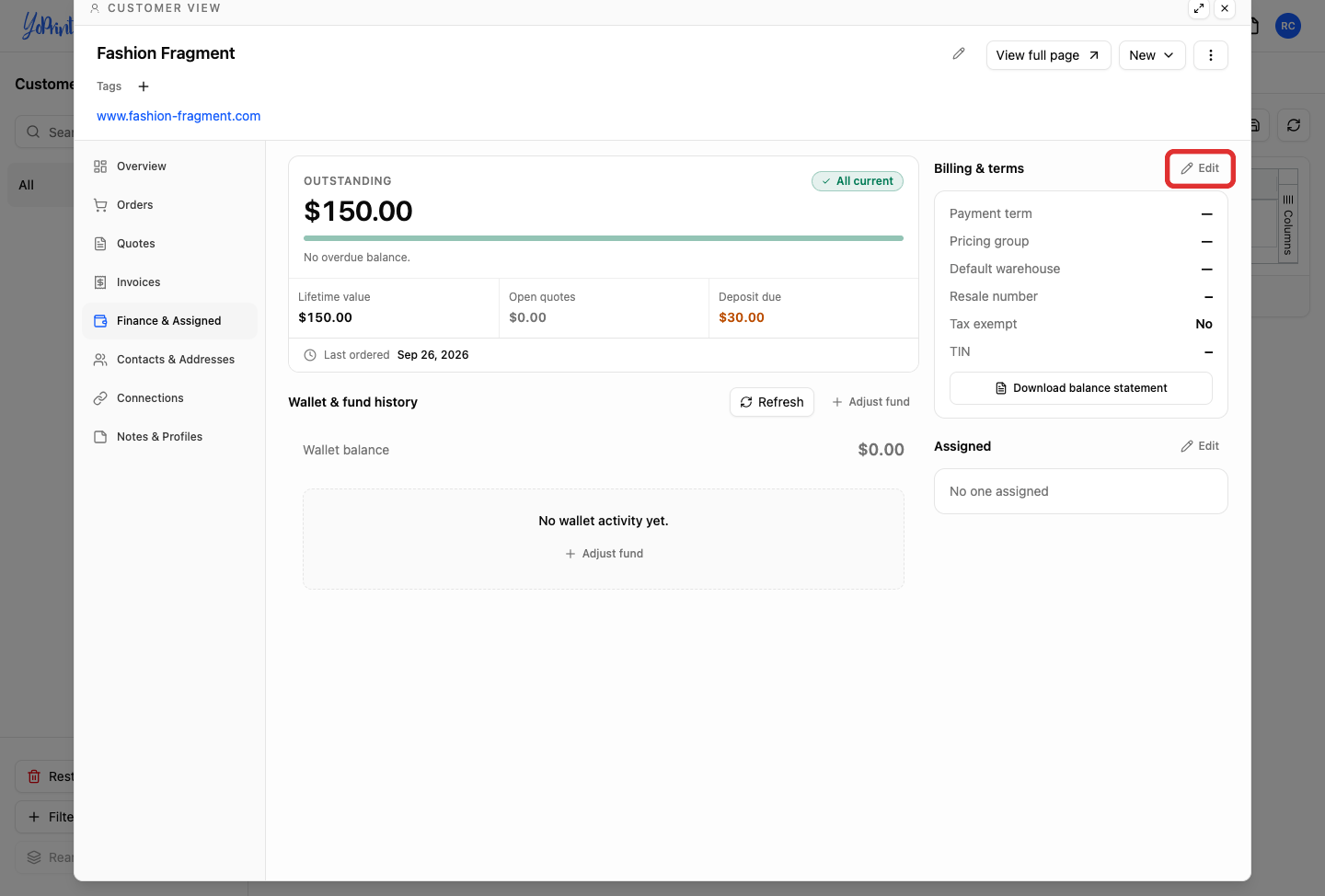
Beside Billing & terms, click Edit.
-
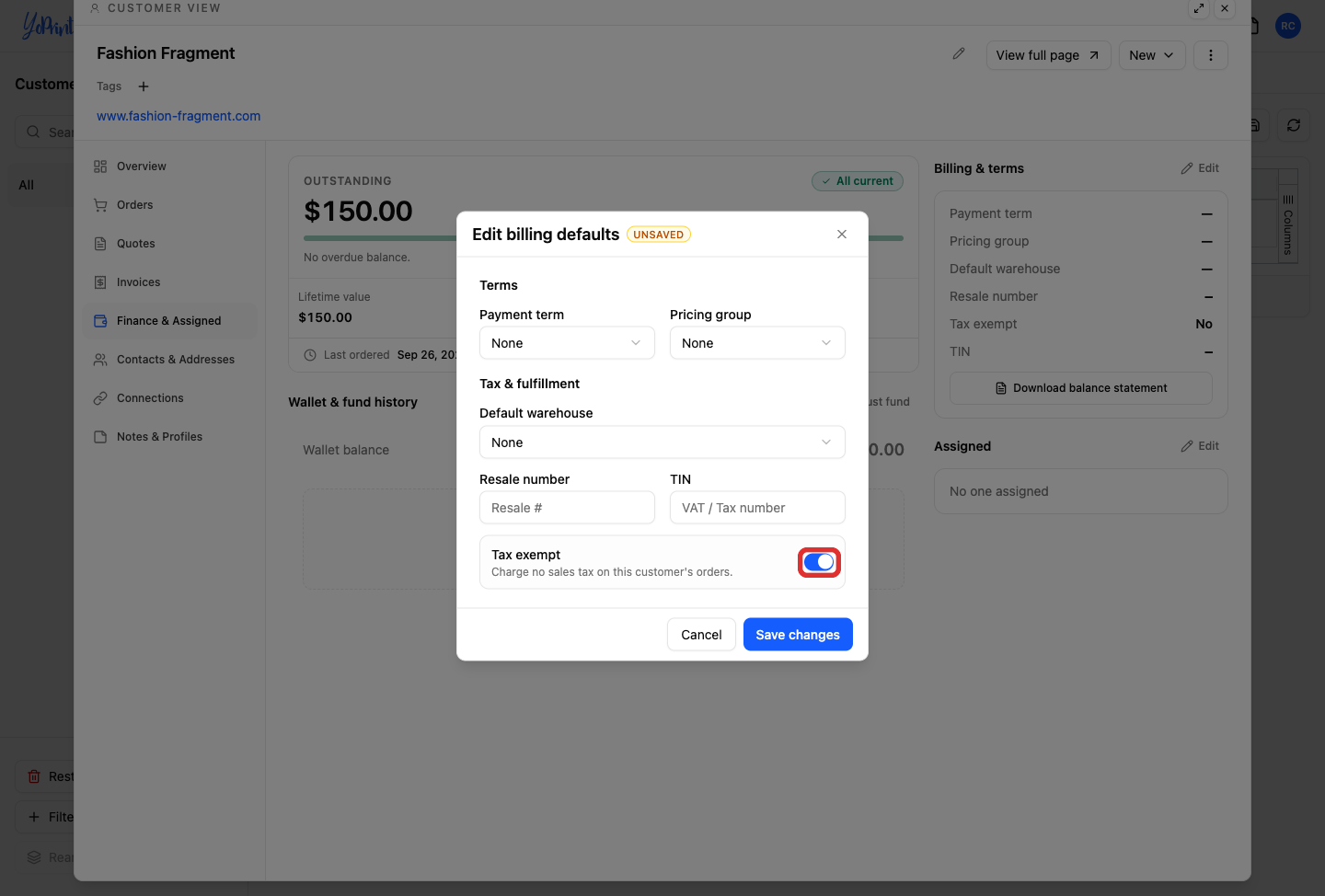
Turn on the Tax exempt toggle.
-
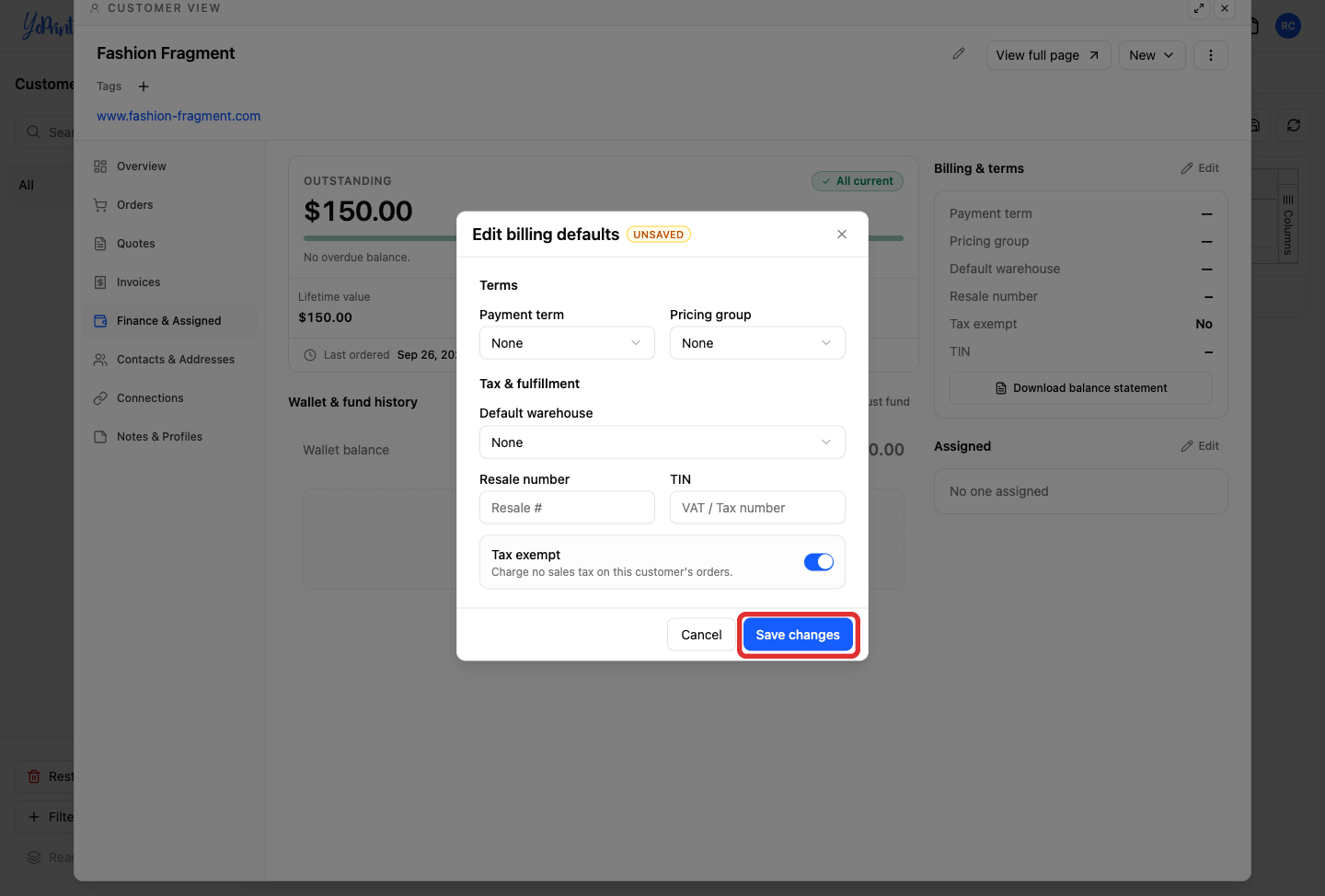
Click Save changes.
-
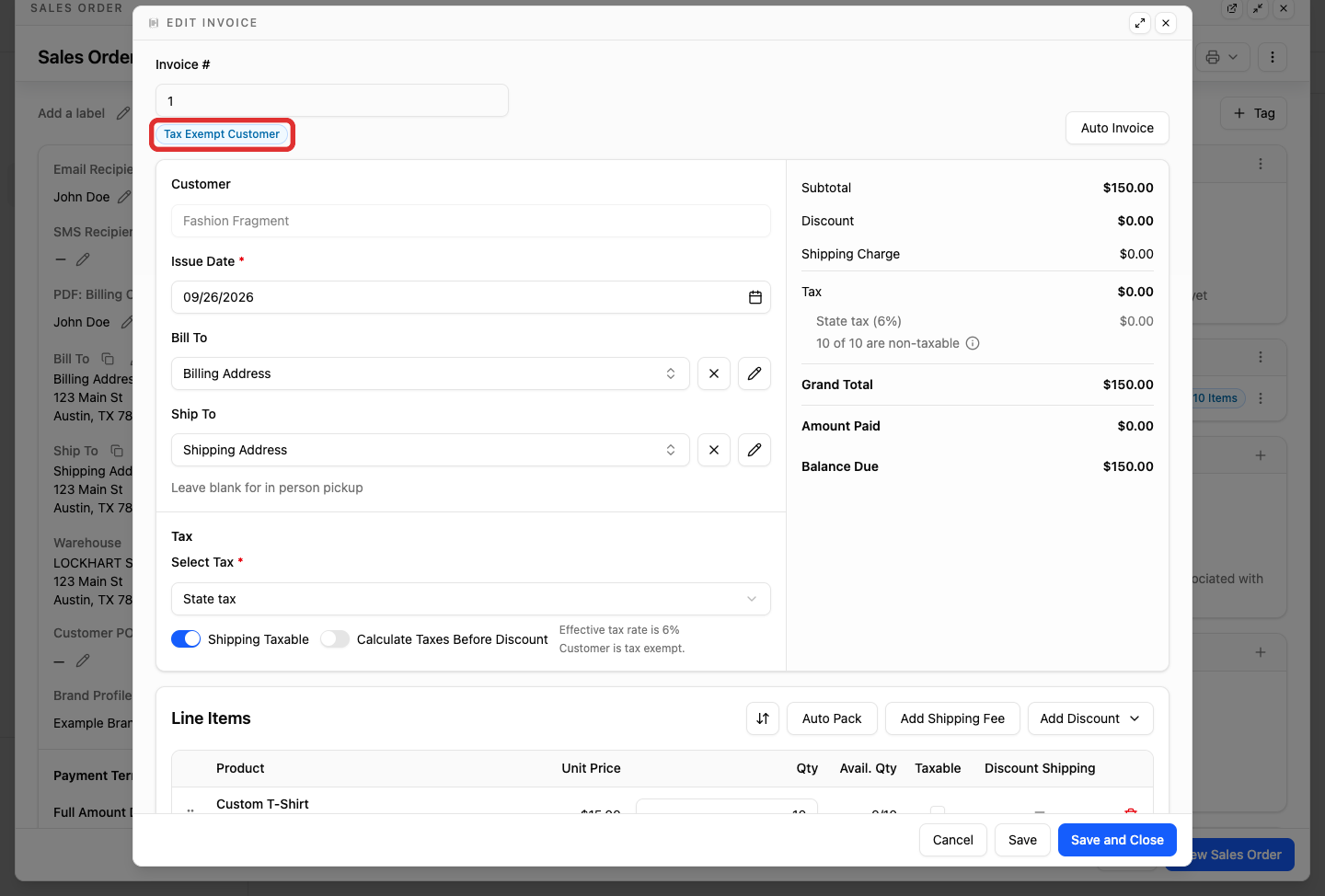
Check the invoice to confirm tax exemption.
In the invoice editor, confirm that the customer is tax exempt and no sales tax is charged, setting the tax total to $0.00.
Existing invoices require manual updates
Marking a customer tax exempt applies automatically to all future sales orders and invoices. Any invoices created before this change retain their previous tax settings. To update tax on an existing invoice, open it in the invoice editor and choose Tax Exempt, or see Edit Tax in an Existing Order.