Sales Order Page Overview
In this article
Browse your sales orders
The Sales Orders page displays all confirmed and published sales orders created across your shop; draft orders are excluded from the default view until you search for them or filter by draft status. The table summarizes key order details at a glance, including order IDs, customer names, labels, dates (Prod. Due, Ship by Date, and In Hands Date), deposits, subtotals, totals, and current status.
-
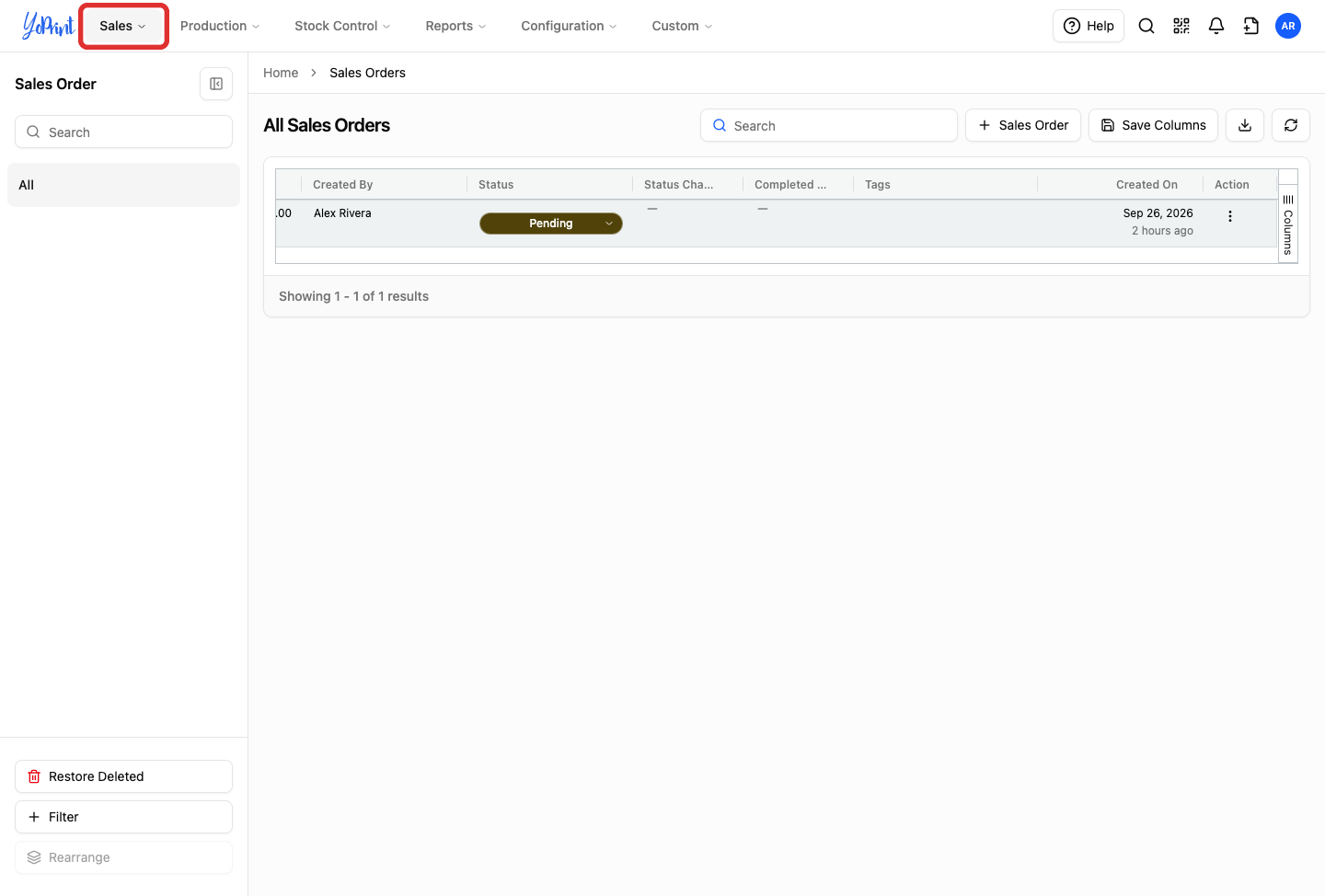
Go to Sales > Sales Orders to open the overview table.
-
Use the left sidebar to switch between saved views, or click + Filter to create a custom filter by status or date.
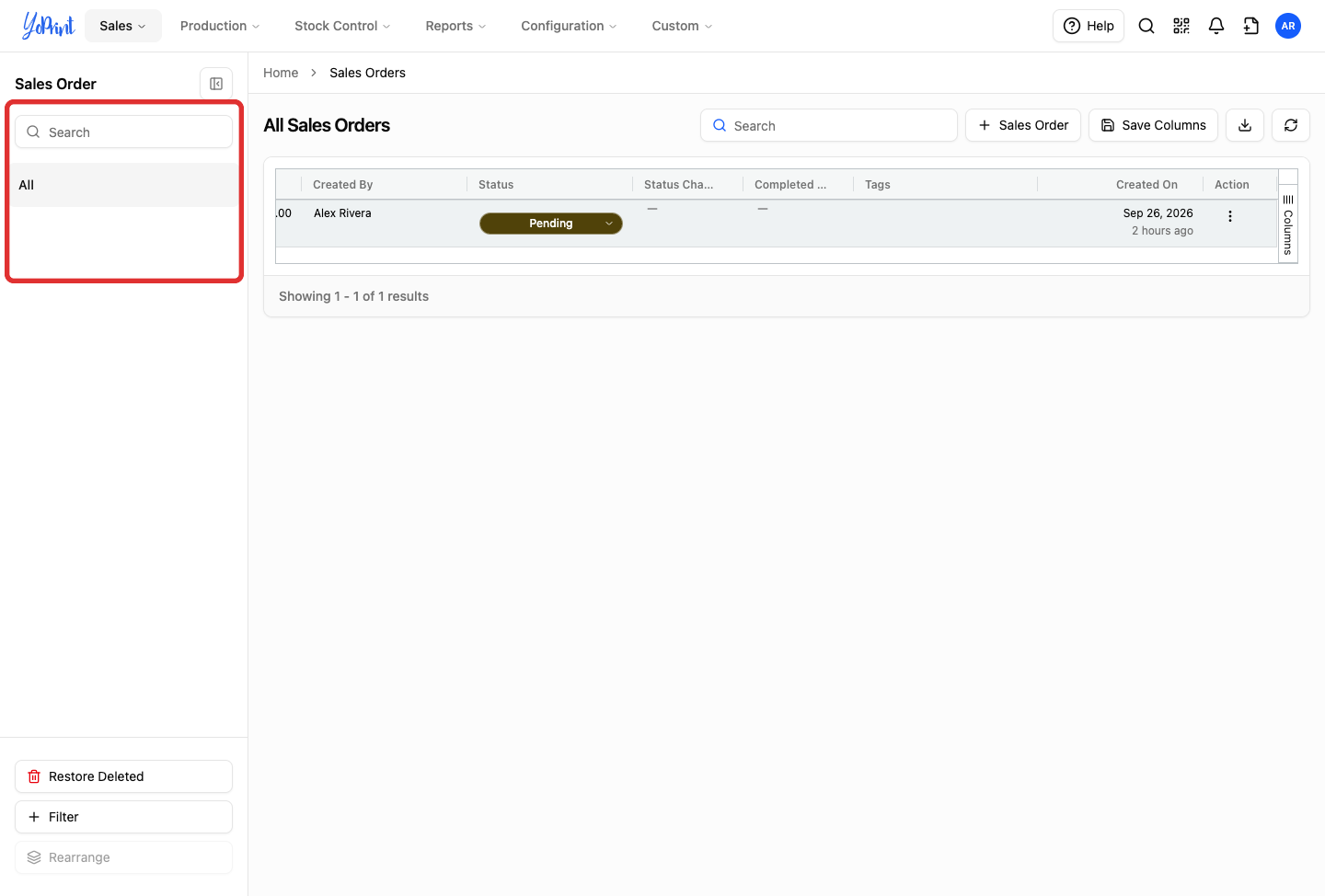
The sidebar defaults to All sales orders. When you create and save custom views, they appear in this list for quick access. To learn more about creating saved filters, see Managing Filters.
-
Type an order ID or customer name in the table search box to search across all shop sales orders (including drafts) in Search Results.
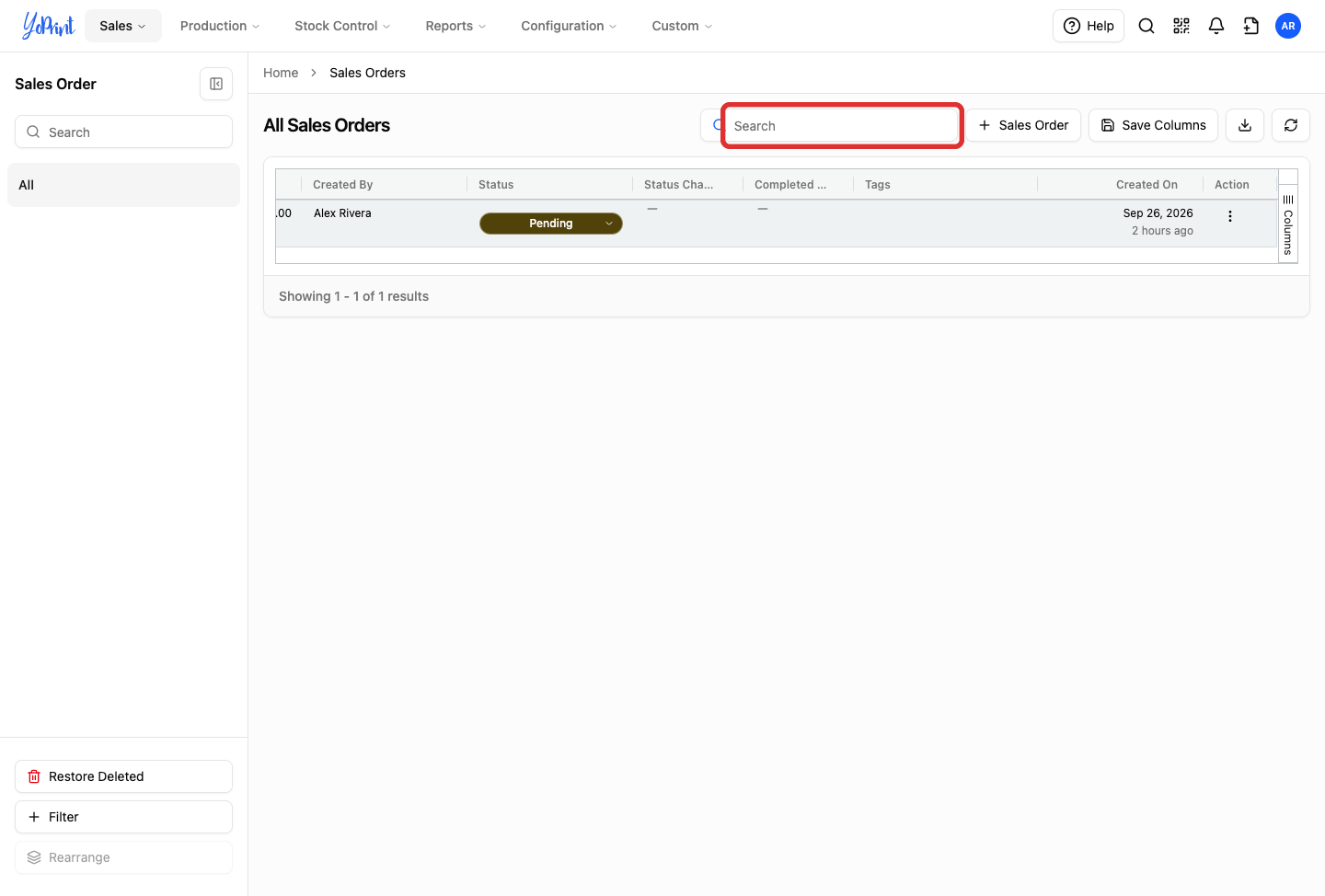
Searching queries the database across all orders and displays matching records, including unpublished drafts.
-
Click the search icon in the top navigation bar (or press
Shifttwice) to search across all orders, quotes, and customers.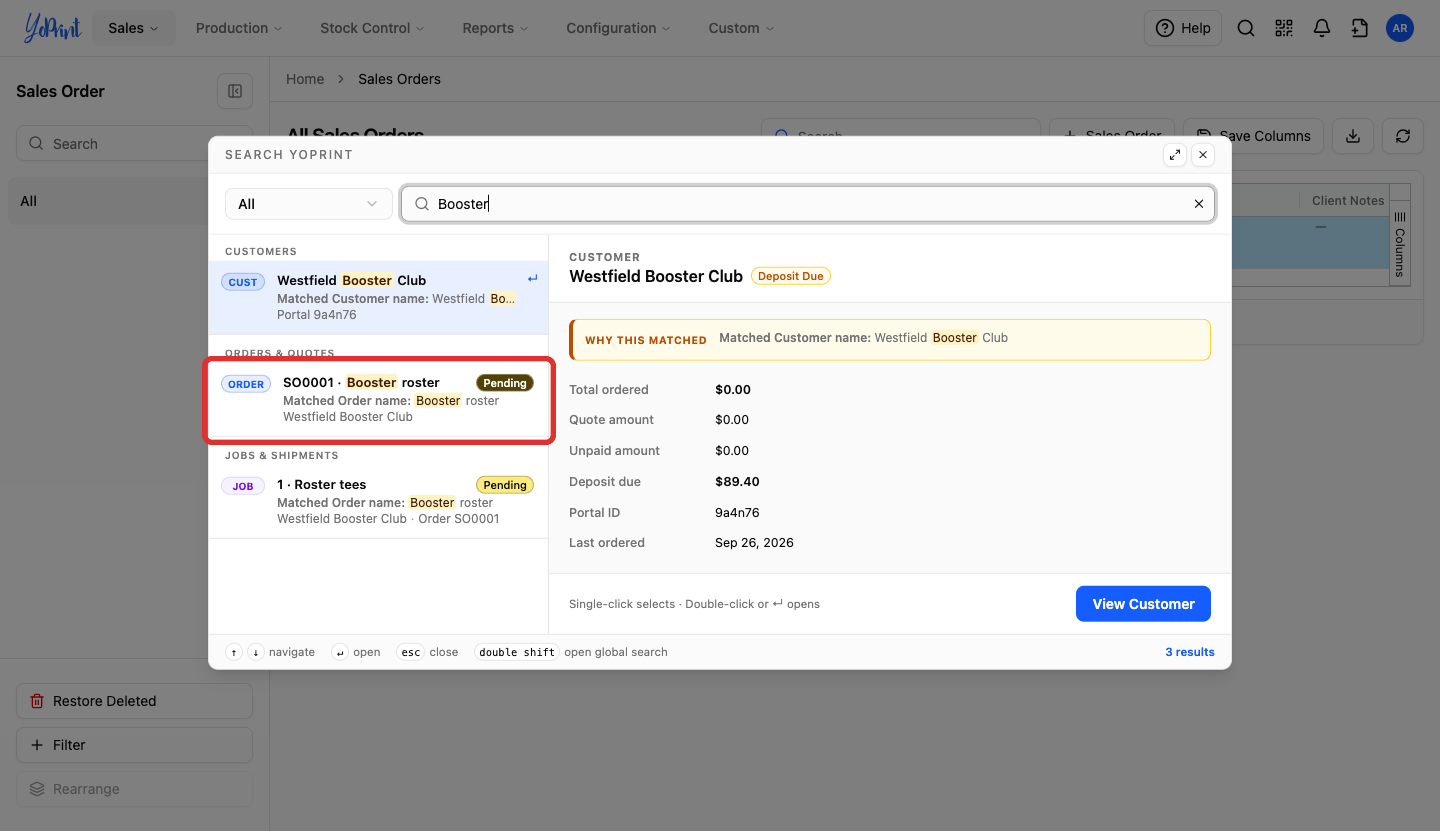
To learn more about searching across your account, see Use the Global Search Feature.
Click the download icon above the table to export your sales orders as a CSV file, or click the refresh icon to reload the latest table data.
Use bulk actions
-
Select the checkbox next to one or more sales orders in the table to display bulk options.
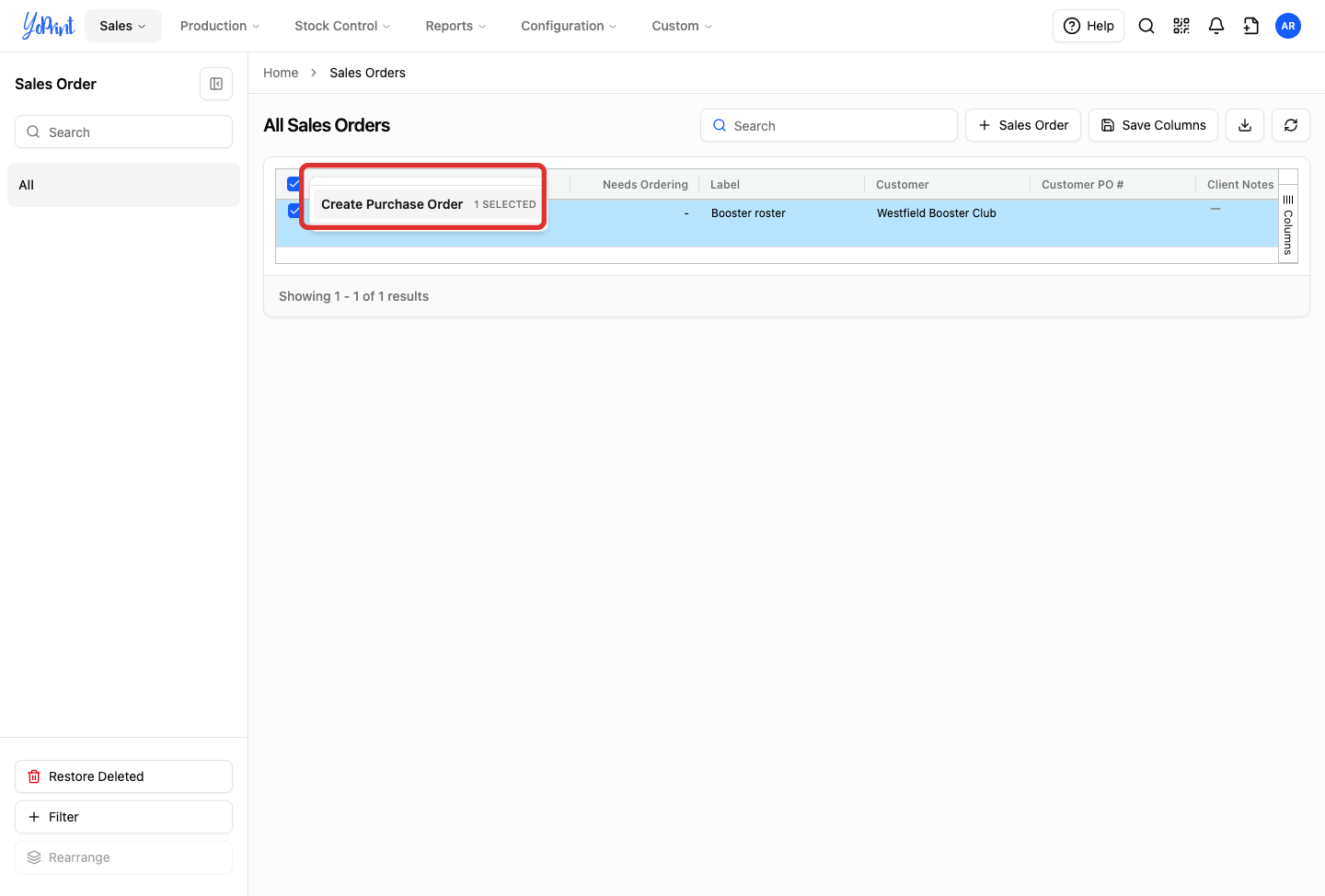
The floating action bar displays the number of selected orders and available actions. By default, click Create Purchase Order to generate purchase orders for the selected orders. If your shop has configured QuickBooks integration or custom PDF templates, additional actions for syncing and exporting appear in this bar.
Customize table columns
Customize your table columns to highlight the order details your team uses most frequently.
-
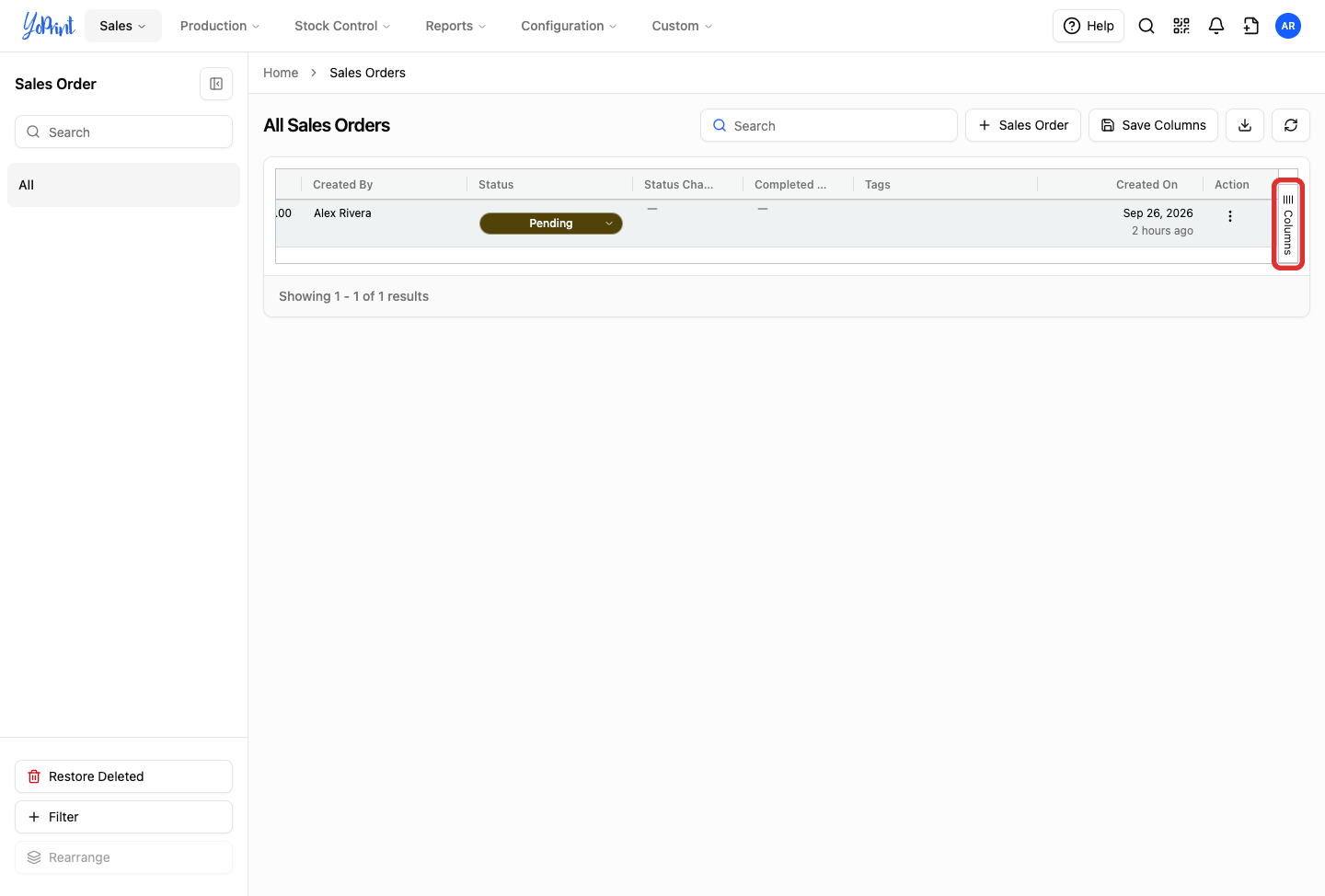
Click Columns on the right edge of the table to select which columns to show or hide.
-
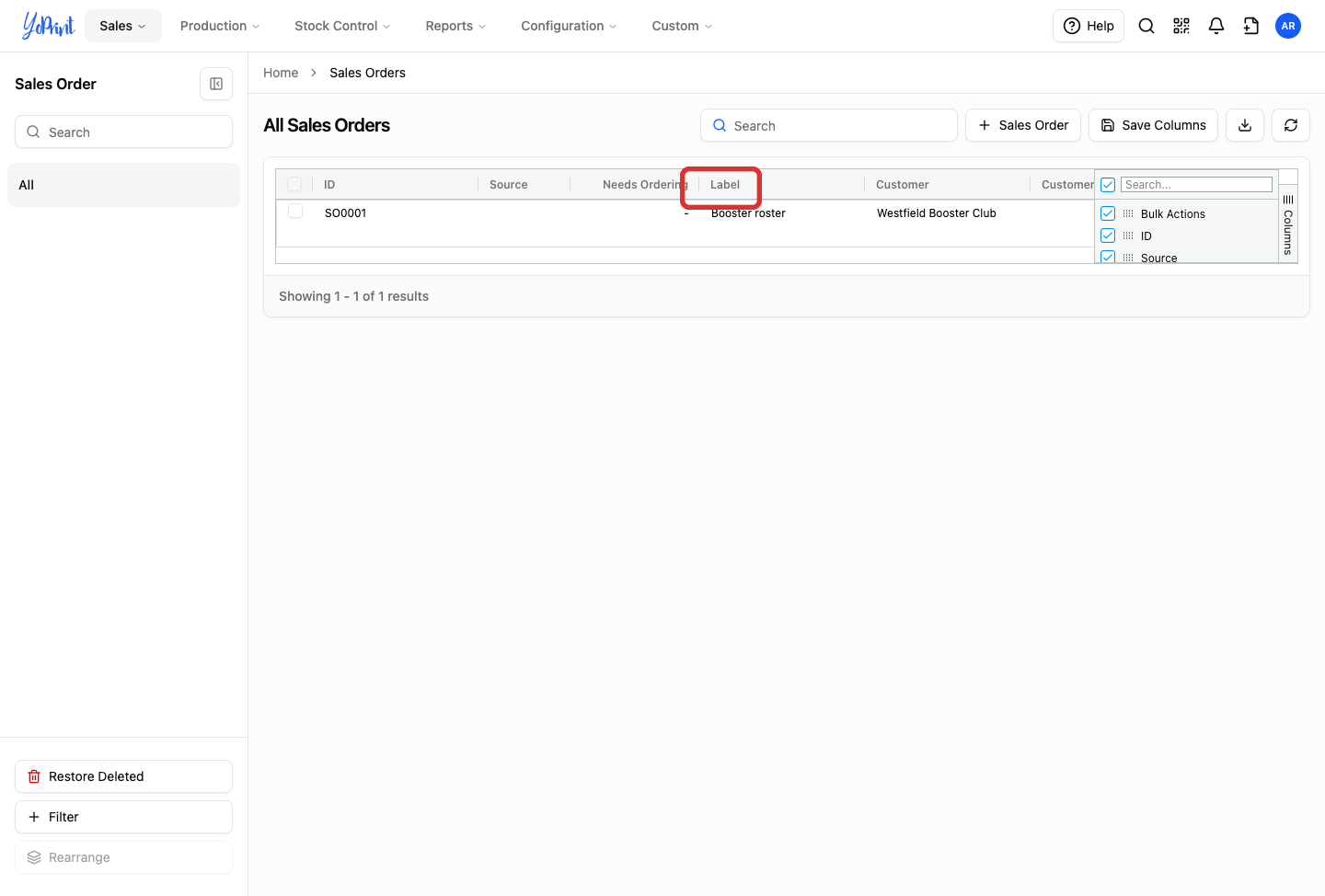
Drag and drop column headers to rearrange them into your preferred order.
-
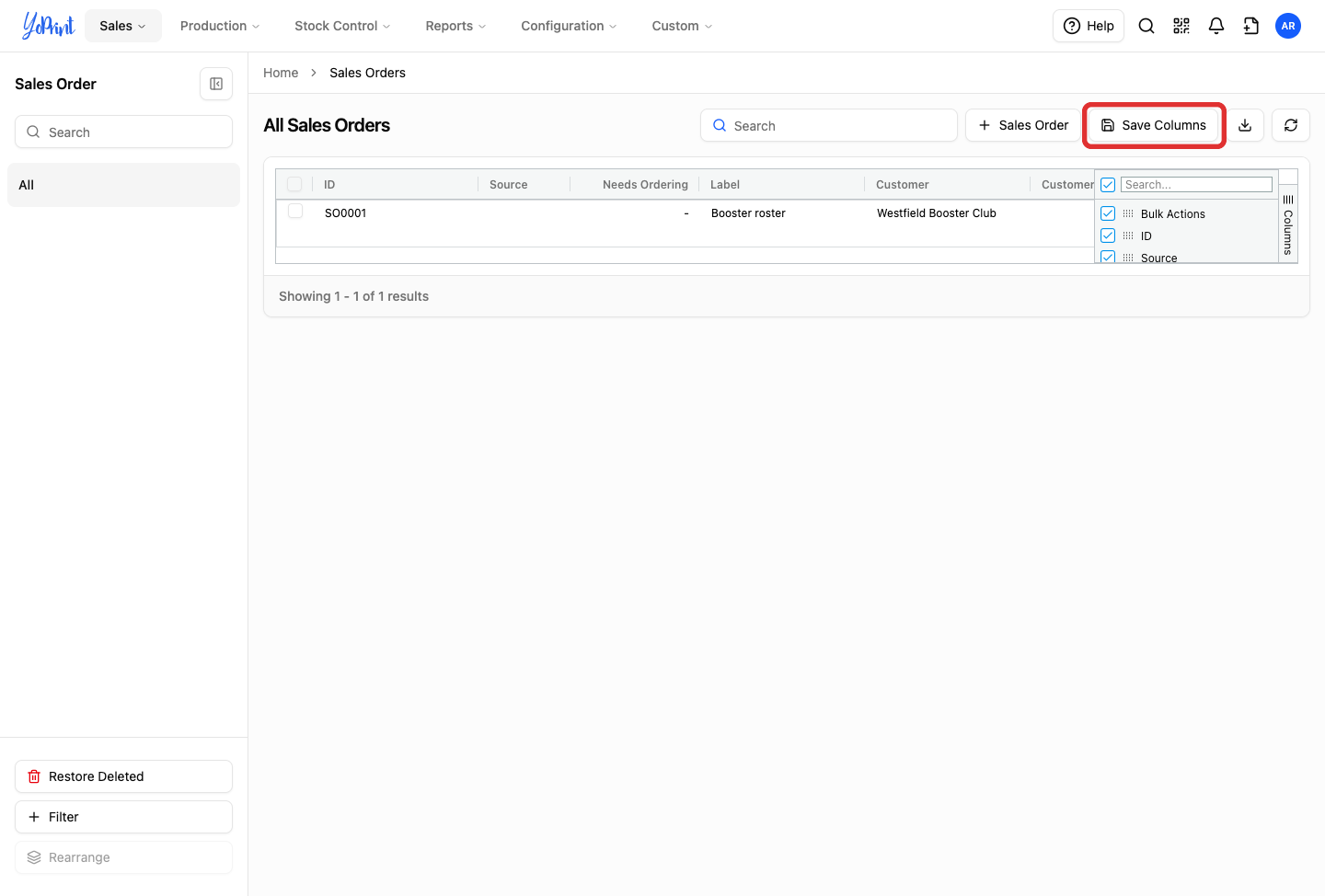
Click Save Columns above the table to save your column layout to your user profile.
Choose how sales orders open
By default, opening an order or quote displays it in a slide-out preview drawer so you can inspect details without losing your place. You can customize how existing sales orders and quotes open across three separate areas: global search, sales order lists, and links from related records.
Preferences save per user and per team, applying only to your personal login.
-
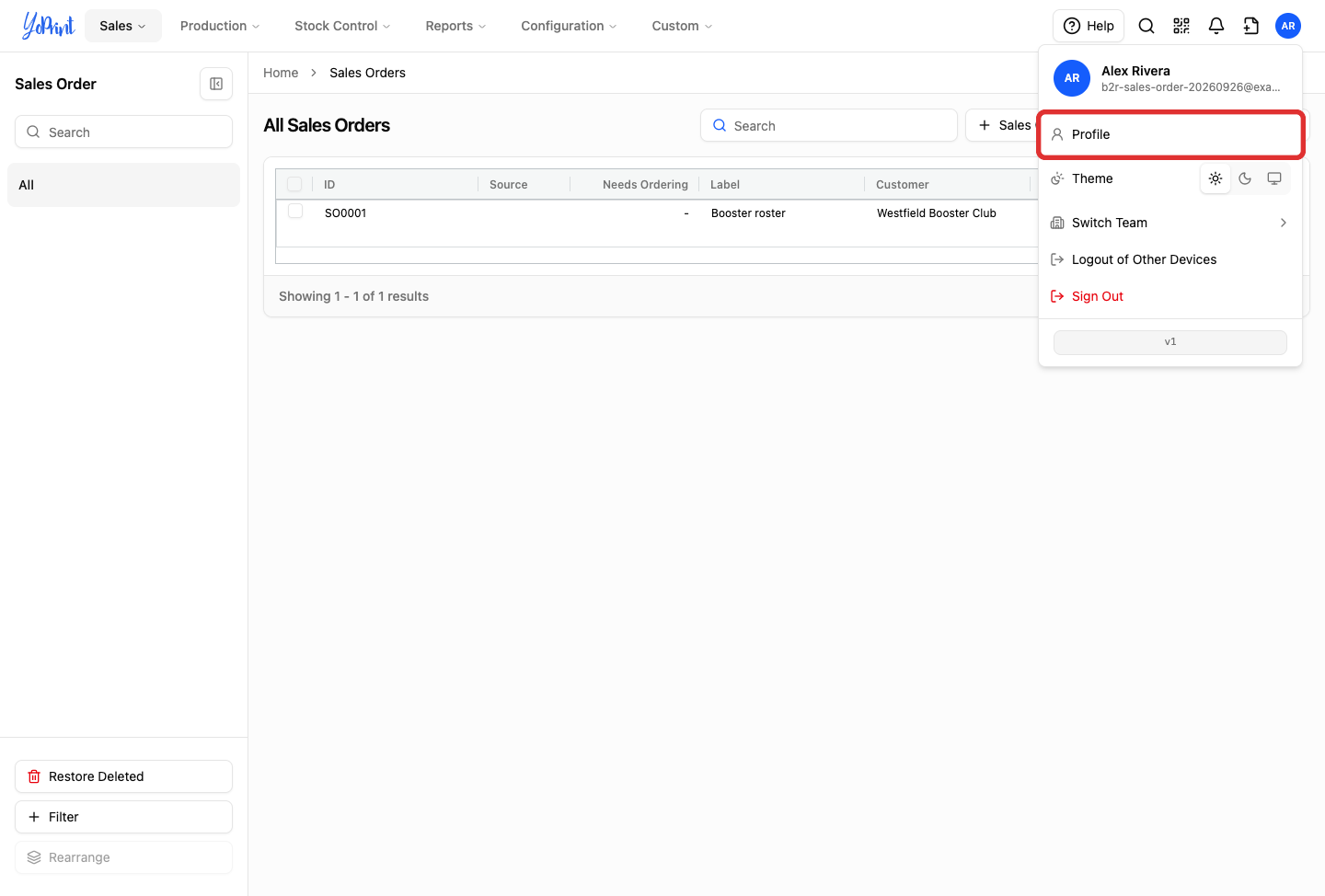
Click your profile avatar in the top navigation bar and select Profile.
-
Scroll to the Sales Order Opening section.
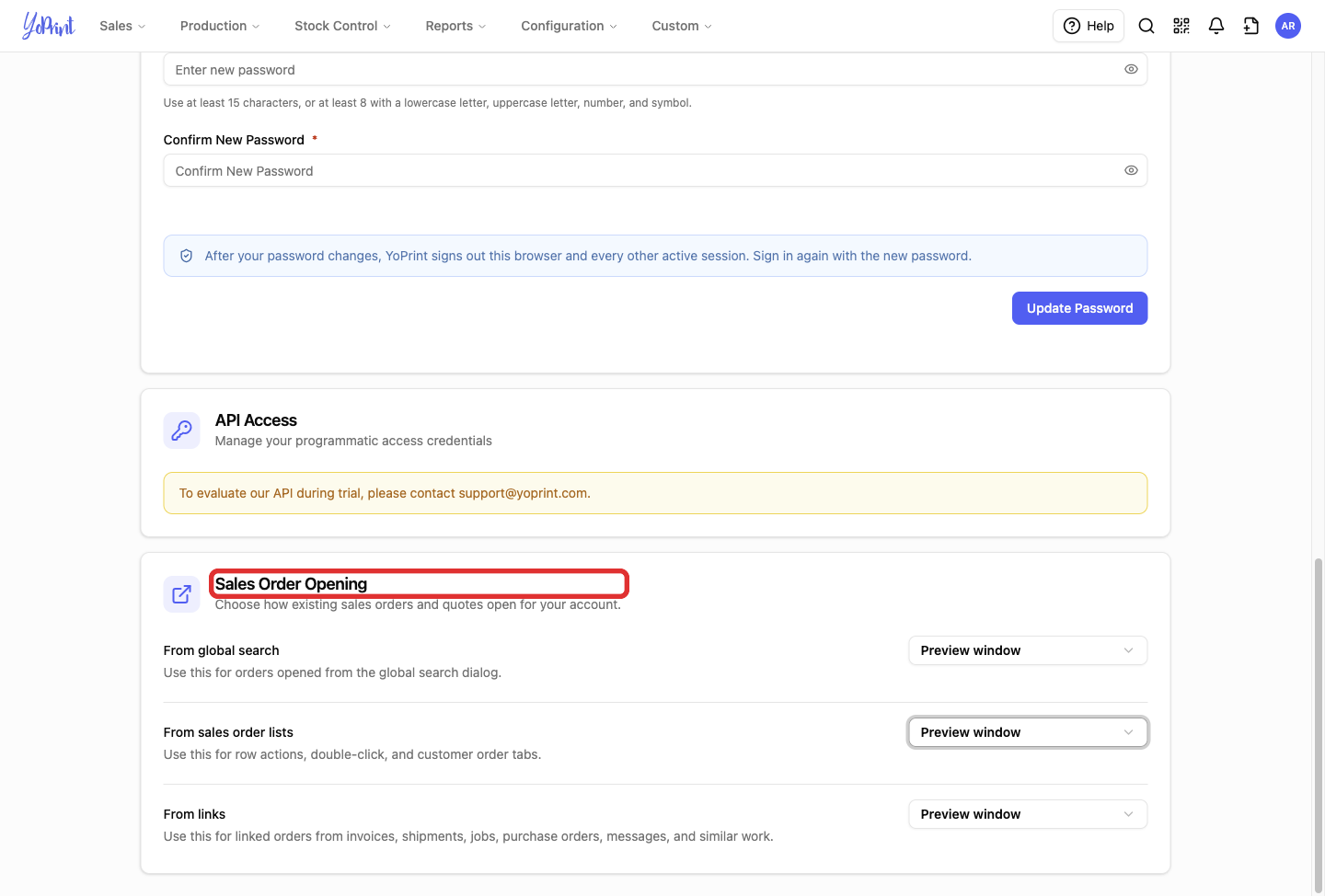
These preferences govern how both sales orders and quotes open across your account.
-
Choose your preferred opening behavior for From global search, From sales order lists, and From links:
- Preview window: opens a slide-out drawer displaying order details alongside the current list.
- Full page: opens the complete order page in your current browser tab.
- New tab: opens the order in a separate browser tab.
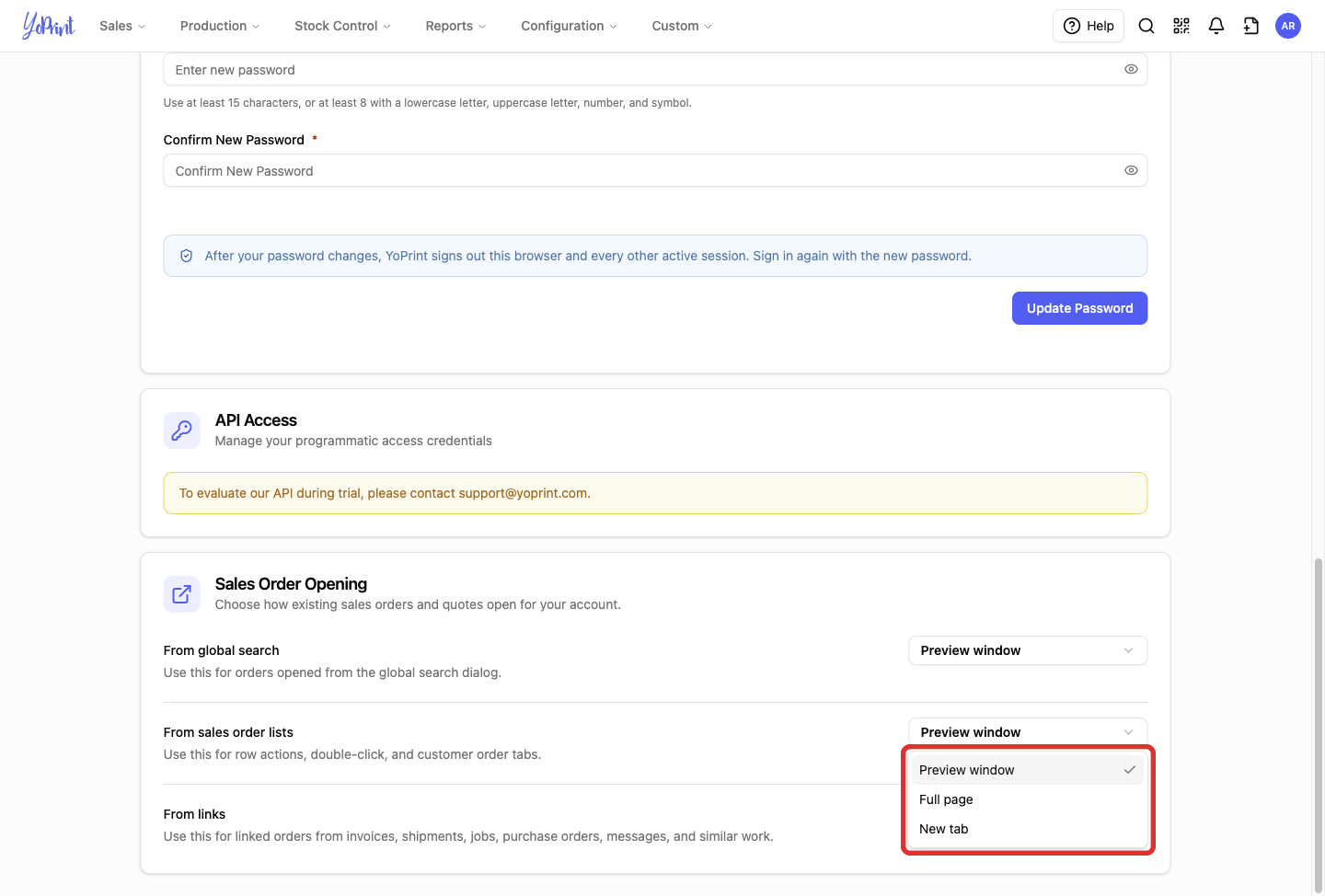
Selecting a dropdown option saves your preference automatically without needing a save button. From links applies when opening an order from related records such as invoices, shipments, jobs, purchase orders, or messages.
Opening preferences apply only when opening existing orders and quotes inside YoPrint. Direct URL visits, browser bookmarks, barcode scanner redirects, and clicking + Sales Order to start a new order always open in a full page.
Work with the preview window
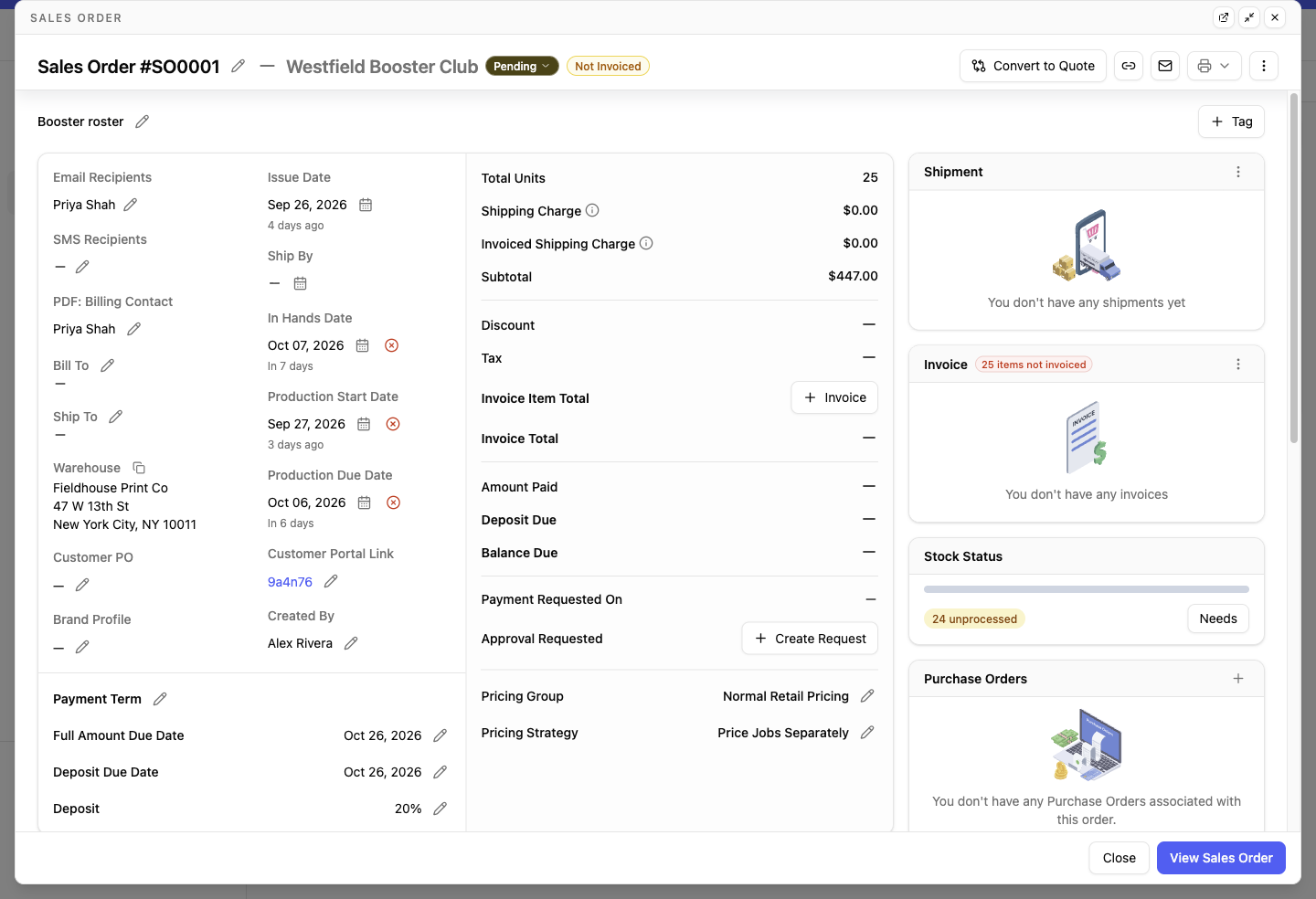
The preview drawer displays jobs, line items, totals, customer contact information, and shipments directly over the table.
-
Double-click an order row (or click ⋮ and select View) to open the preview drawer.
-
Click Close to return to your list.
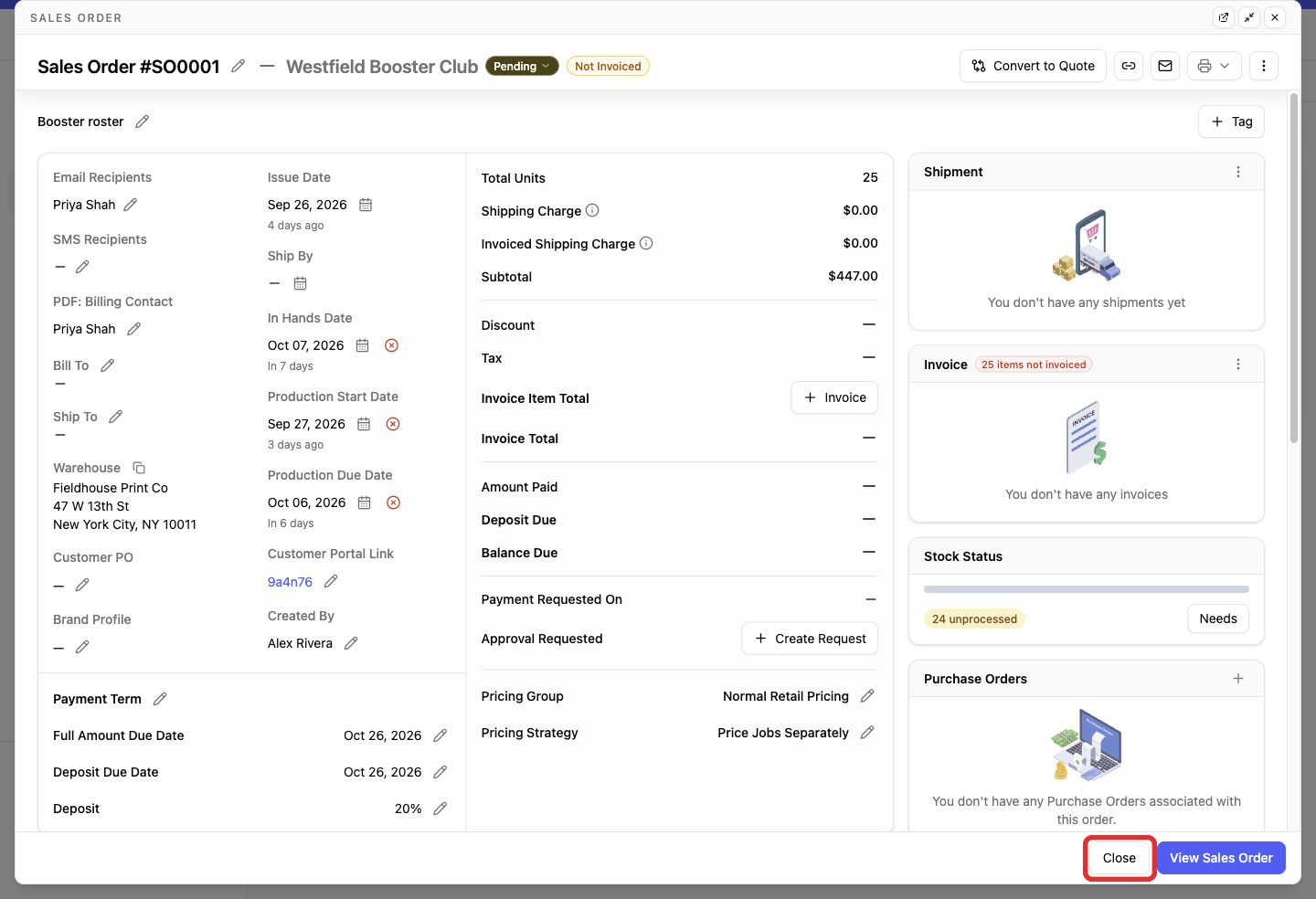
Click View Sales Order in the preview drawer to open the full order details page in your browser tab.
Create a new sales order
-
Click + Sales Order above the table to start a new order draft.
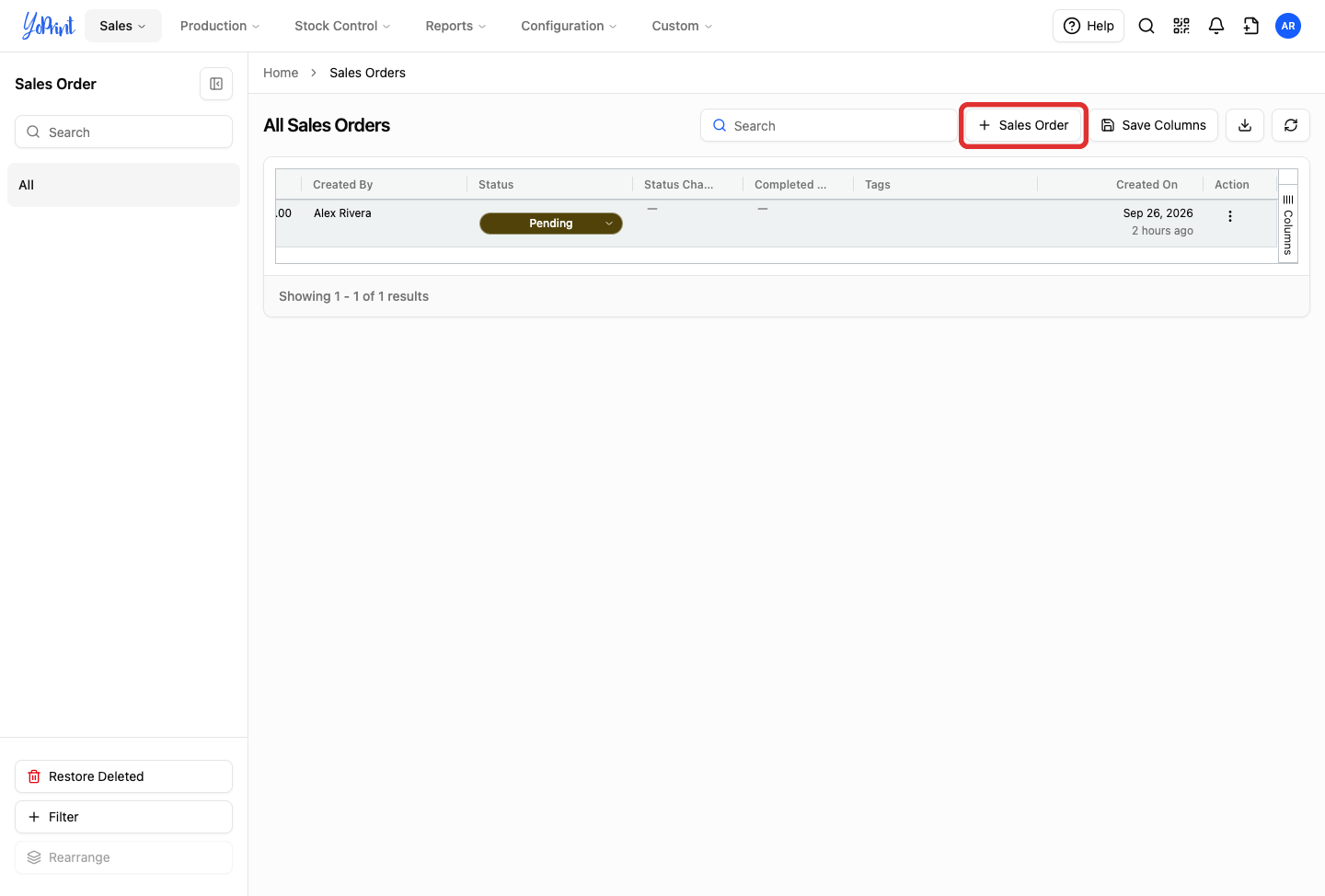
To complete the order setup, see Creating a Sales Order for step-by-step instructions on choosing a customer, adding jobs and products, and publishing the order.
