Setting Up Your Account
In this article
Set up your company details, locations, team access and payment options before your first order. Start on the YoPrint dashboard.
Add your company details
The company name, contact details and address you enter here are what customers see, on quotes, invoices, emails, shipping labels and the customer portal, so they should be the ones you want customers to use.
-
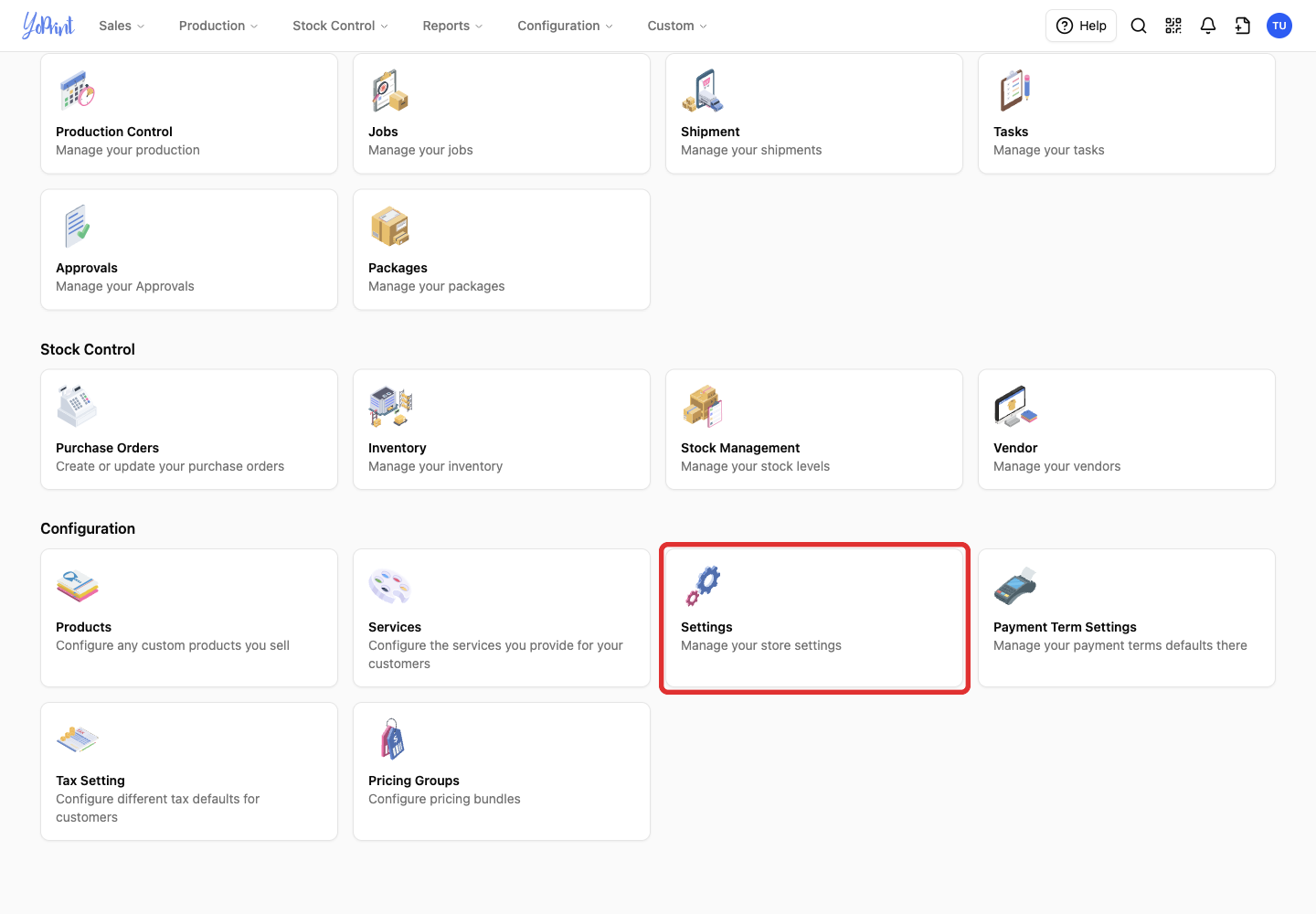
On the dashboard, scroll down to the Configuration section and click the Settings card.
-
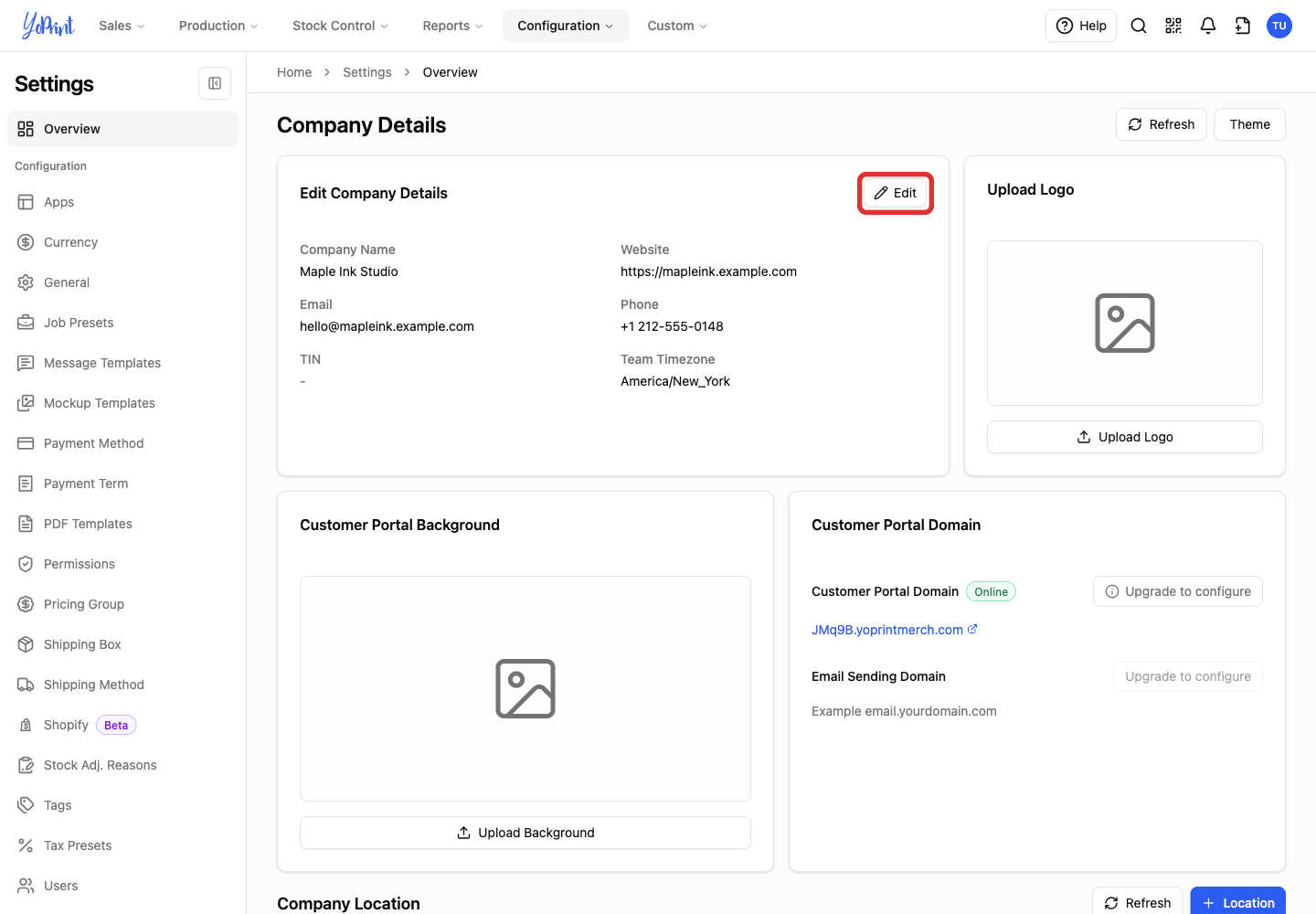
On Company Details, click Edit.
-
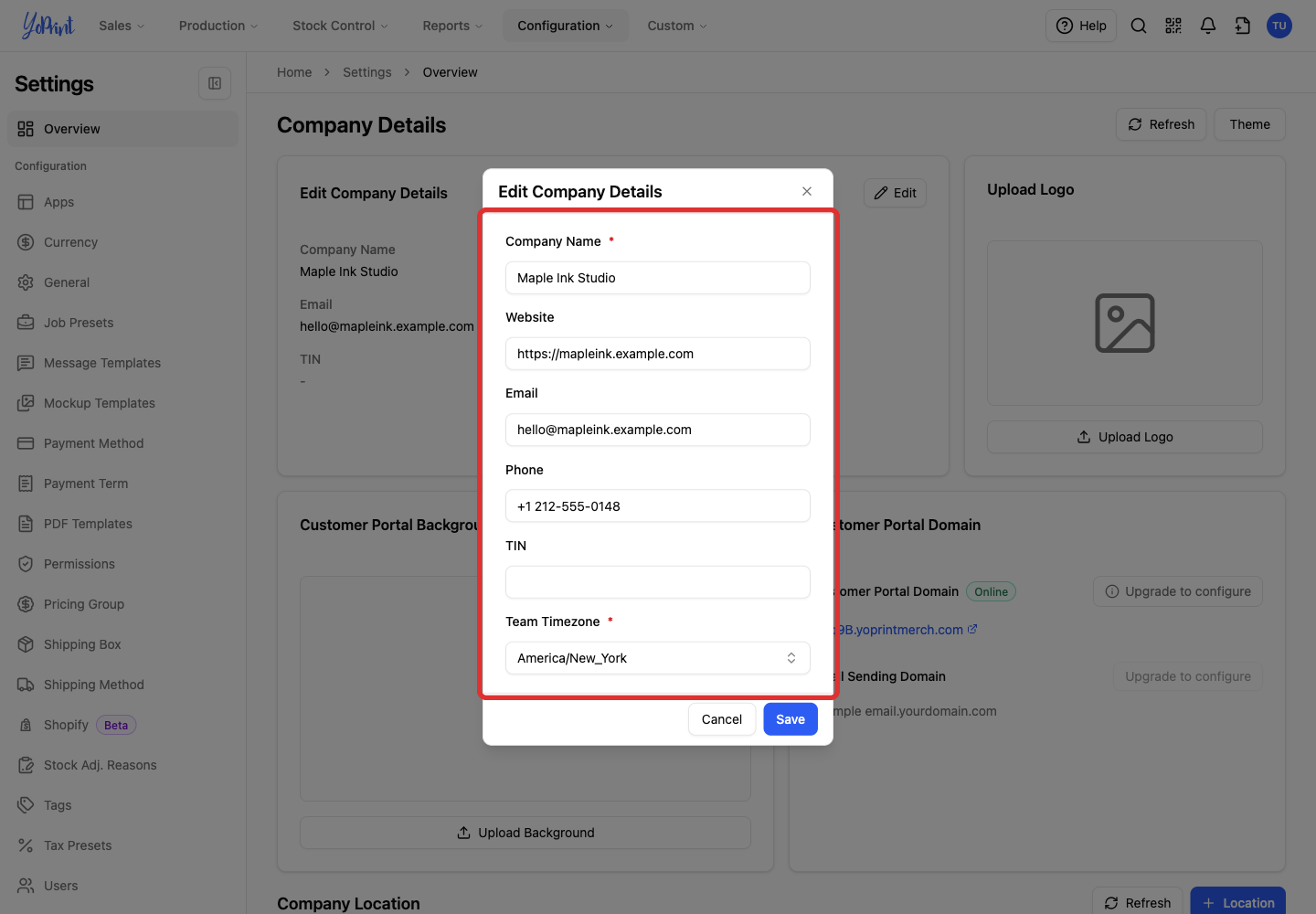
Fill in your company name, contact details, and optional TIN (taxpayer identification number), then select your Team Timezone from the dropdown menu. Keep these details current.
-
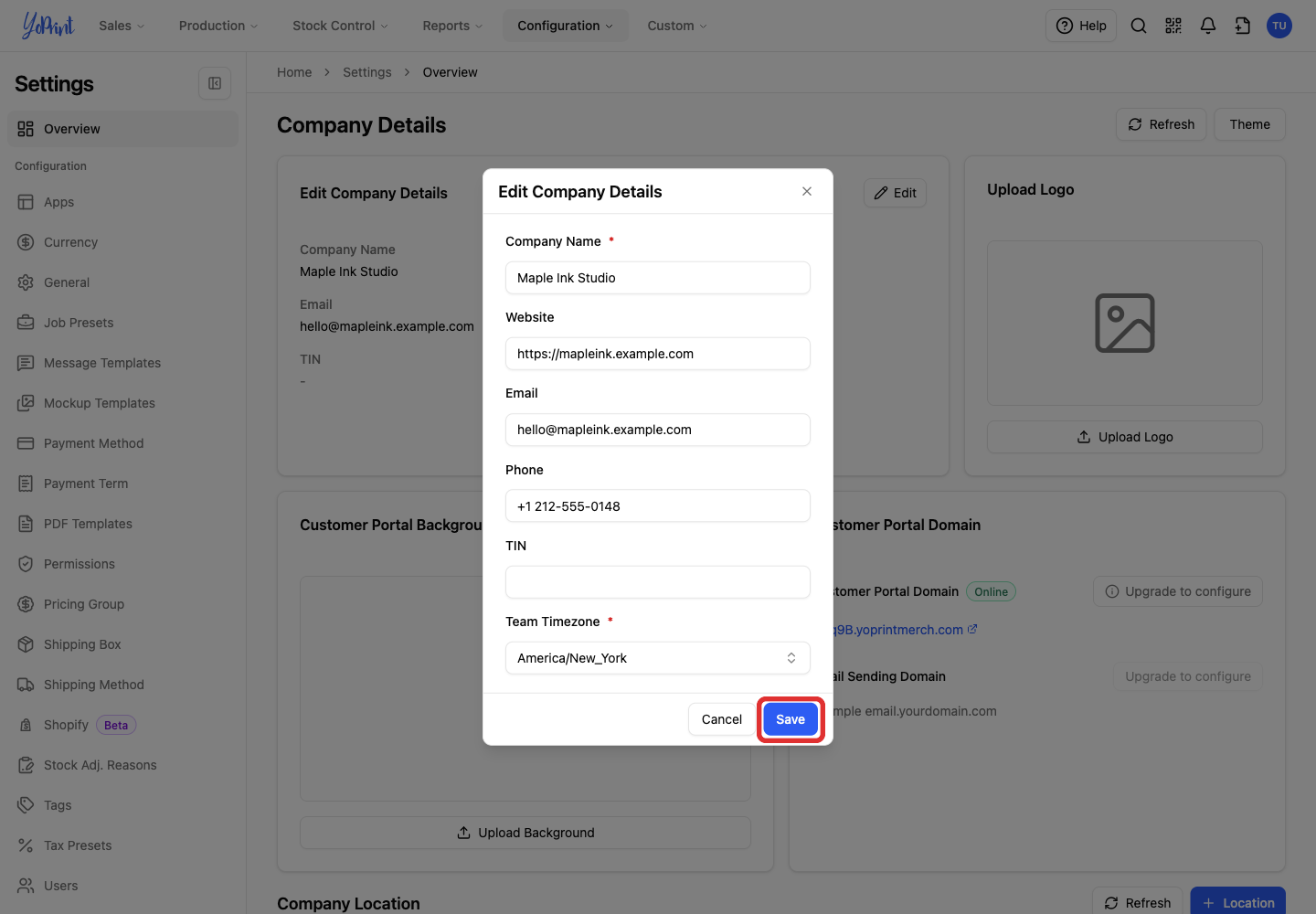
Click Save. You can return to Edit when your details change.
-
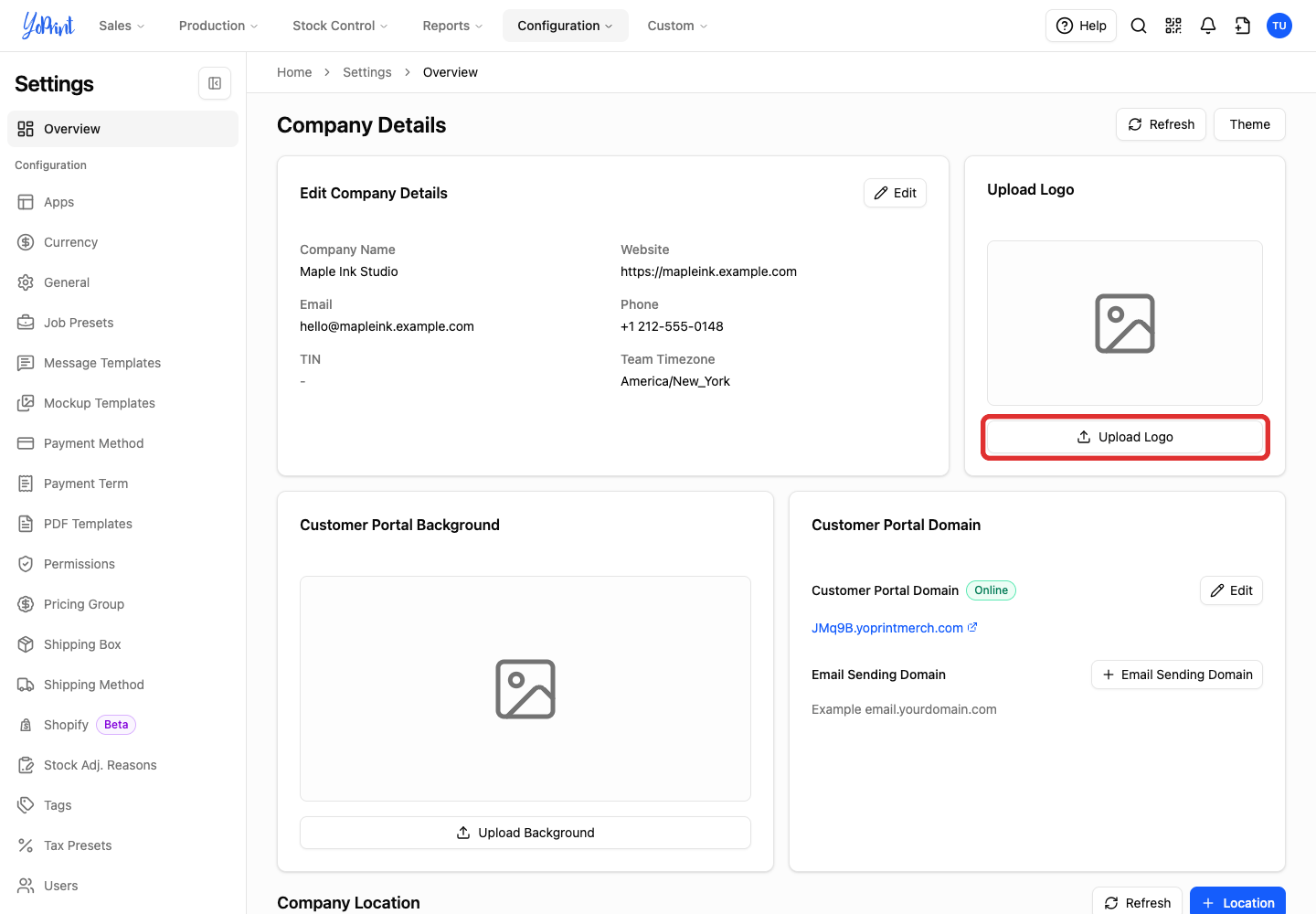
Click Upload Logo to add or replace your company logo with a PNG or JPEG file.
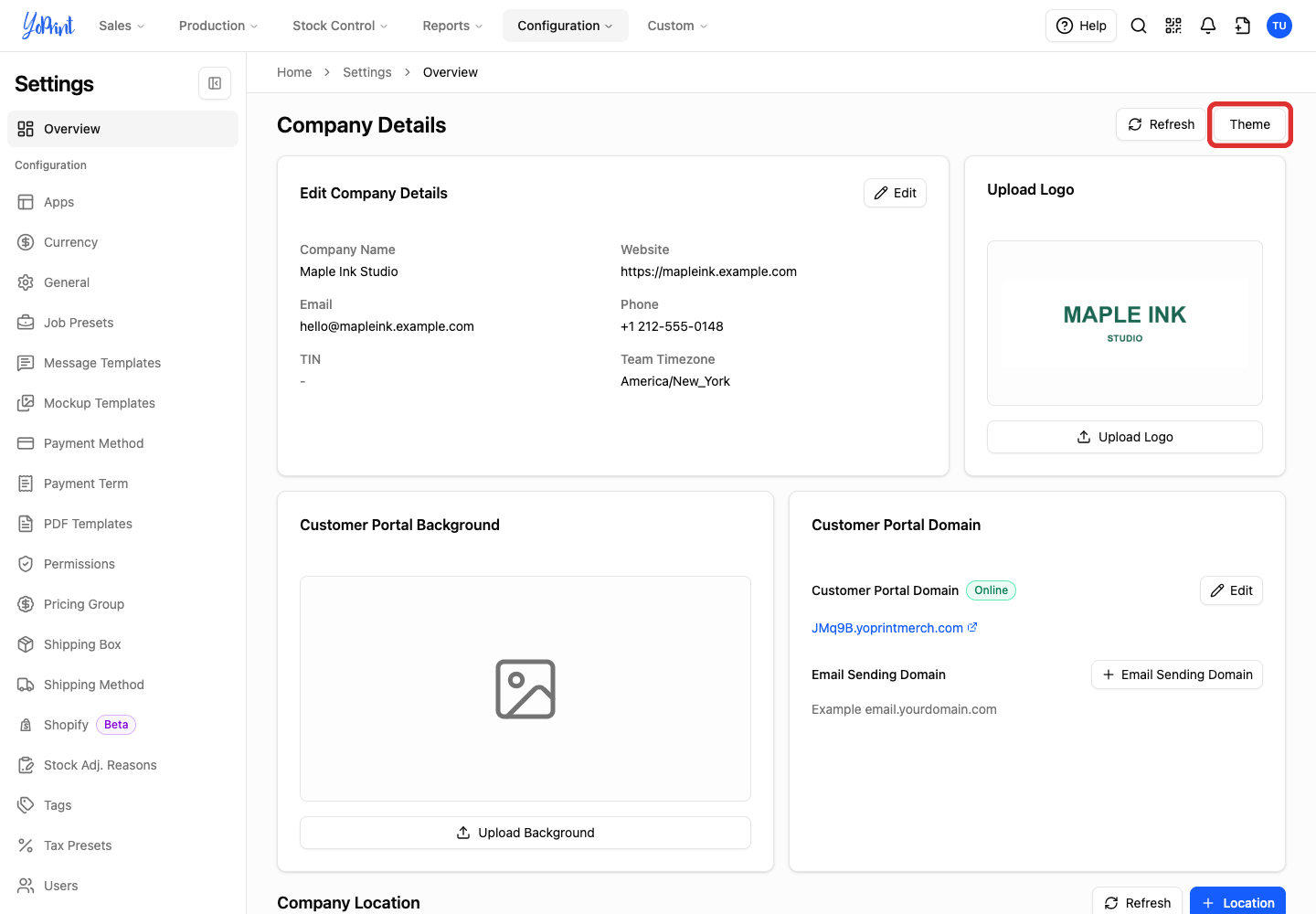
You can also change the colors customers see in your customer portal.
-
Click Theme.
-
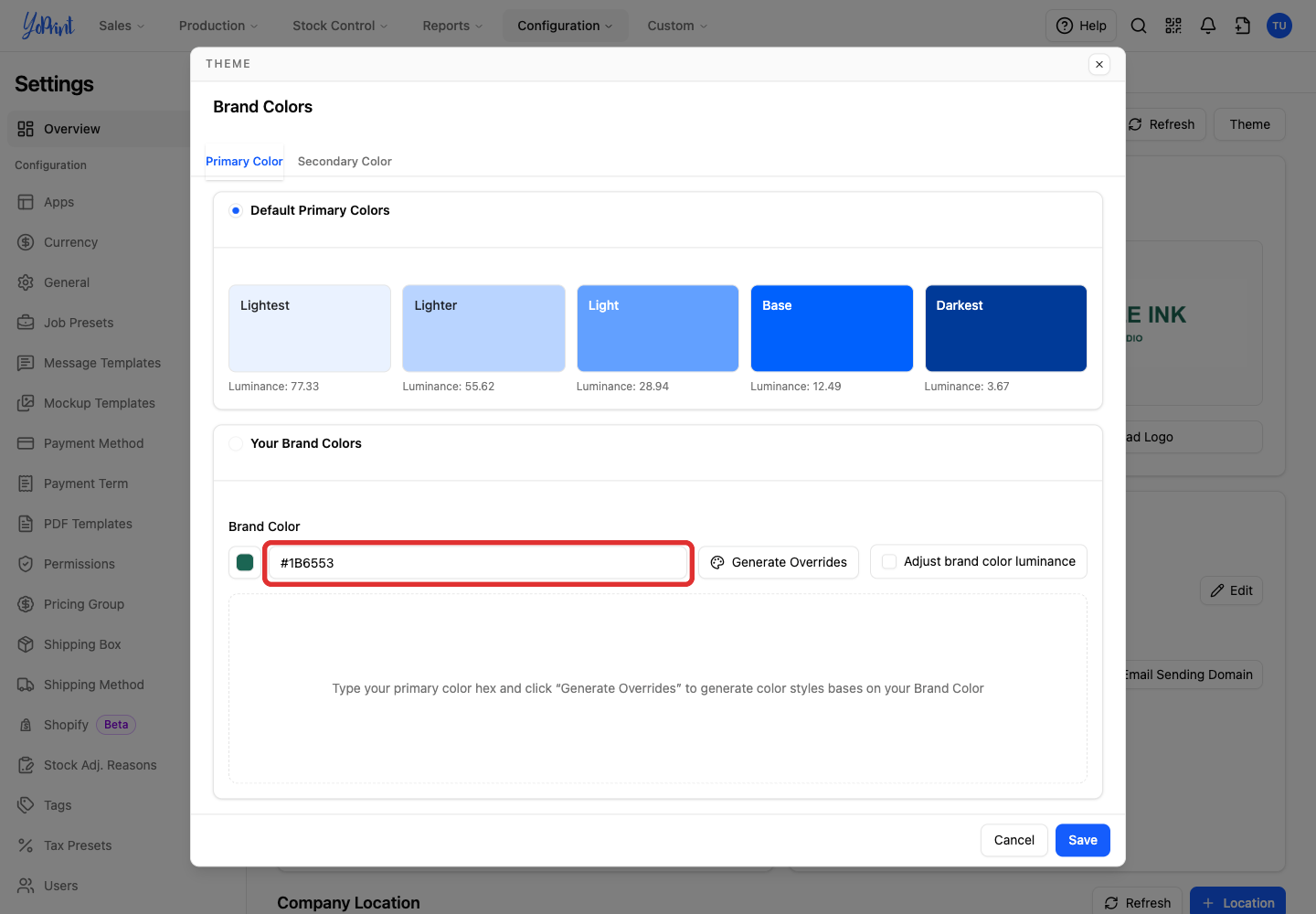
Enter your brand color's hex code in Brand Color.
-
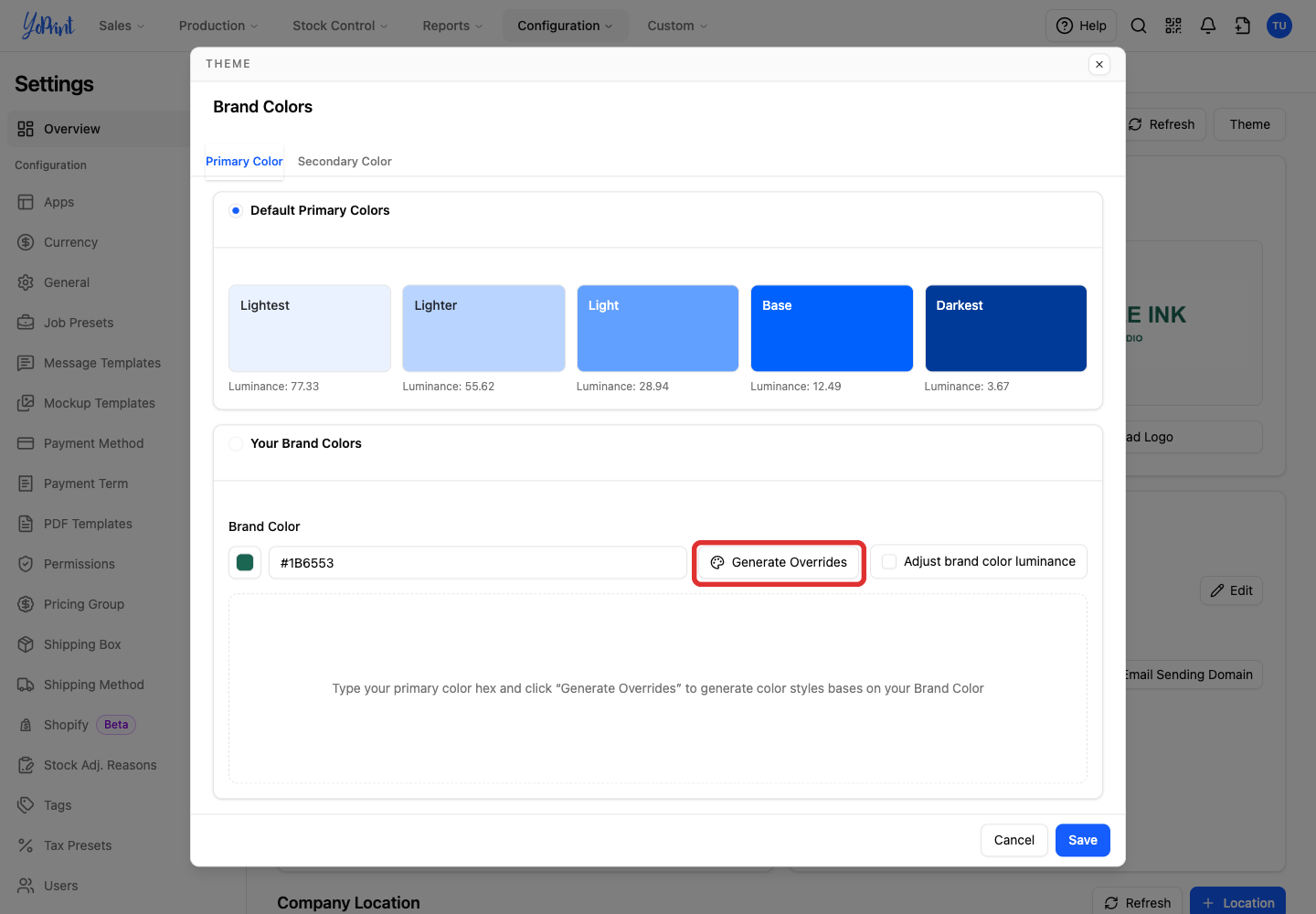
Click Generate Overrides to create shades from your brand color. YoPrint selects Your Brand Colors.
-
Click Save to apply the colors.
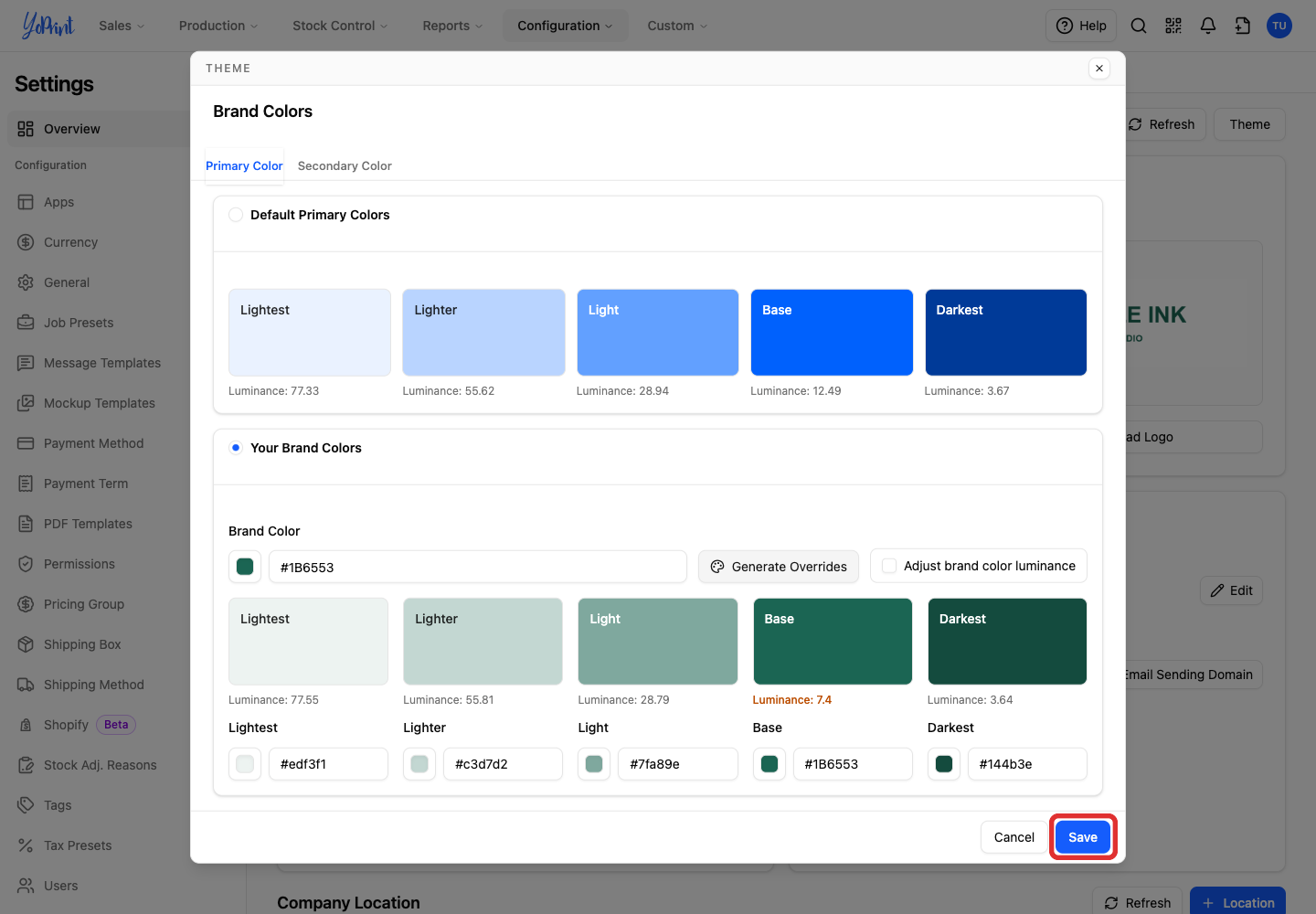
The Secondary Color tab has the same controls for accent colors.
Your default portal address works immediately; follow Customer Portal Custom Domain if you want to use your own domain name.
Add your company locations
-
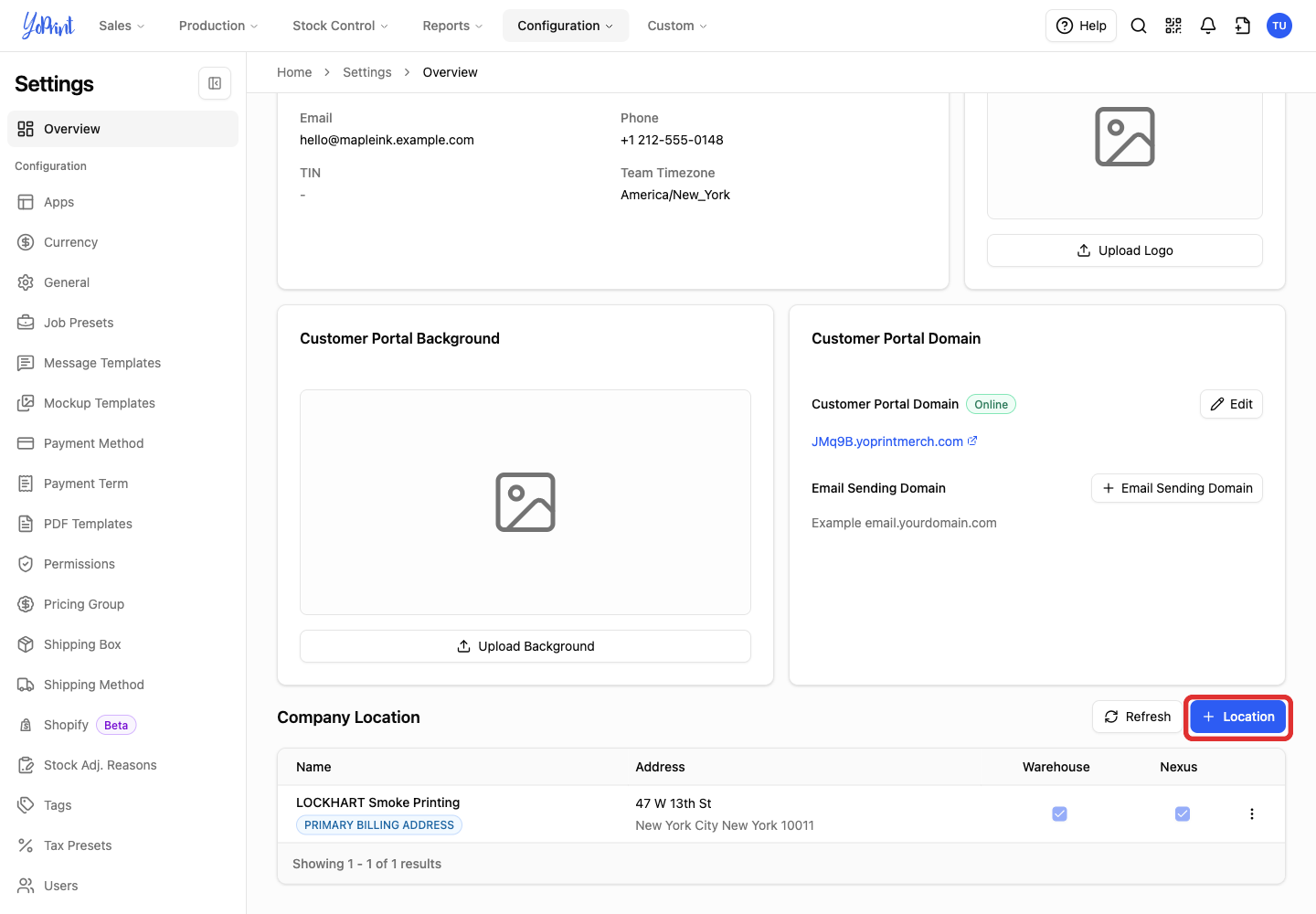
On the same Overview page, scroll down to Company Location and click + Location.
-
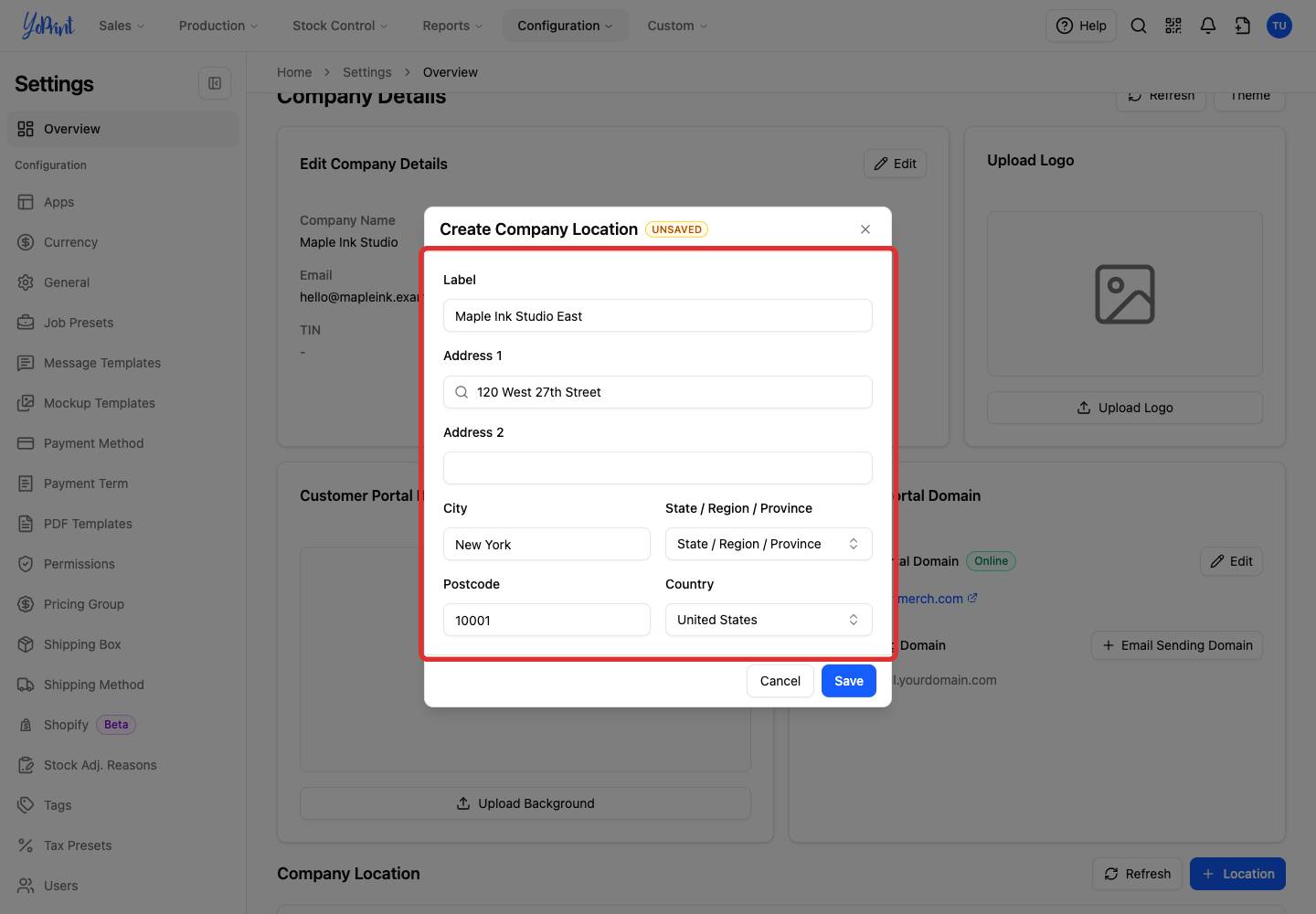
Enter a name for the location in Label (such as Main Shop), then enter its street address.
-
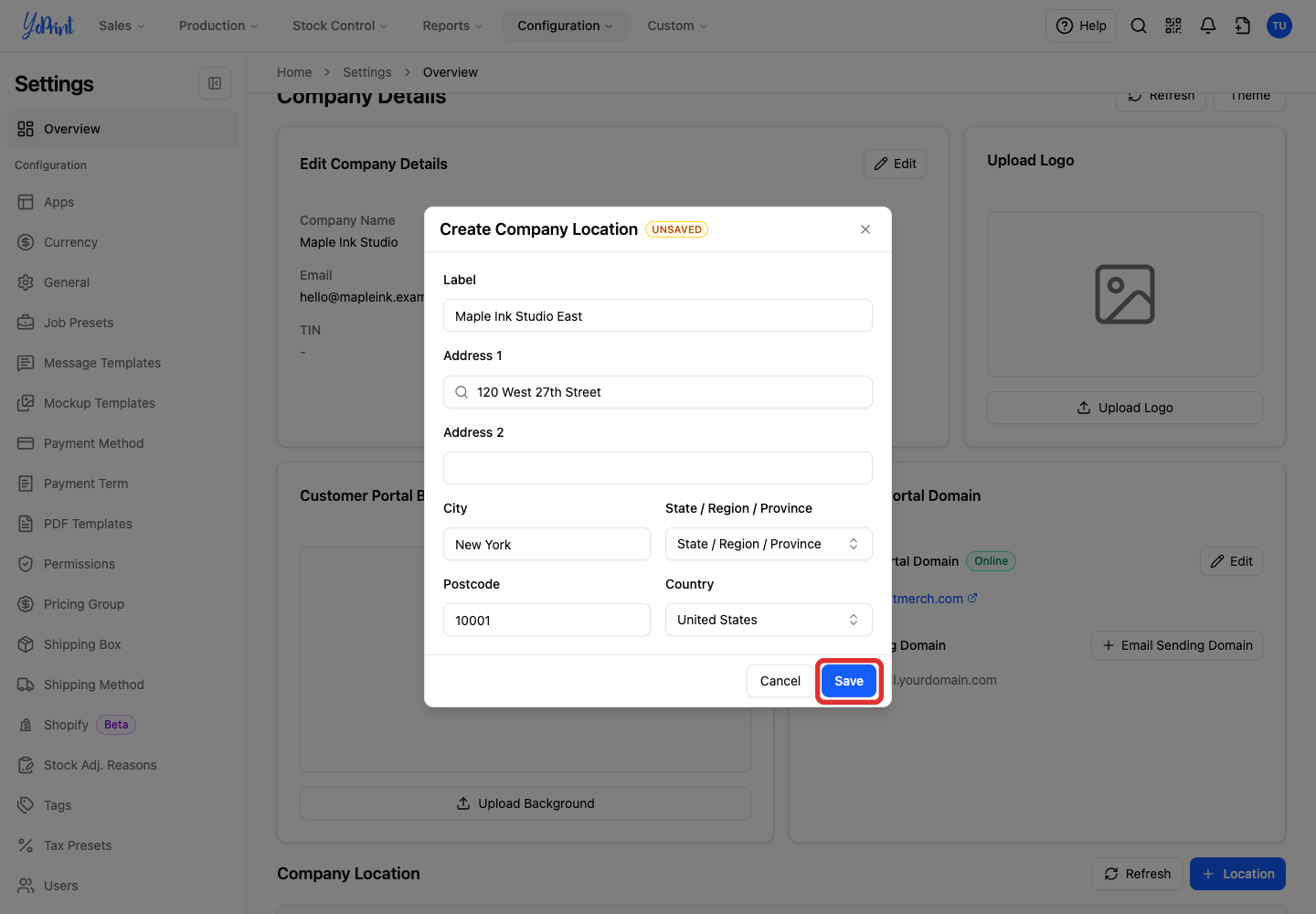
Click Save.
If the location holds stock on shelves, make it a warehouse for inventory tracking. Your plan limits your total warehouses; check your limit in Configuration > Billing.
-
Open the new location's three-dot menu.
If a location already has Warehouse checked, the menu shows Set as Default Warehouse instead.
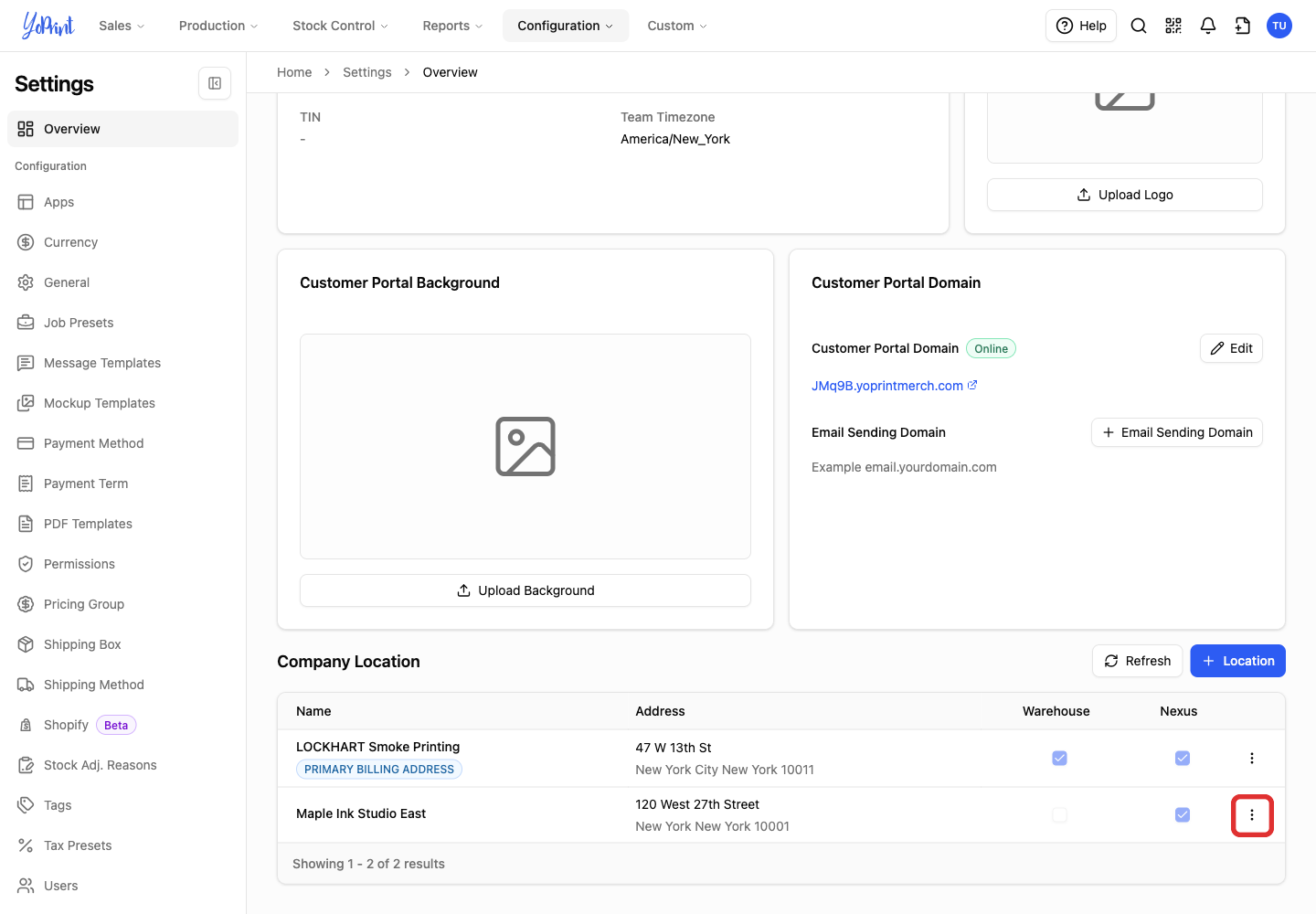
-
Choose Set as Warehouse.
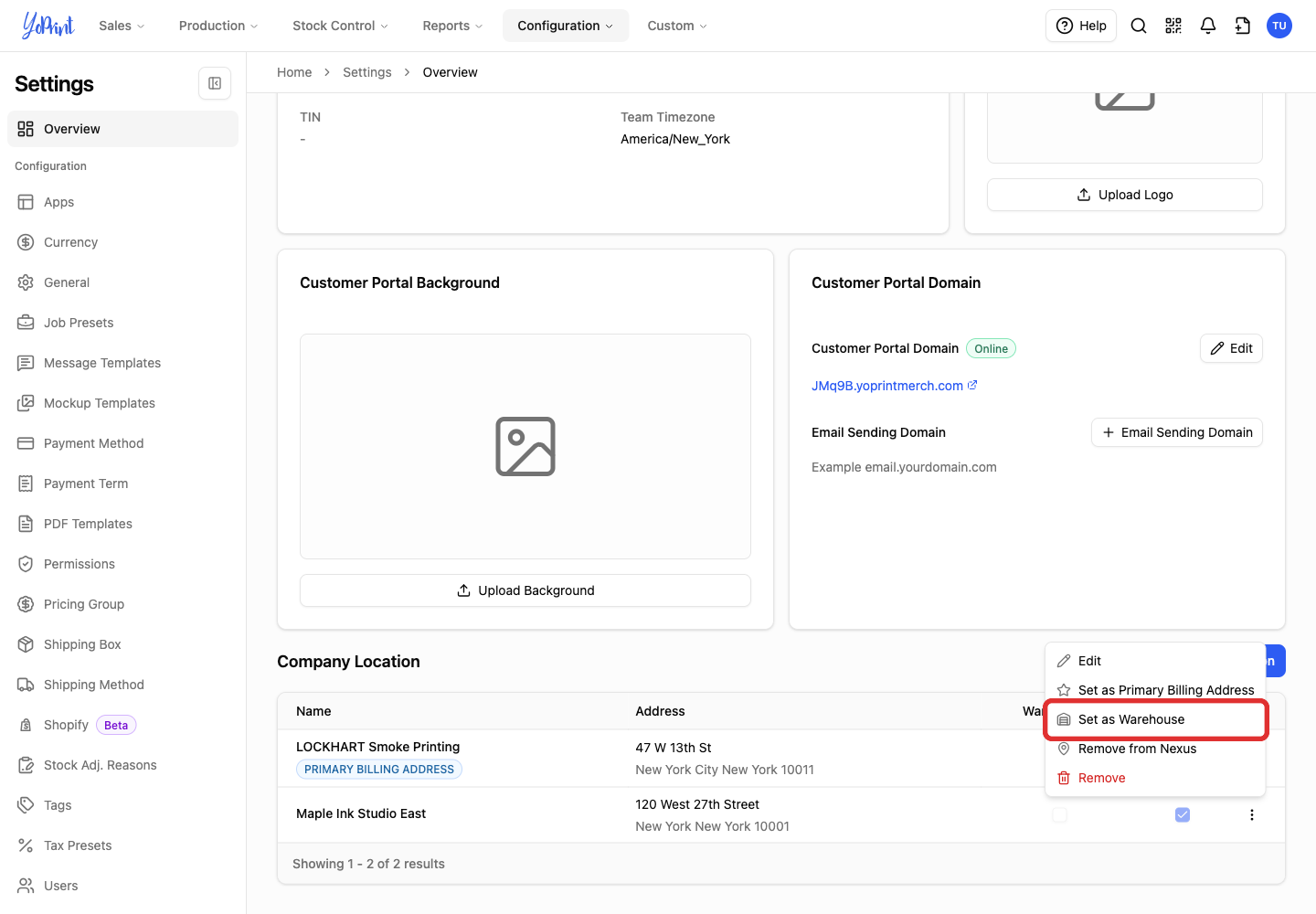
-
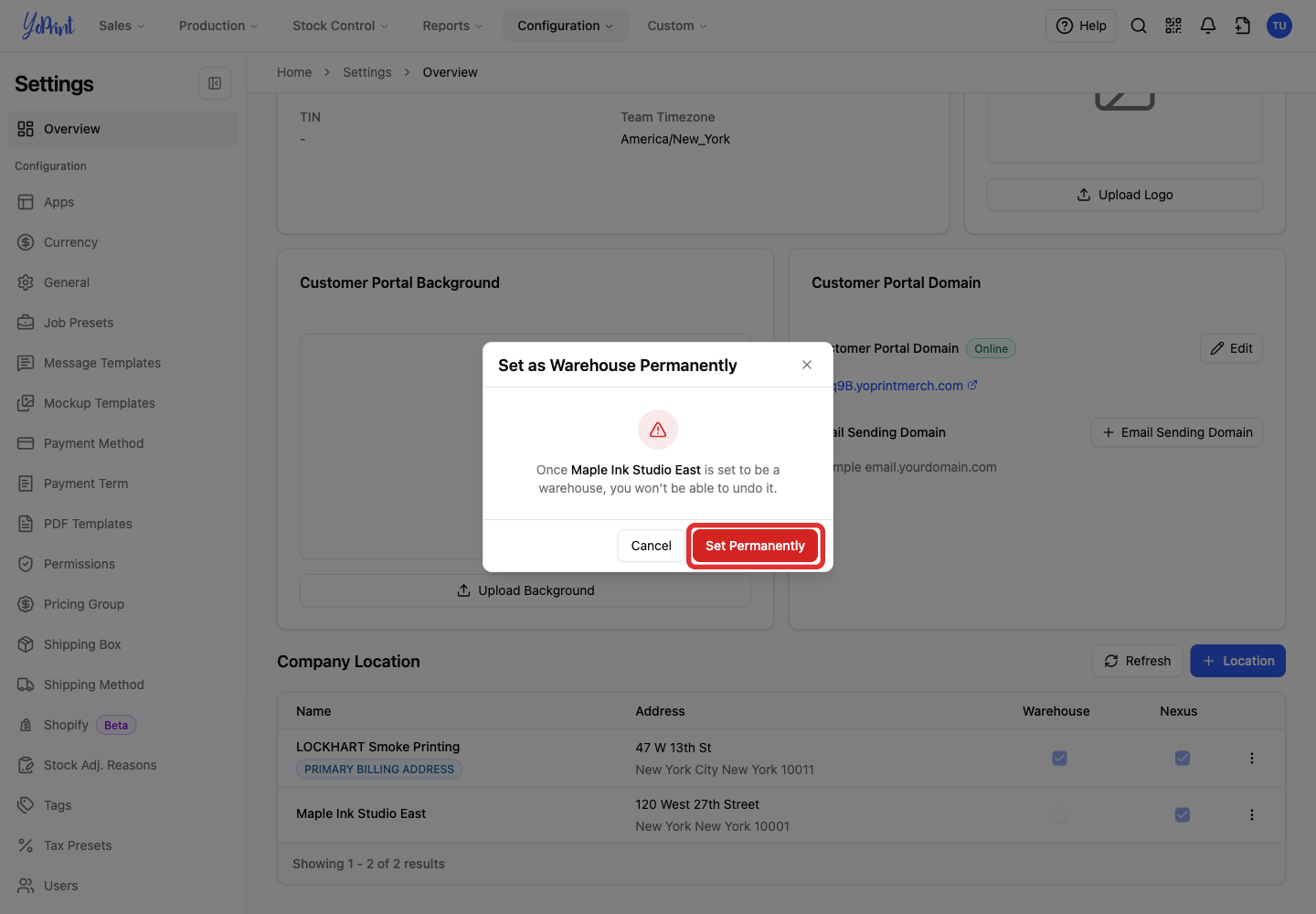
Check the location name, then click Set Permanently.
Once a location is set as a warehouse, it permanently uses one warehouse slot and cannot be changed back to an address-only location.
The three-dot menu beside a location offers actions for billing, warehouses, and sales tax:
- Set as Primary Billing Address: the address shown on invoices and billing emails.
- Set as Default Warehouse: for inventory tracking, mark the location as a warehouse first.
- Add to Nexus / Remove from Nexus: whether the shop collects sales tax there.
New locations have Nexus on by default, and US Auto Tax uses Nexus locations plus the delivery address to calculate sales tax. Keep Nexus on only for states where the shop has a location, and if it sells a lot into another state check that state's rules first; add all locations so stock tracking works.
For address changes and warehouse defaults, see Adding Company Locations & Warehouses. Use Set Up Tax Presets for tax configuration.
Invite your team
Each team member uses their own account. Their permission group controls what they can access.
-
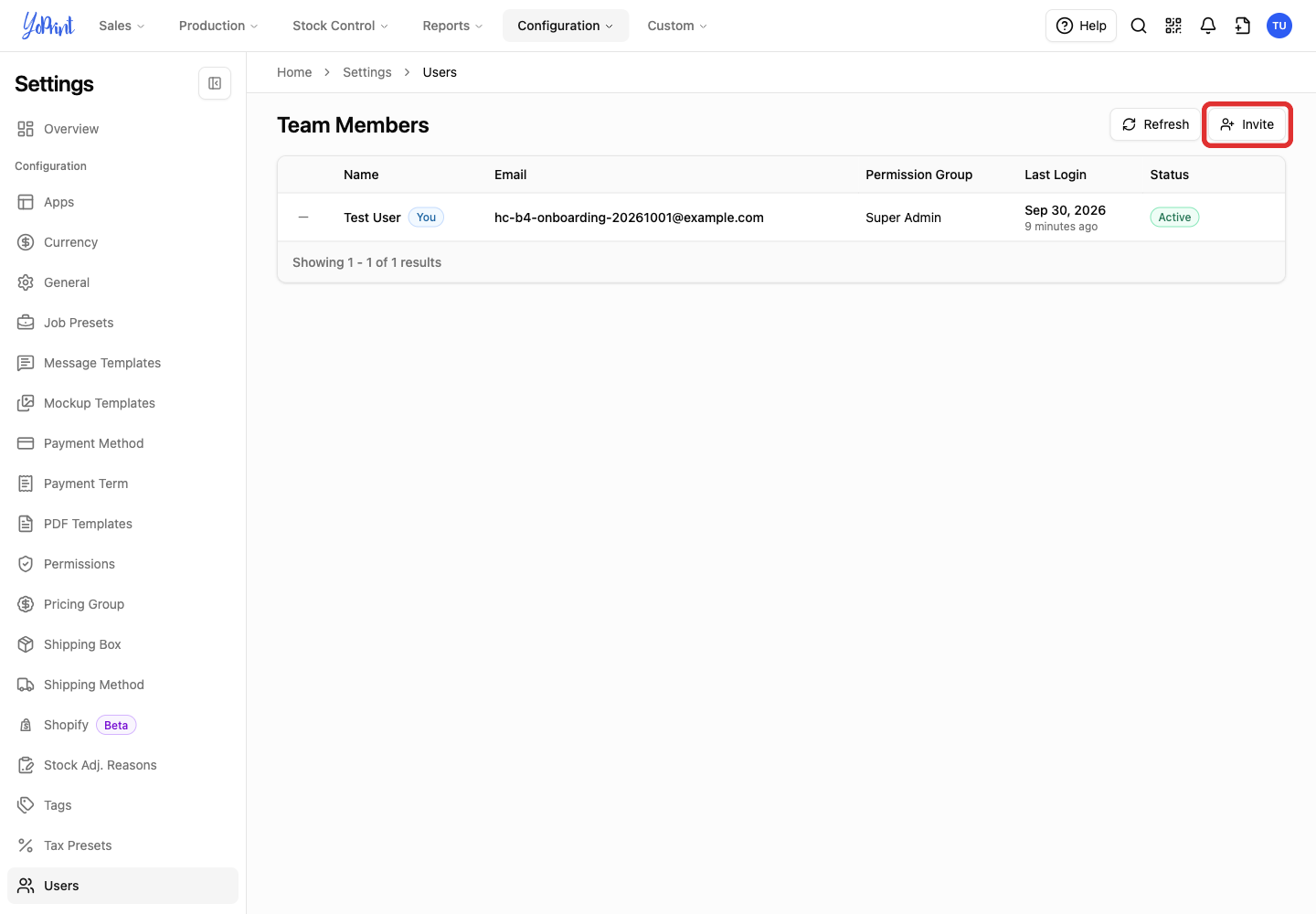
Click Users in the settings sidebar to open the Team Members page.
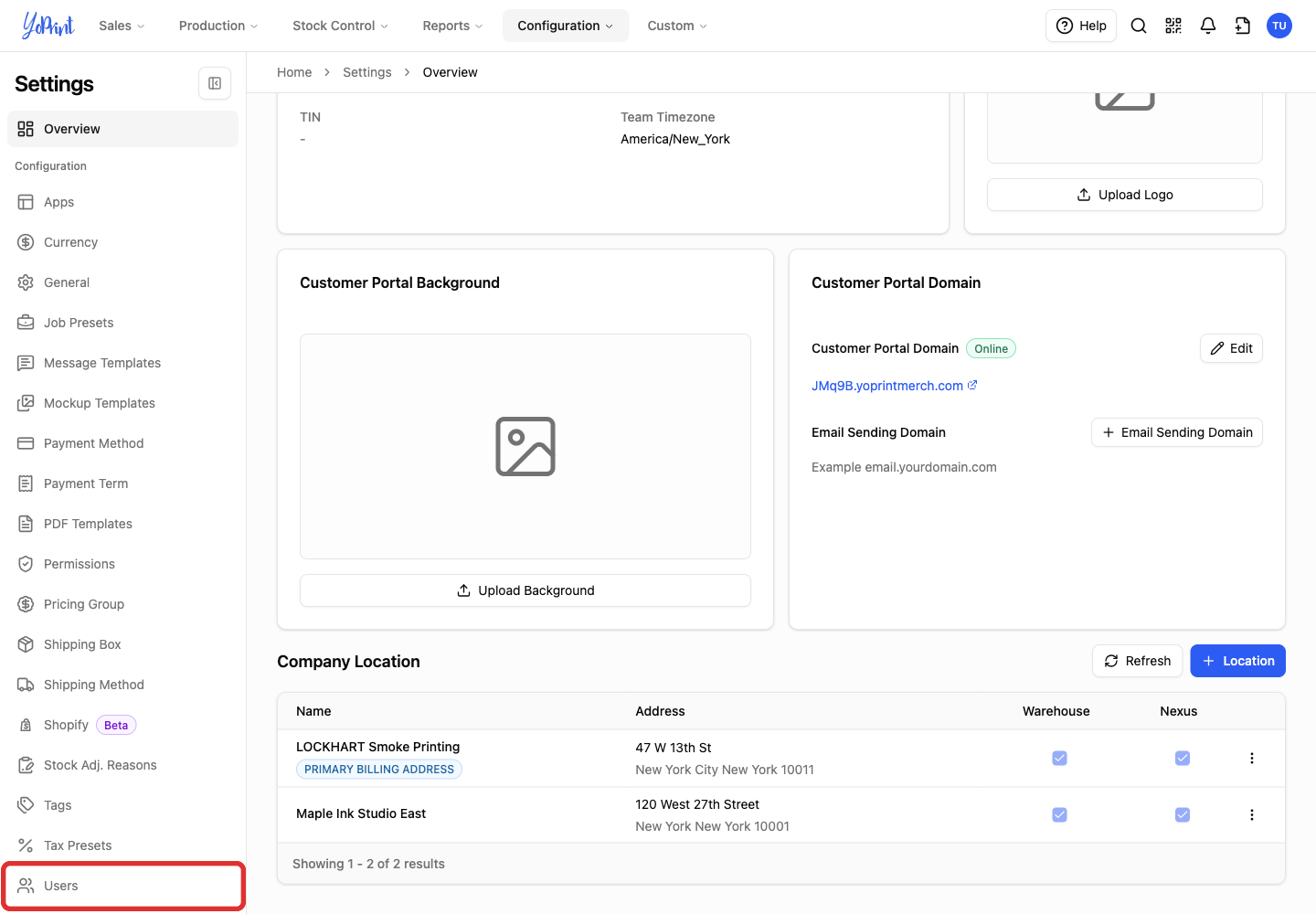
-
Click Invite.
-
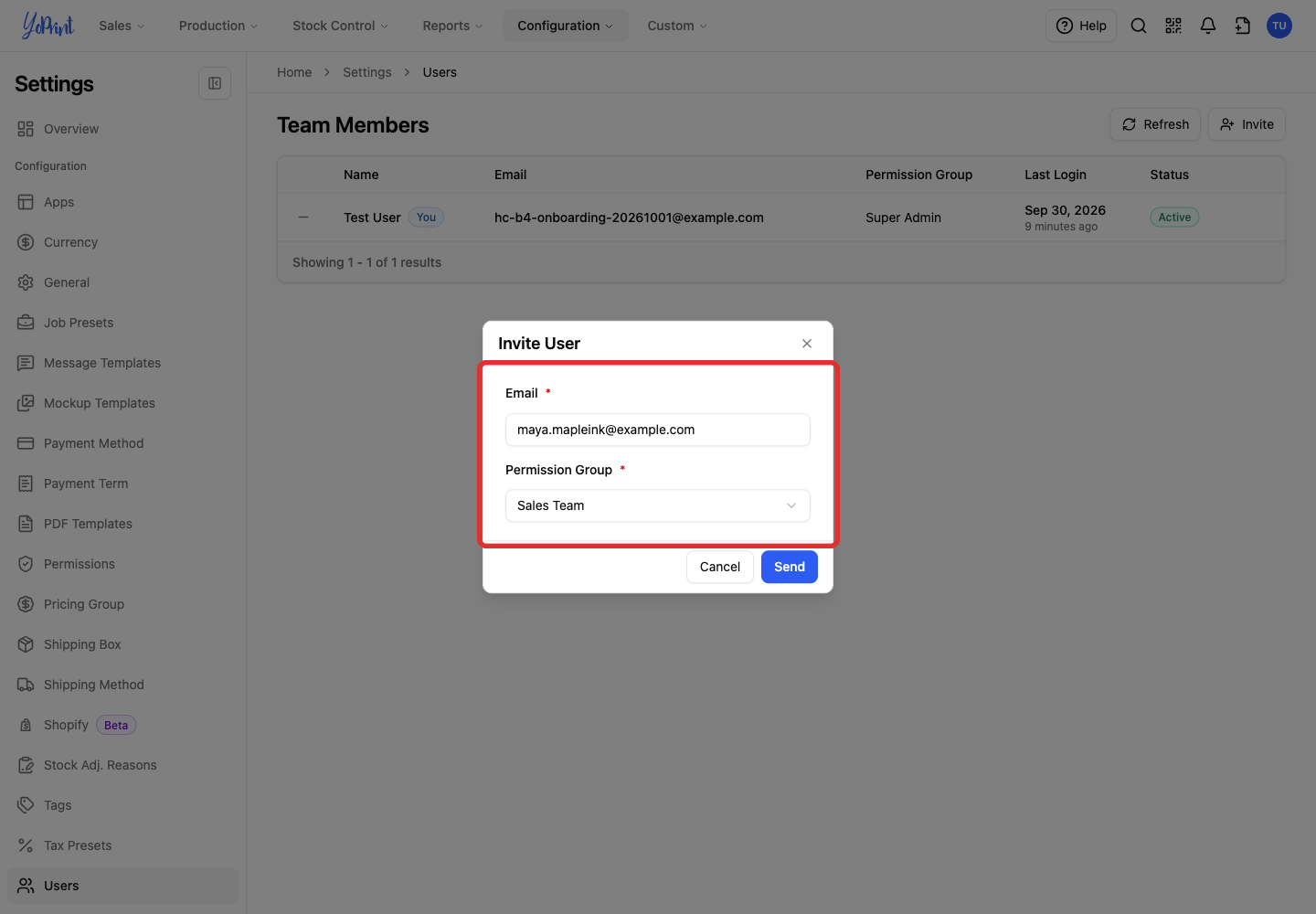
Enter the teammate's email address and select their Permission Group. Choose a permission group that matches their role (such as Sales Team, Shop Floor Team, or Accounting Team) to control what they can see and edit.
-
Click Send.
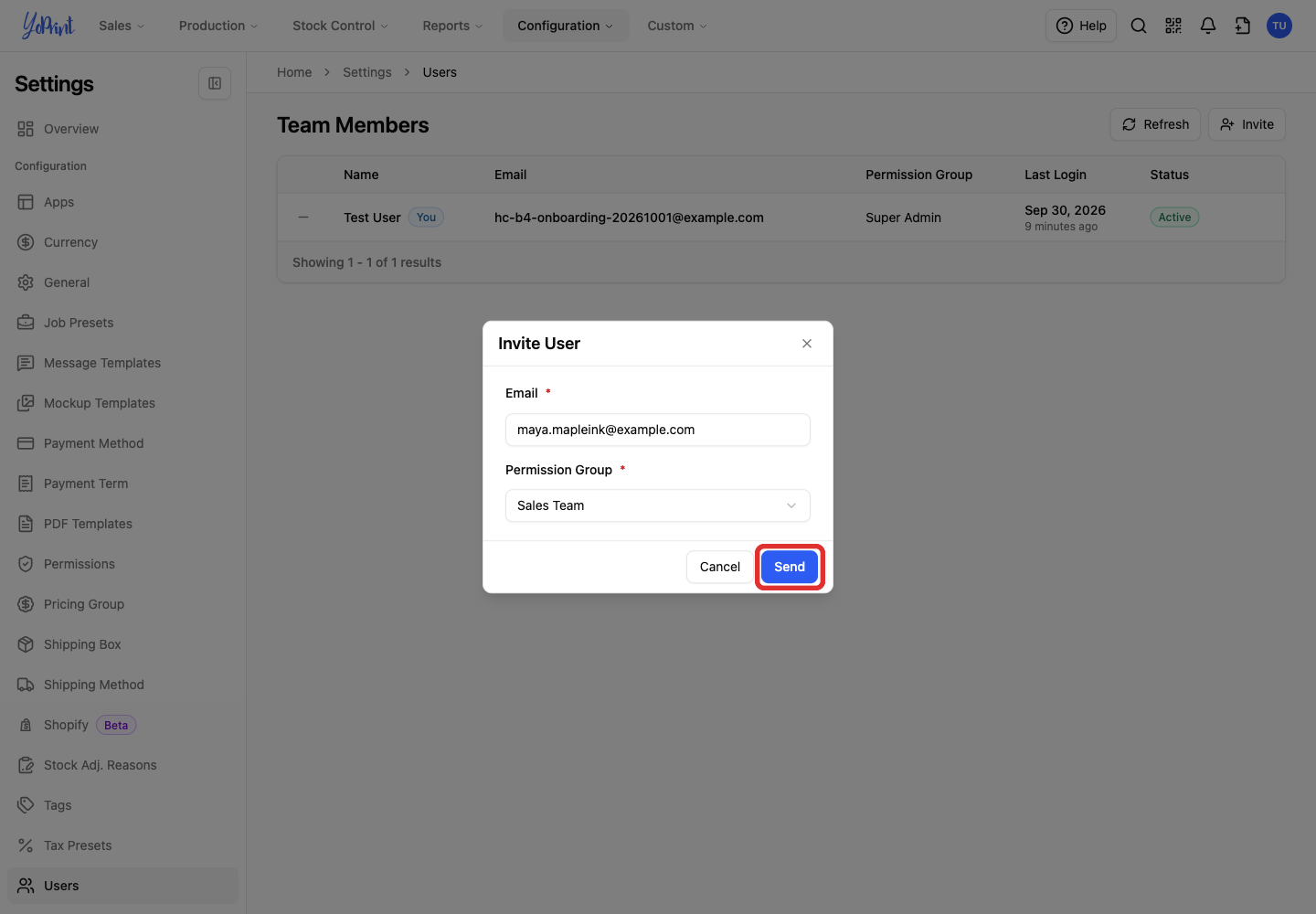
The invitation appears as Pending. Your teammate follows the email instructions to join. For changing a pending invitation or removing a member, see Manage Users in Your Team.
Set your payment terms
Payment terms set the due dates shown on customer quotes and invoices. They do not collect money automatically.
-
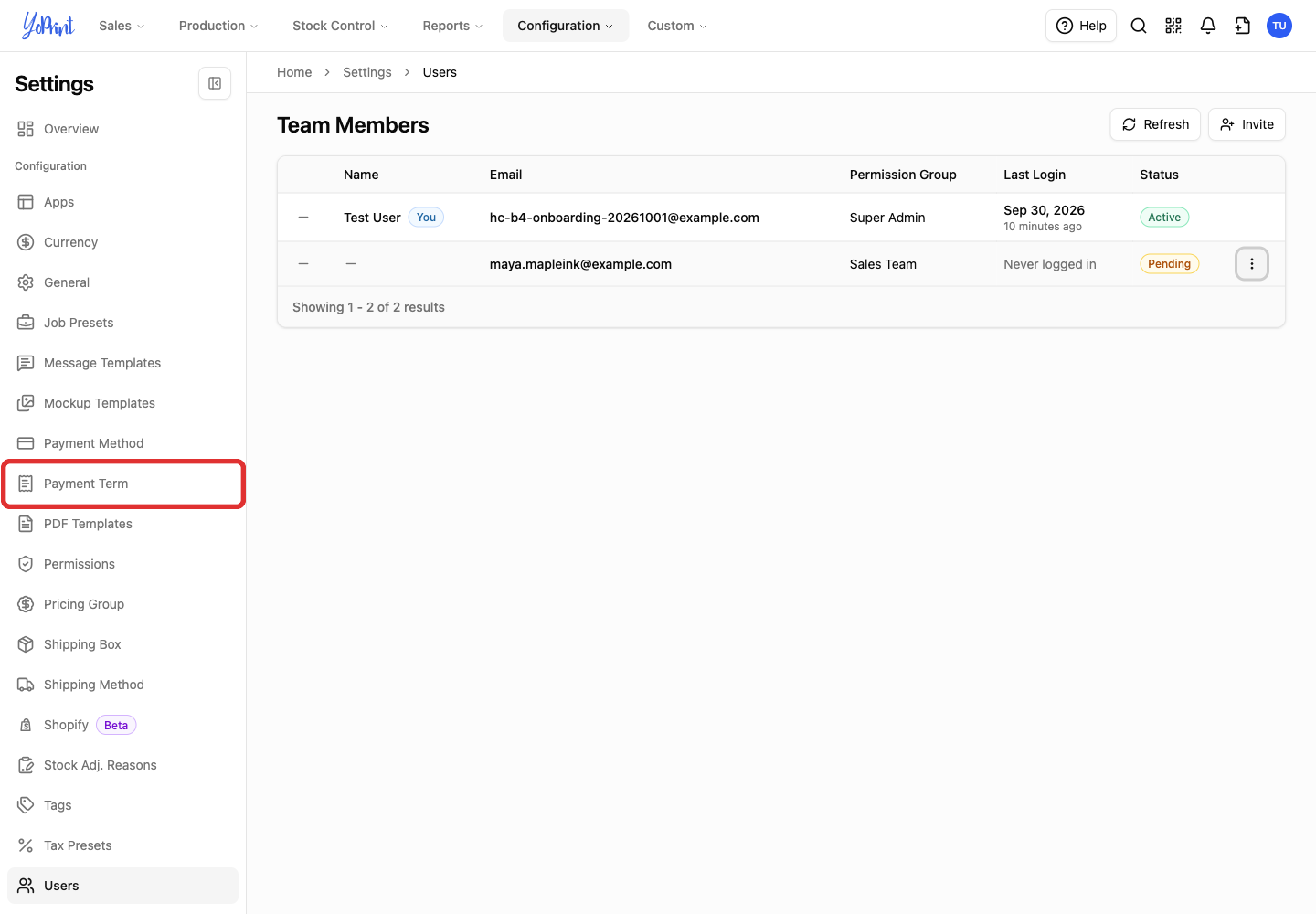
Click Payment Term in the settings sidebar.
-
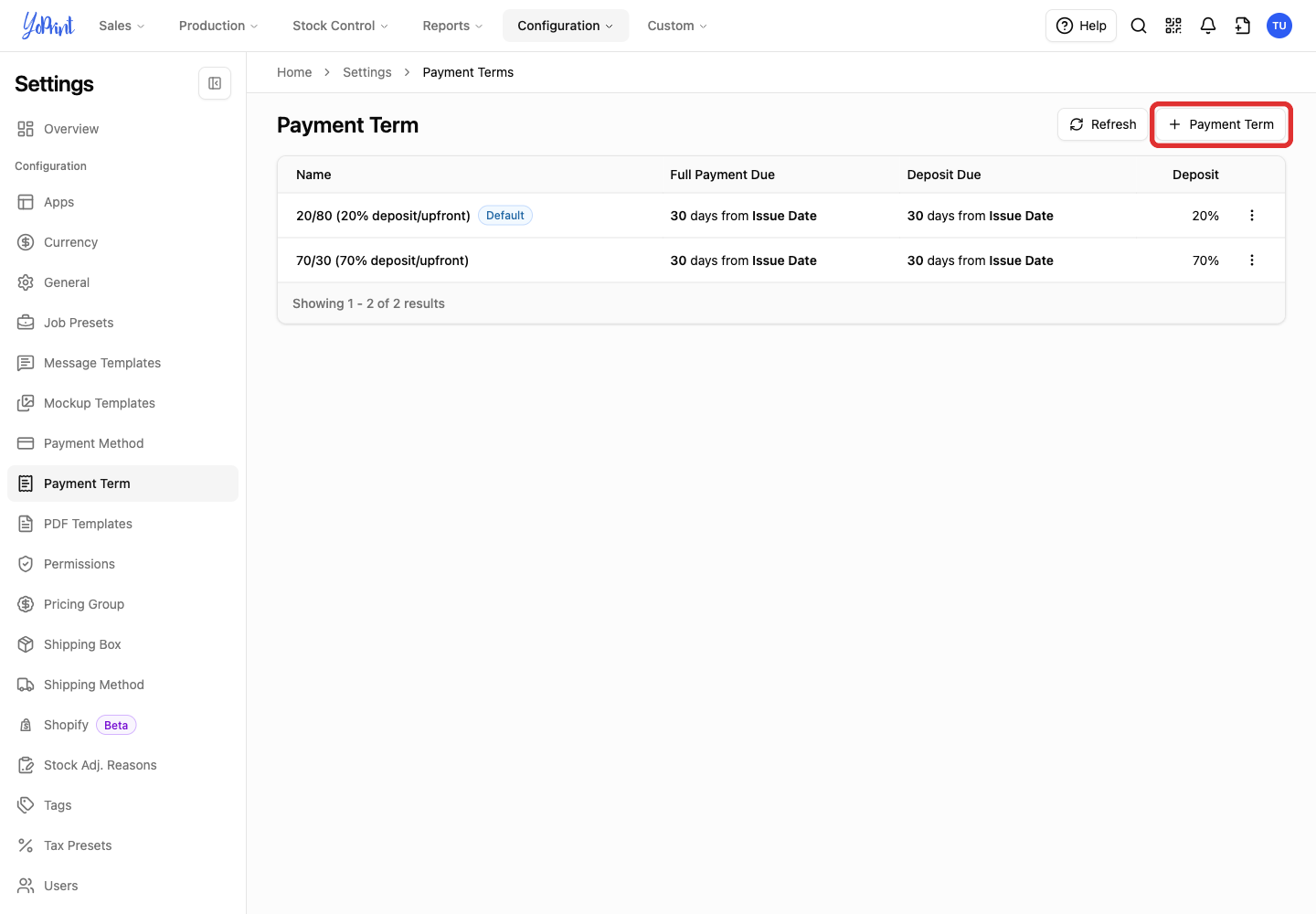
Click + Payment Term.
-
Give the term a name and set its full-payment due rule by entering the number of days and choosing the trigger date. If you need a deposit, turn on Deposit required before production to flag the order until the deposit is recorded, then enter the percentage and deposit due rule.
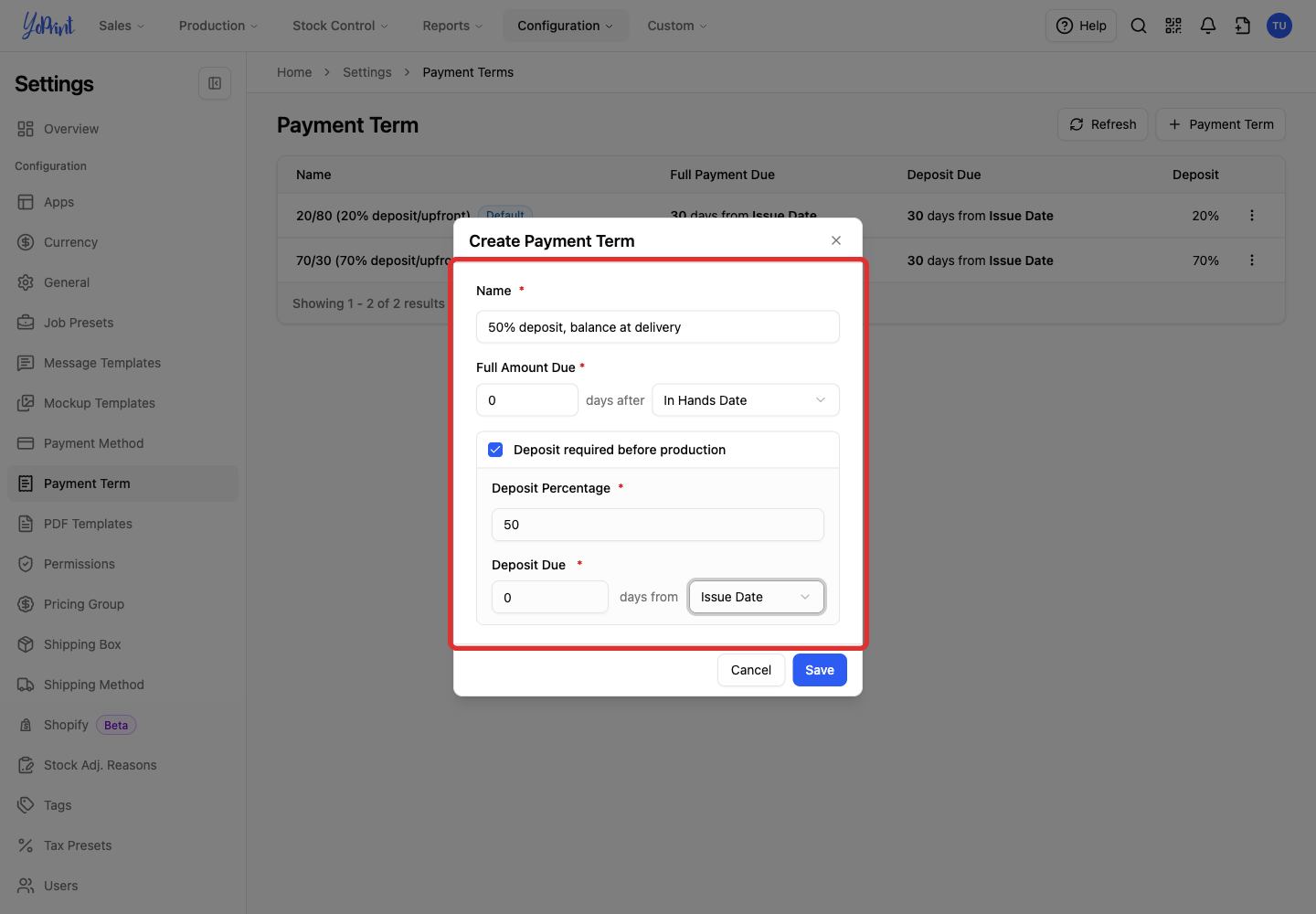
For example, the term shown asks for a 50% deposit on the Issue Date, with the full amount due on the In Hands Date (enter
0days to make payment due on the date itself). -
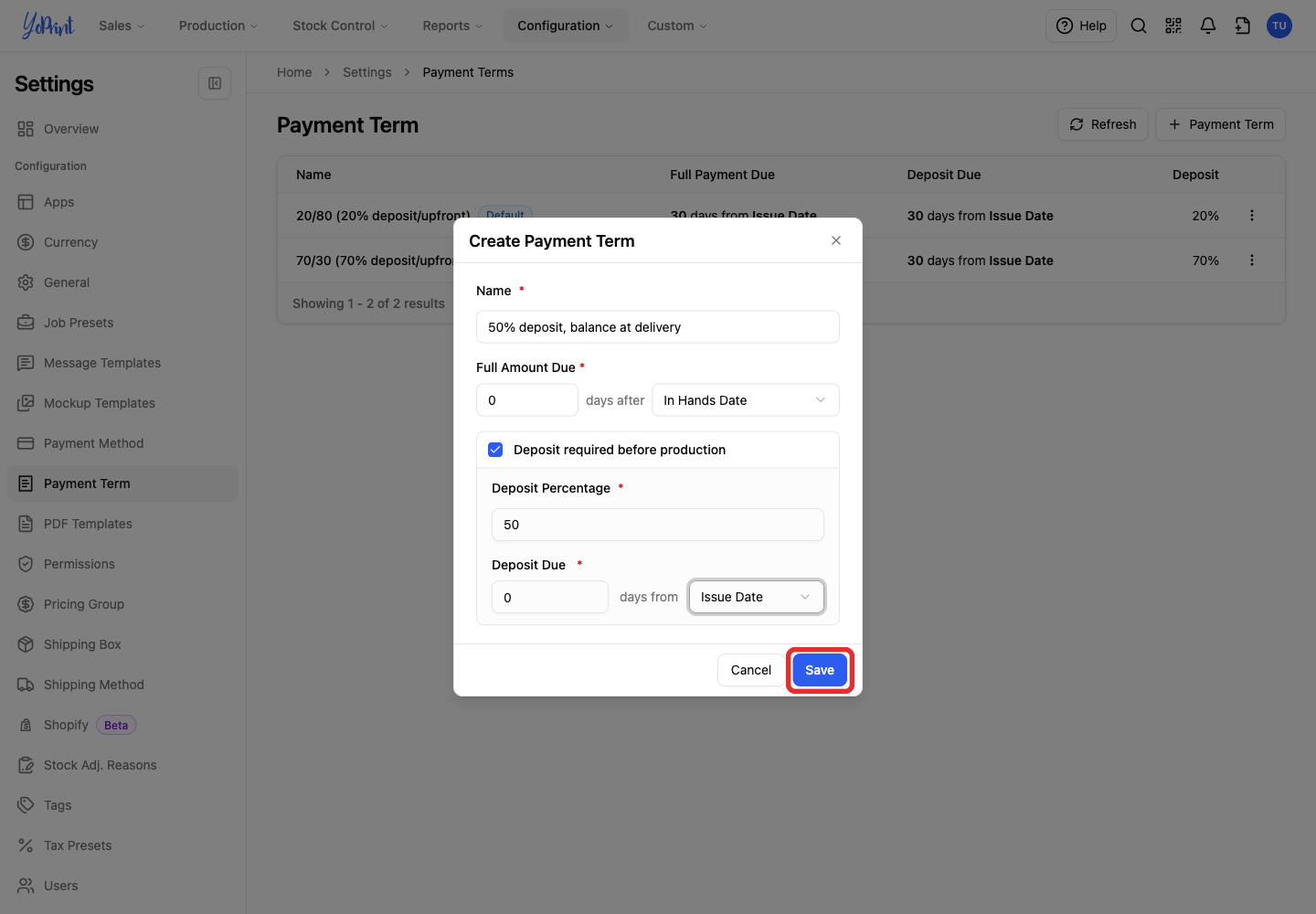
Click Save.
For editing terms or giving one customer a different term, follow Manage Payment Terms.
Choose how customers pay
A payment method labels offline payments recorded manually in YoPrint, such as cash, a check, or a payment taken on an outside card reader. It records the payment on the order without charging the customer.
-
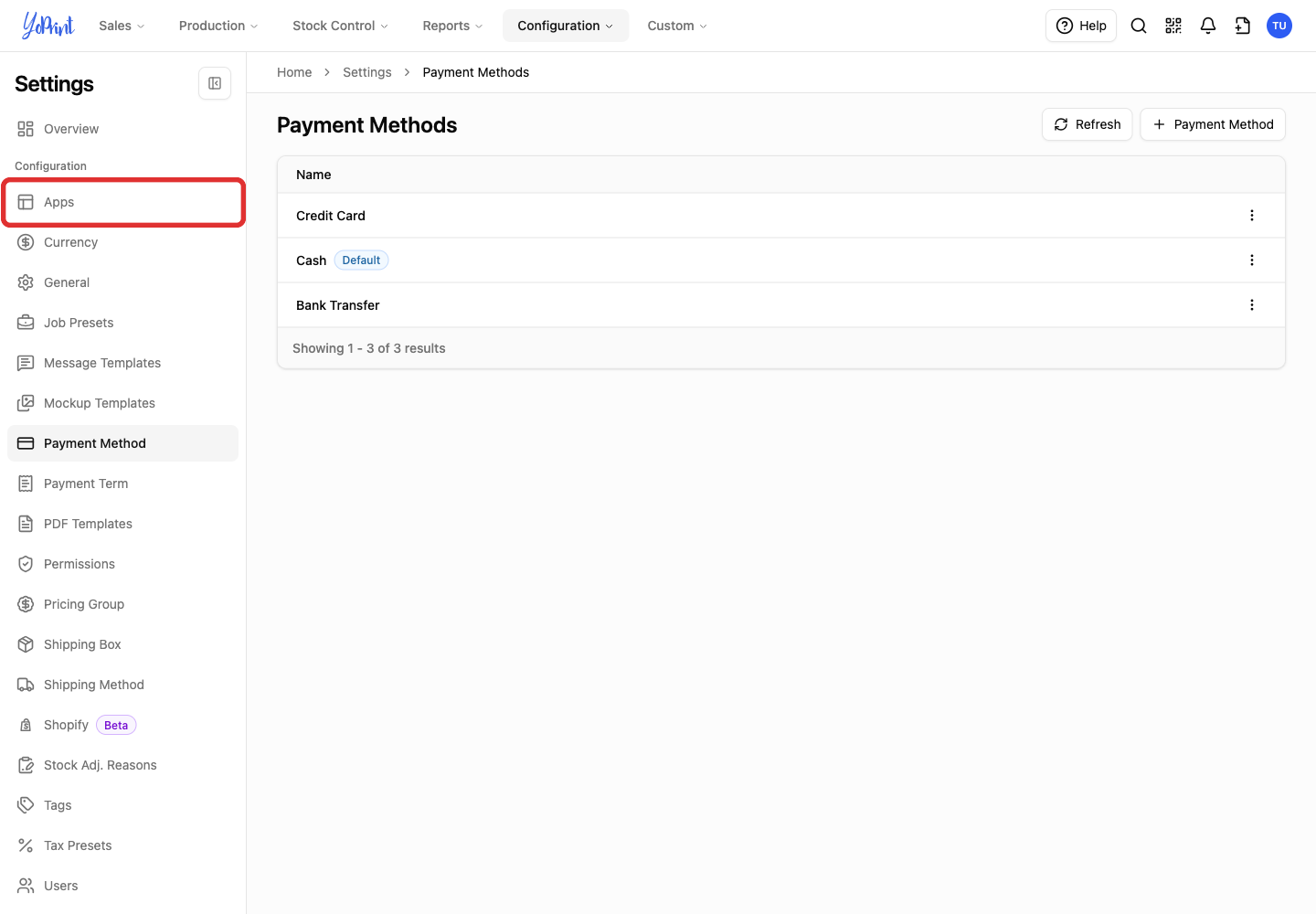
Click Payment Method in the settings sidebar.
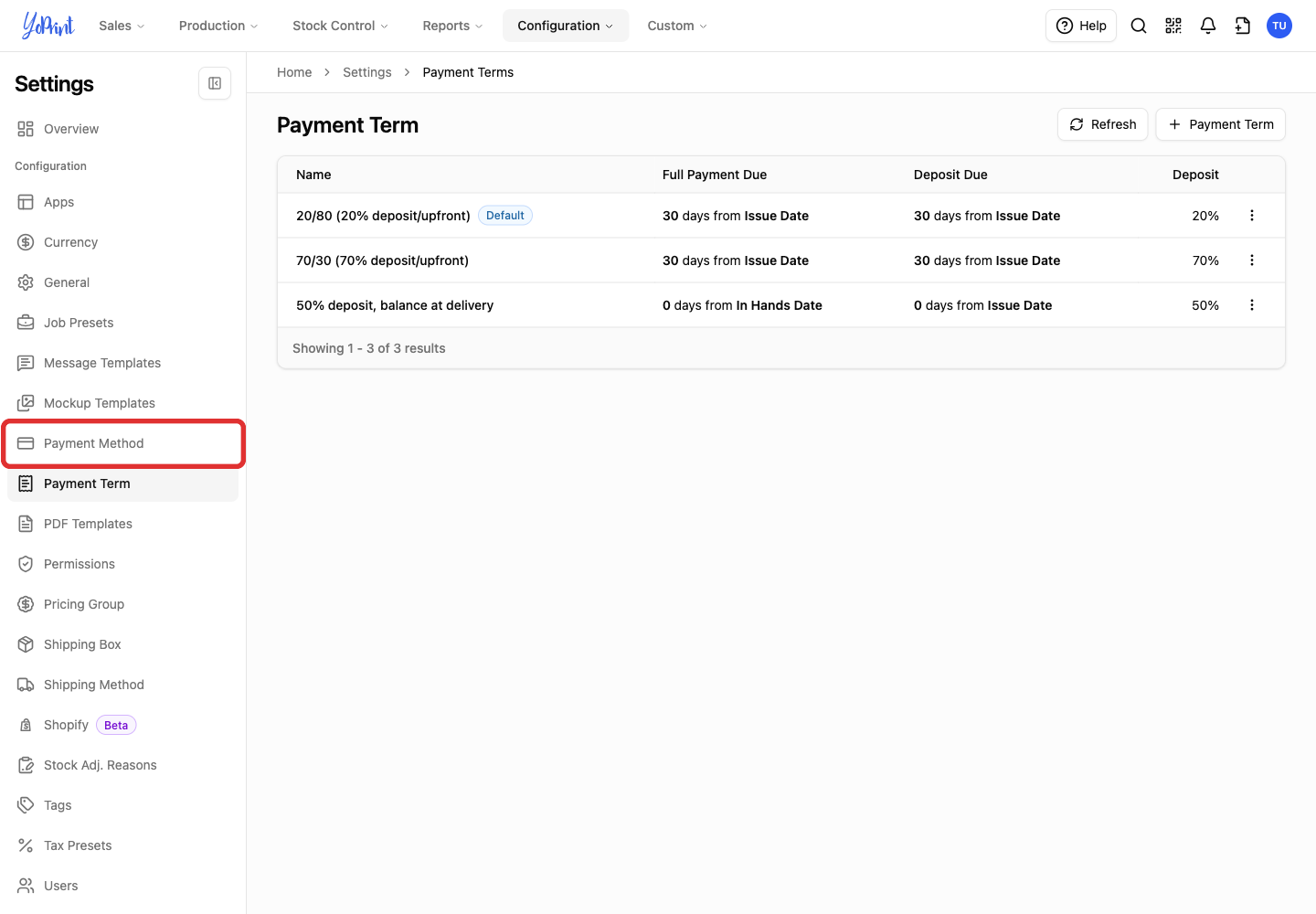
Use Customizing Payment Method to add, rename or remove methods and record manual payments.
-
To connect an online payment processor, click Apps in the settings sidebar.
You can connect one or more processors, including Stripe, Square or PayPal.
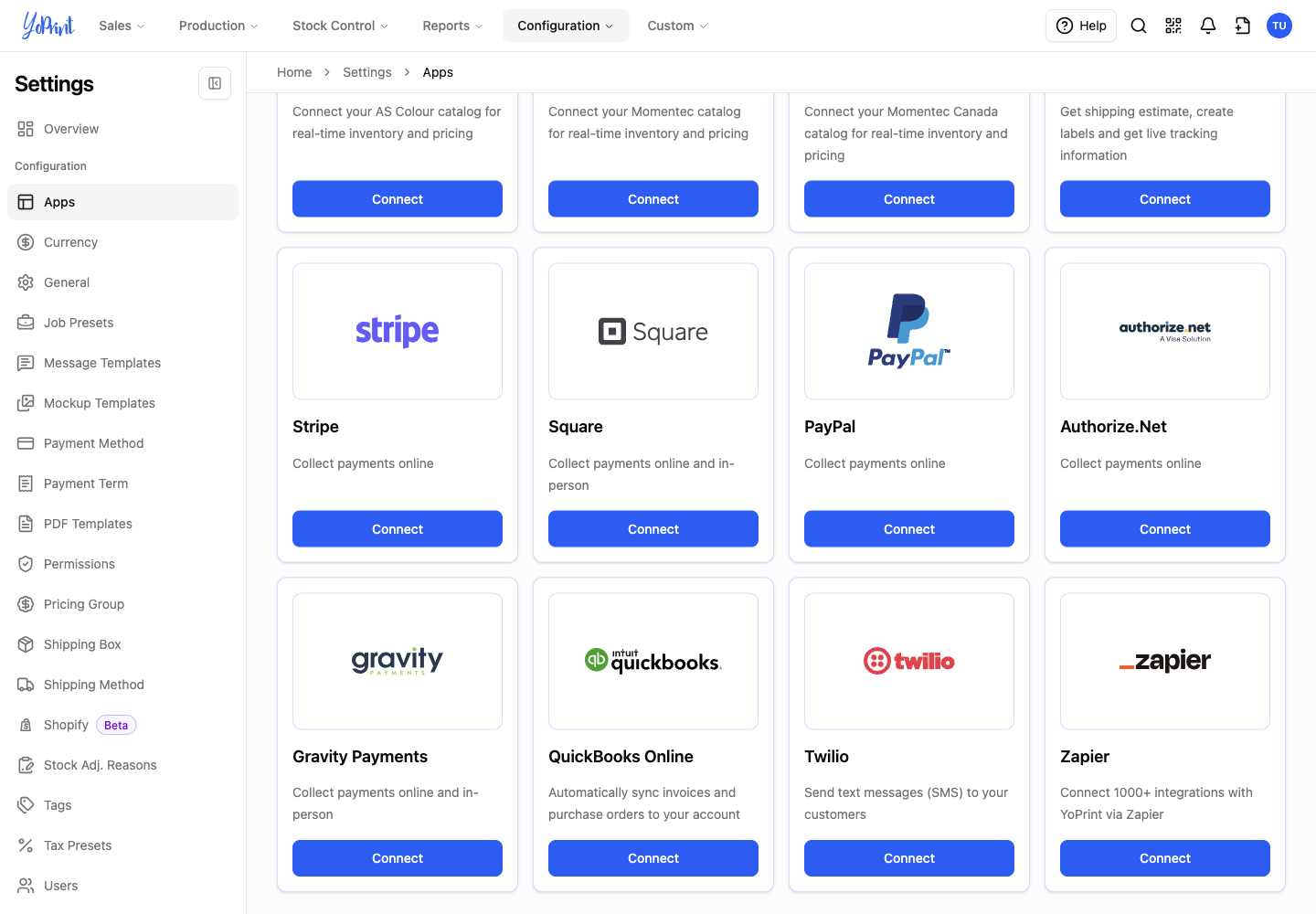
Connect QuickBooks Online if you use it
The QuickBooks Online card is on Apps too. Follow Connect YoPrint with QuickBooks Online to connect your account and sync invoices, payments, and purchase orders.