Understanding QR Codes vs. Code 128
In this article
A barcode on a YoPrint label or document takes you straight to the record it encodes on your screen. You can scan a job label, packing slip, or sales order instead of searching or typing numbers manually. YoPrint supports two barcode formats, QR Code and Code 128, so you can match the scanning equipment your shop already uses.
What the codes do in YoPrint
A QR Code is a square, two-dimensional barcode. The letters come from "quick response".
Code 128 is a one-dimensional barcode made of vertical bars. It stores letters and numbers to identify items in shipping and warehouse work.
The same data takes far less space as a QR code and reads from any angle. Both codes below contain the example value SO0001. Their smallest squares and bars have the same width, so you can see how much less label width the QR code needs. These examples do not open a YoPrint record.
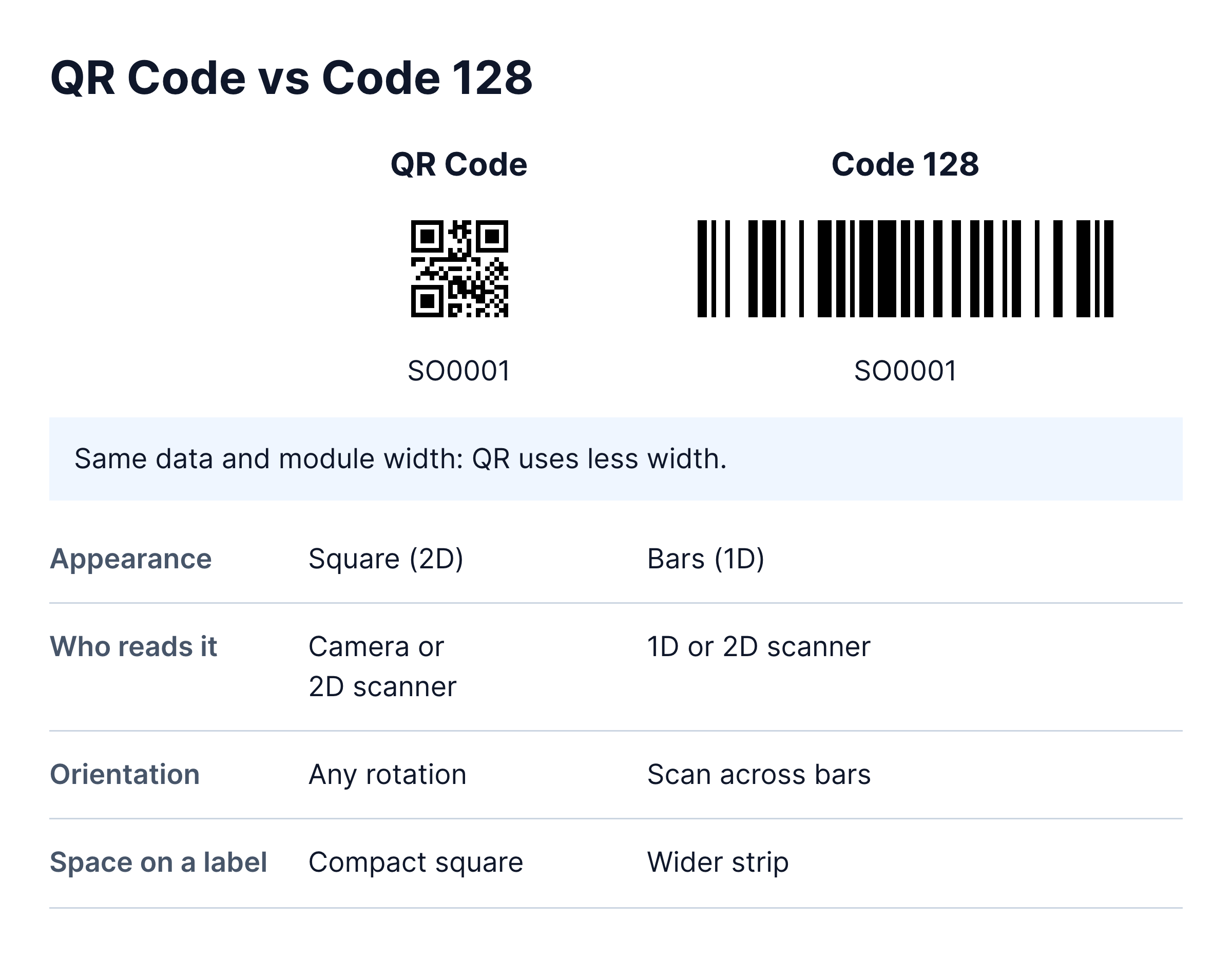
QR codes are compact squares that can be rotated in any direction in the plane of the page, though the camera still needs the whole code in view, in focus, and well lit. Code 128 barcodes are wider strips designed for traditional linear scanners.
YoPrint's built-in PDF templates put codes on these documents and labels:
- Quotes and sales orders, including compact versions and Sales Order as Invoice.
- Invoices, purchase orders and stock transfer documents.
- Job sheets, job worksheets and packing slips.
- Job labels, shipment labels and purchase order labels.
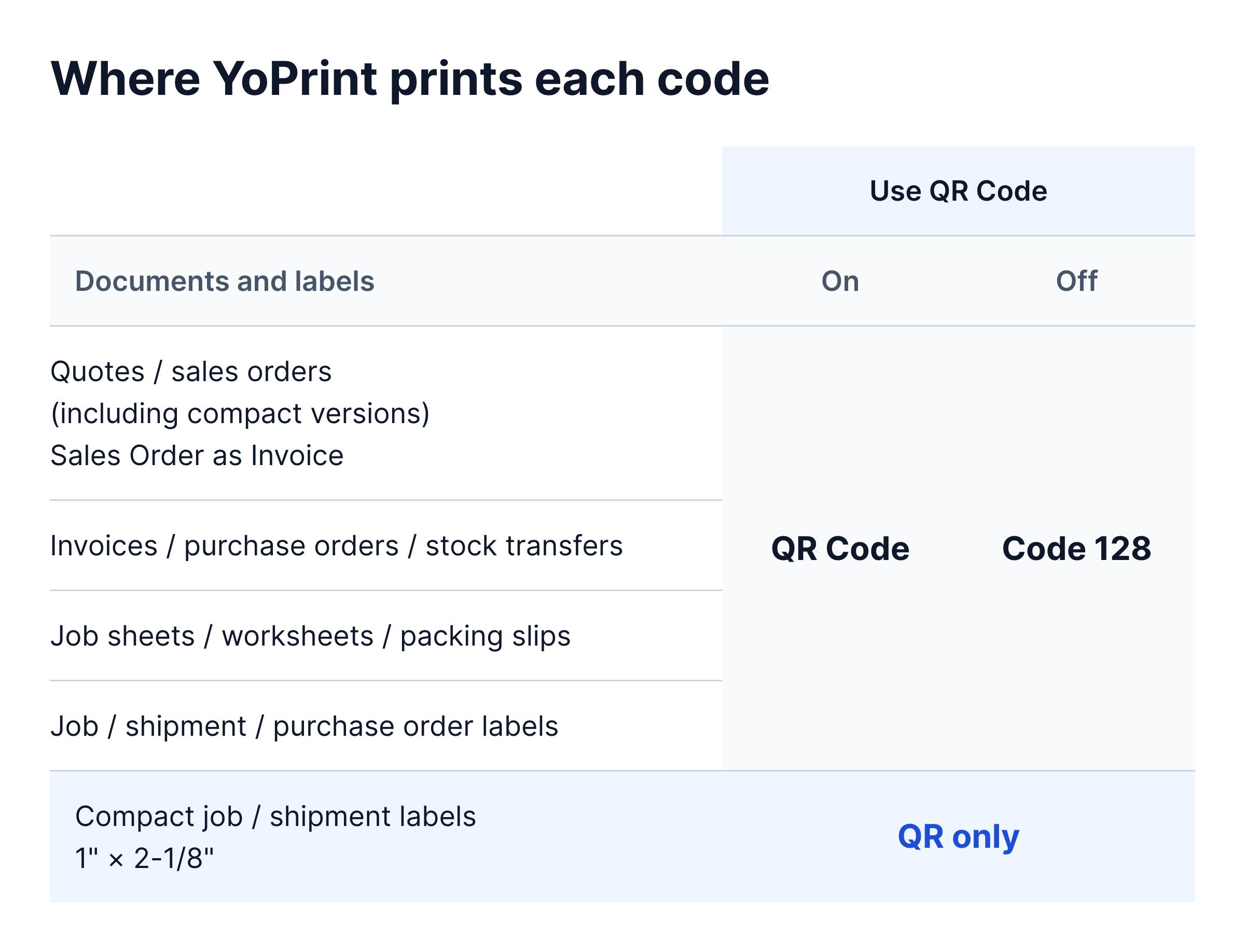
Most of these templates use QR Code when Use QR Code is on, or Code 128 when it is off. Compact 1" x 2-1/8" job and shipment labels always use QR codes.
A code opens the record encoded in it, and an invoice's code opens its order. Scanning a sales order code opens that sales order. Scanning a job label opens that job.
Here is where YoPrint prints each code when Use QR Code is on or off.
Benefits of QR codes
QR codes offer three practical advantages for shop work:
- You can scan with a phone or tablet camera, YoPrint's built-in camera scanner, or a QR-capable scanner.
- You can scan the code from any direction, without turning the page to line it up.
- QR codes usually take up less space on the document than a traditional linear barcode.
Choose a barcode format
Choose the format that matches the scanners your team uses on the shop floor.
A phone, a tablet, or YoPrint's built-in camera reads QR codes. Modern 2D barcode scanners also read QR codes. YoPrint recommends QR Code for its built-in scanner.
A handheld laser scanner reads only bars. Code 128 is the format a bar-only scanner reads, so choose it if your shop uses a 1D scanner that cannot read QR codes. Standard 1D scanners read linear barcodes made of vertical bars.
Handheld USB or wireless scanners configured in keyboard mode enter scanned data directly into YoPrint like a keyboard.
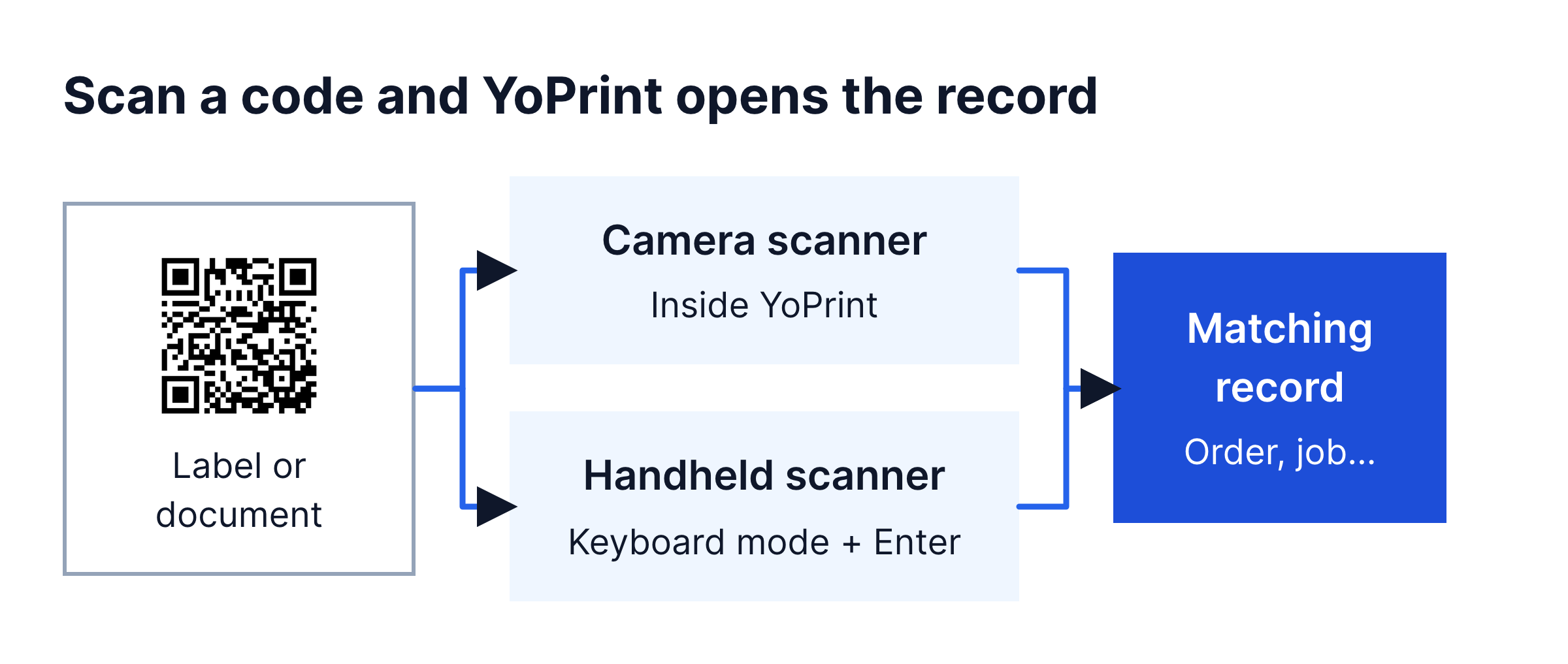
Both scanning routes take you from a YoPrint document or label to the record encoded in its code. Here are the two ways in and where you land.
Scan a code with YoPrint's built-in scanner
Use a device with a camera and have the YoPrint document or label ready.
-
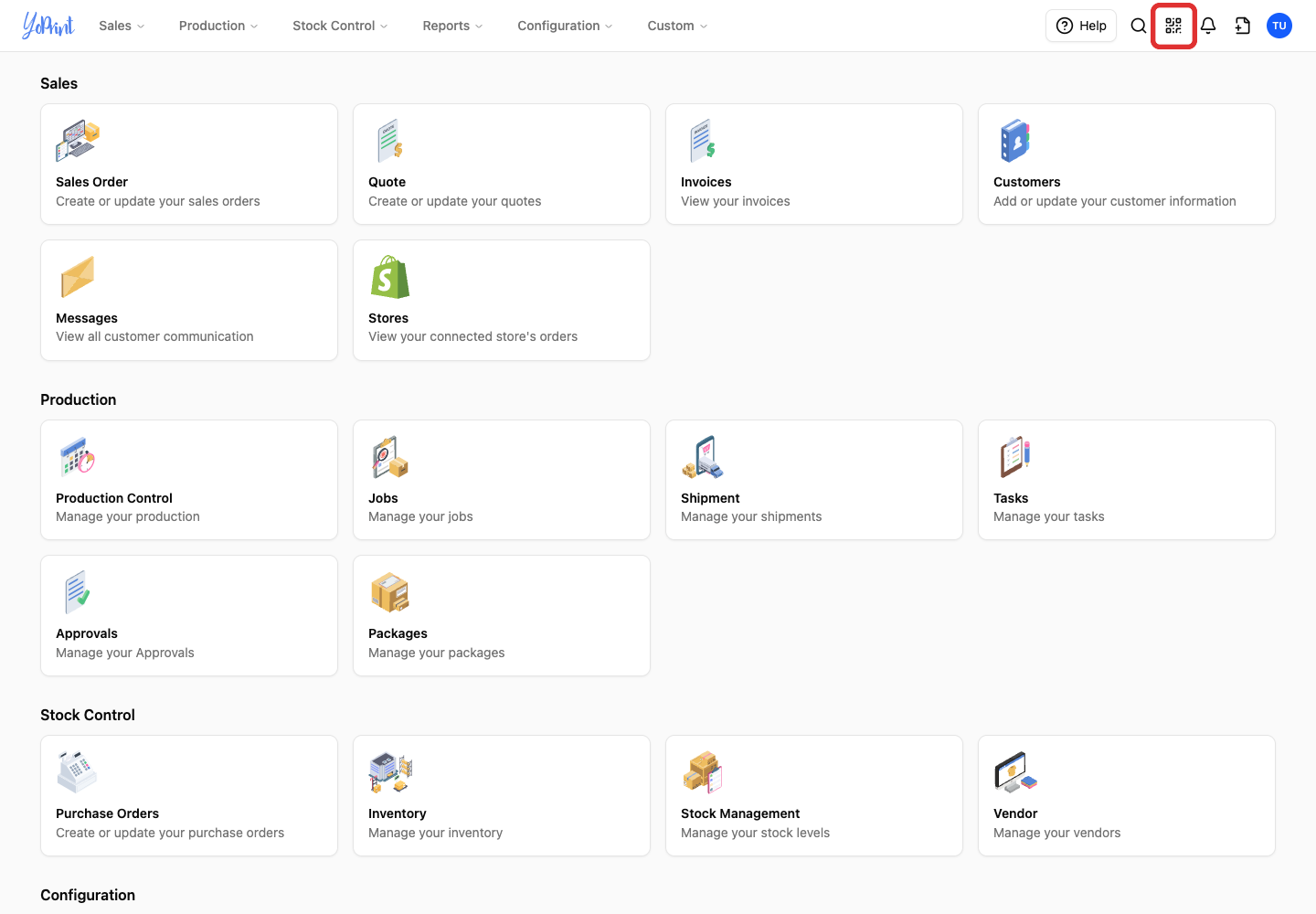
Click the barcode icon in the top bar.
-
Point the camera at the QR code. Keep the whole code in view. Make sure the area has enough light, and hold the camera at a distance that lets it focus.
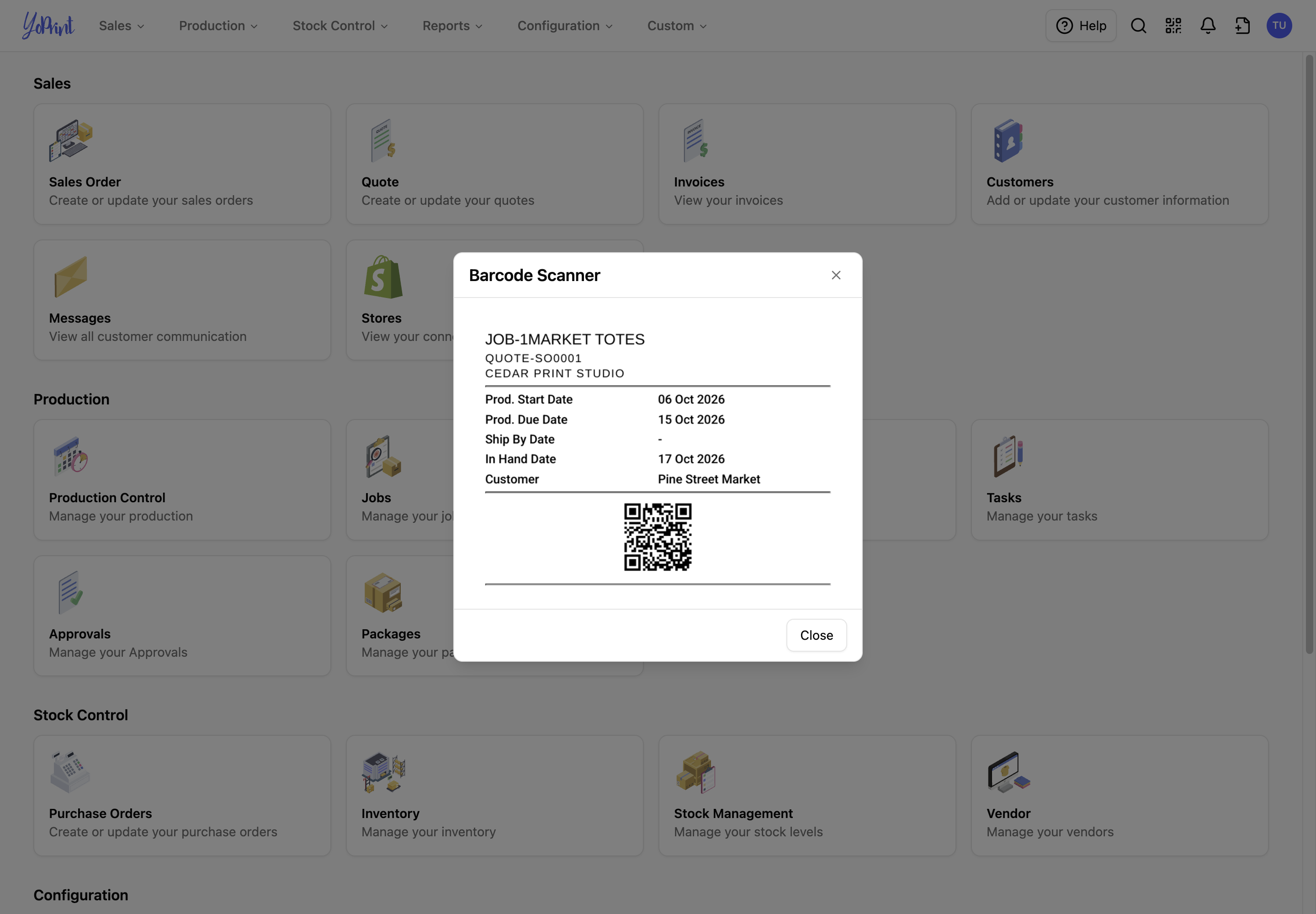
Camera access
Allow camera access if your browser asks. If camera access is blocked, the Barcode Scanner dialog shows Camera Access Denied instead of the camera view. Allow access in your browser settings to use the camera scanner.
When YoPrint reads the code, it closes the scanner and opens the matching record. A sales order code opens that sales order. A job label code opens that job within its order.
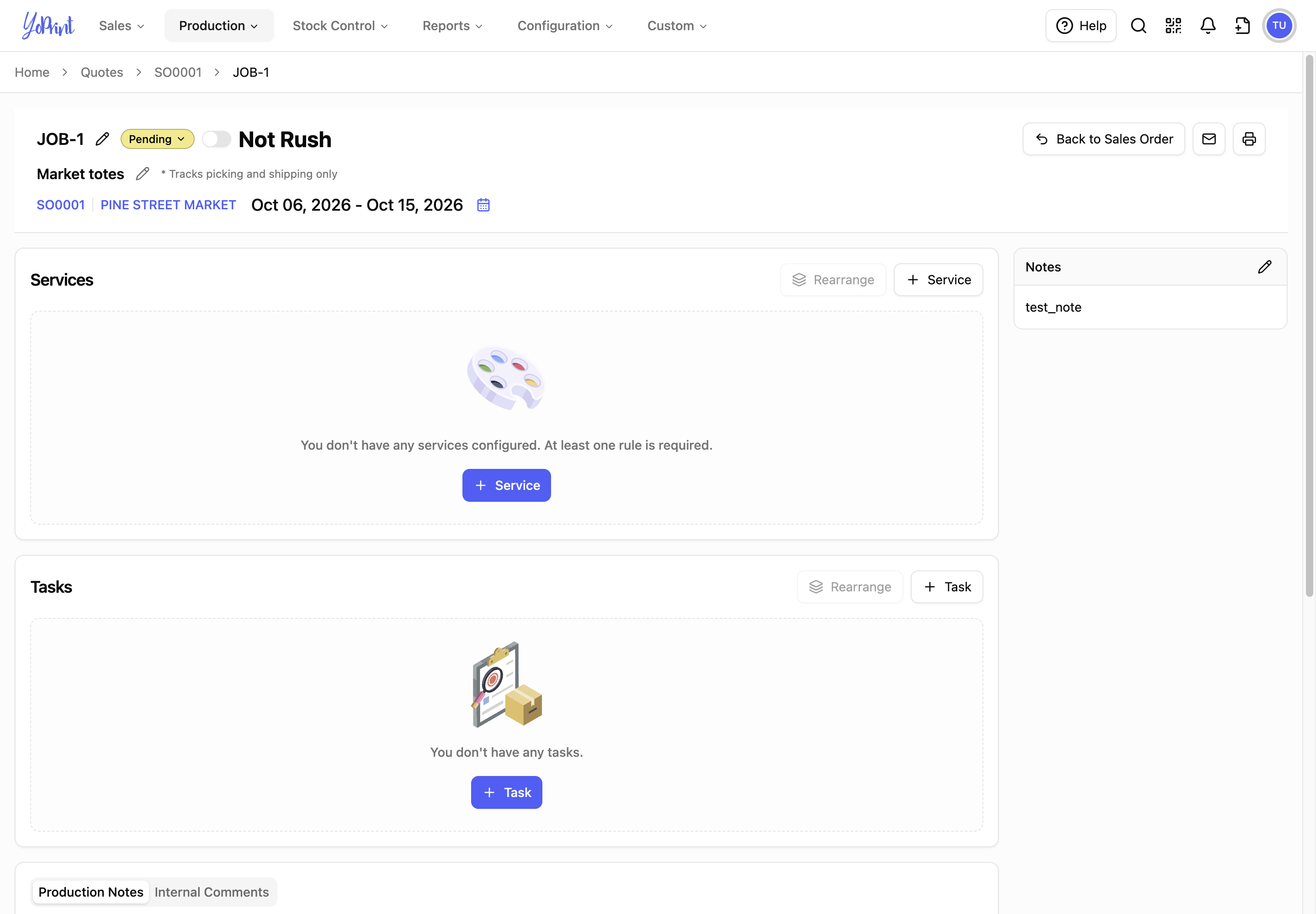
Scan with a handheld scanner
A handheld scanner acts as a keyboard only when it is set to keyboard (HID) mode.
Set your USB or wireless scanner to keyboard mode. Configure the scanner to send an Enter key after each scan. Follow your scanner's manual for these settings.
Keep YoPrint open in the foreground, with no text field selected. Scan a Code 128 barcode on a YoPrint document or label. YoPrint receives the code as keyboard input and opens the matching record.
Change the format in Settings
Once you know which format suits your shop's hardware, set your barcode preference in Settings.
This company setting controls standard job labels, such as 4" x 6" thermal labels, and other PDFs that use company barcode settings. The compact Job Label (1" x 2-1/8") always uses a QR code.
Dashboard shortcut
You can also click the Settings card under the Configuration heading directly on your home dashboard.
-
Click Configuration in the top menu.
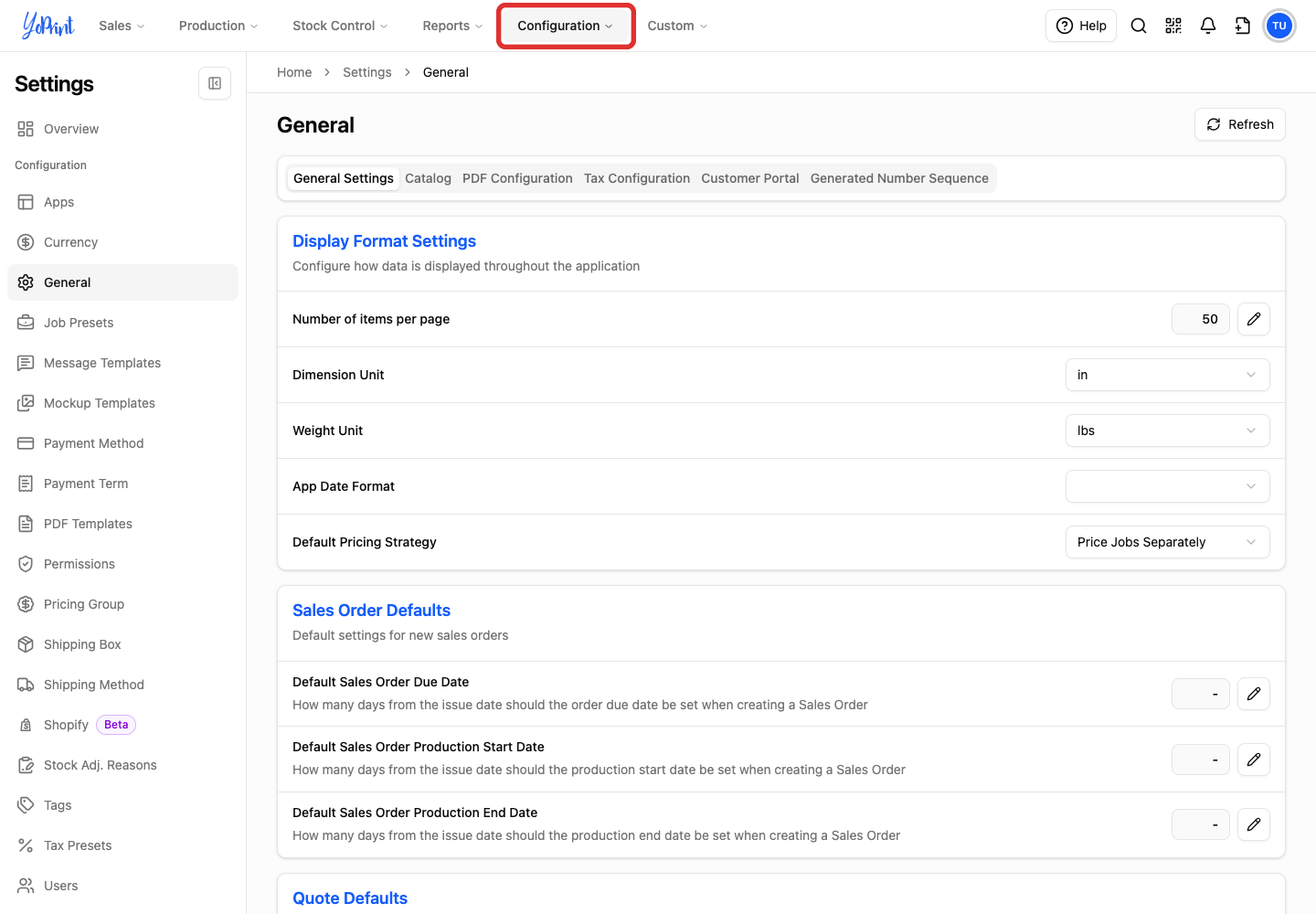
-
Select Settings.
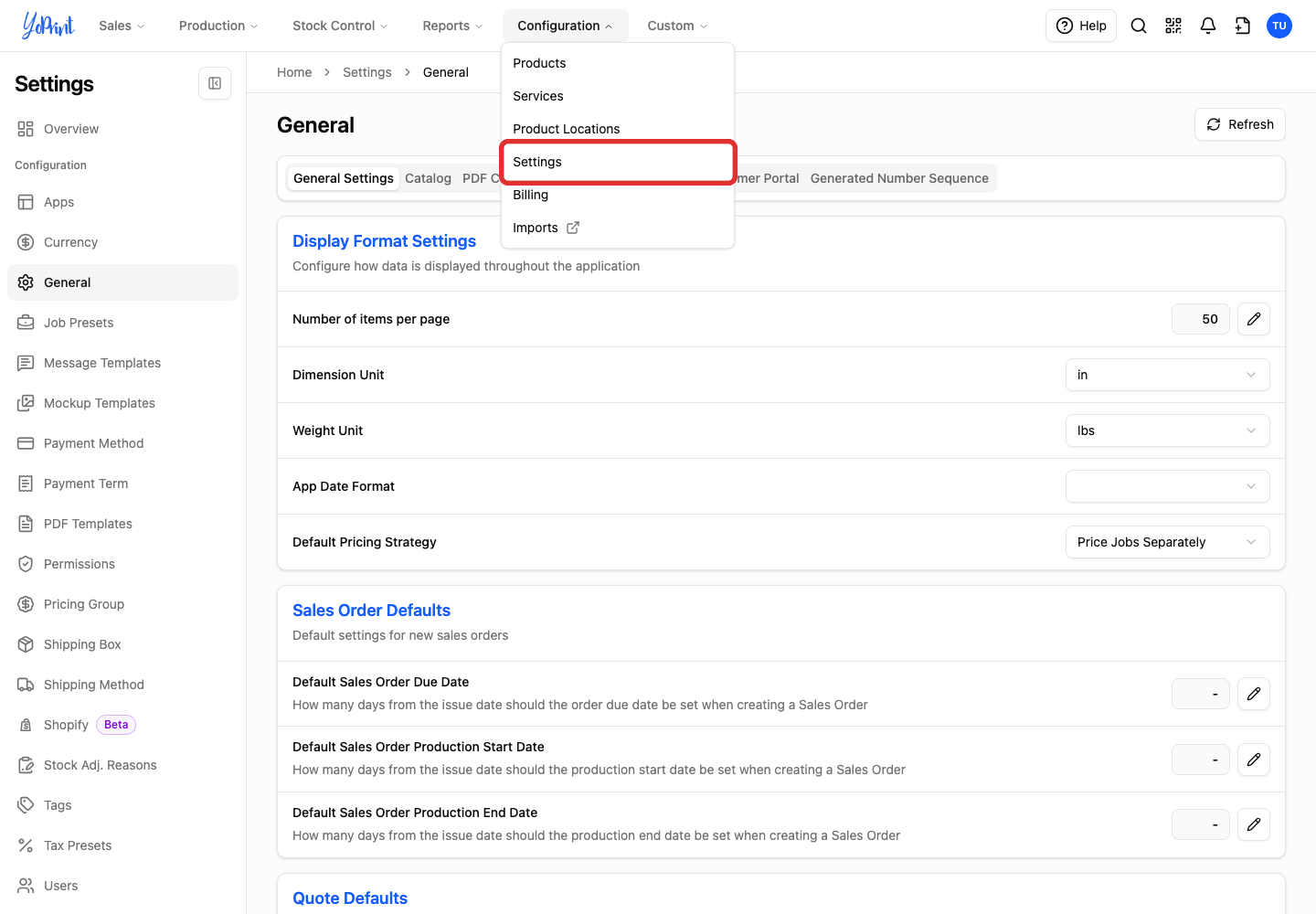
-
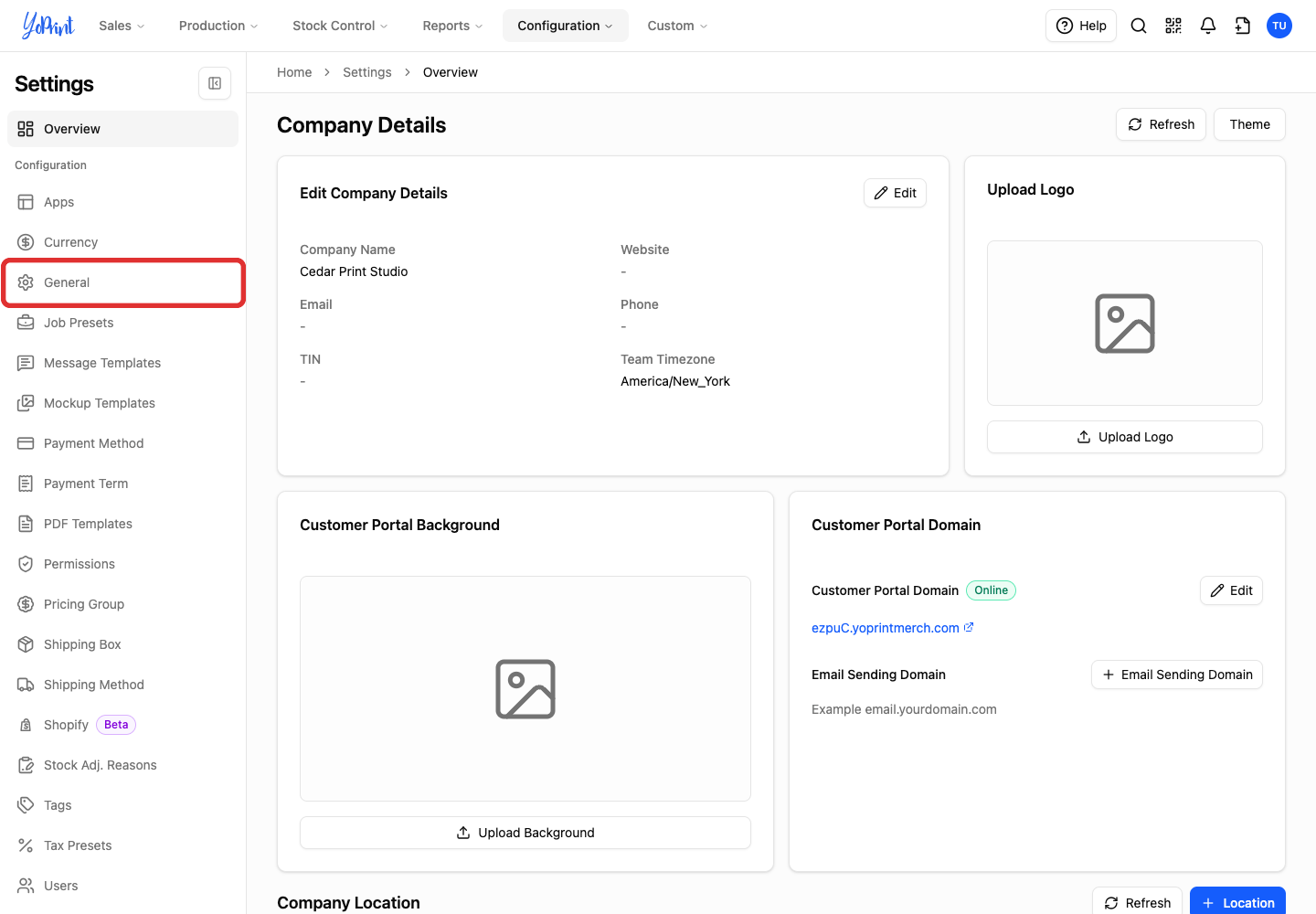
Click General in the Settings sidebar.
-
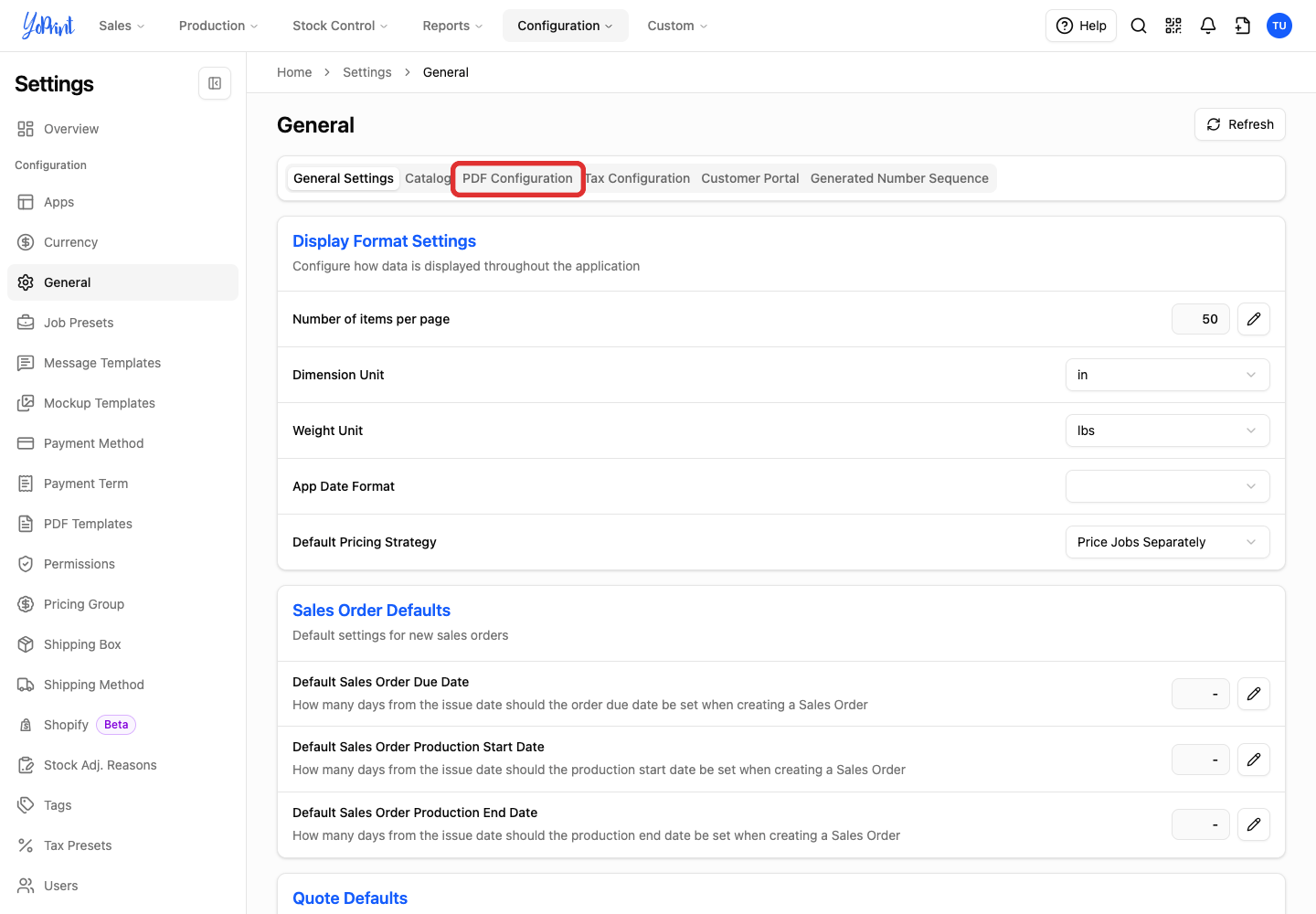
Click the PDF Configuration tab.
-
Scroll down past PDF Label Settings to PDF Advanced Settings. Turn Use QR Code on for QR codes or off for Code 128.
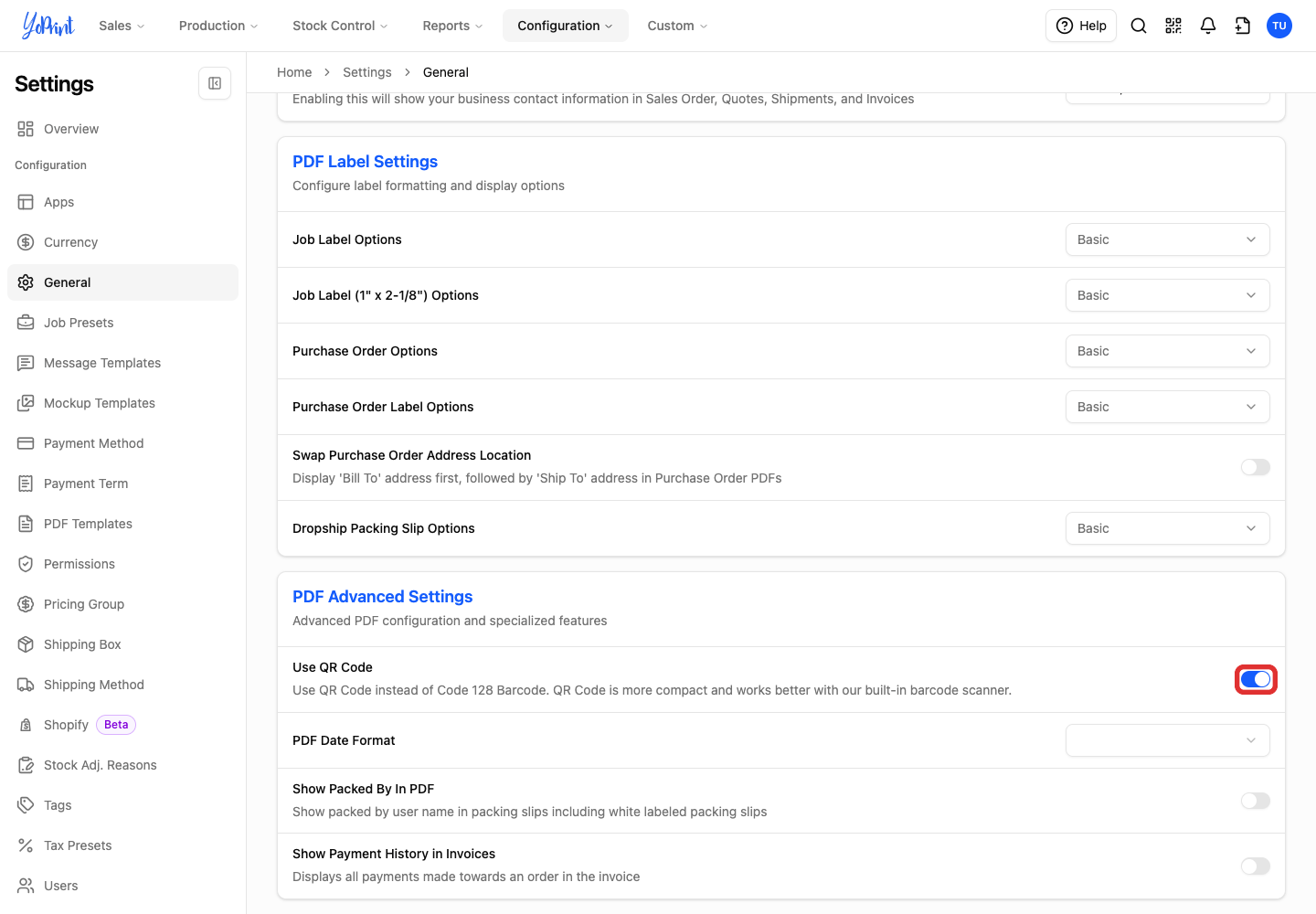
Turning off the switch does not disable barcodes. It sets standard labels to use Code 128 instead.
Your choice saves automatically. You do not need to click a Save button.
Generate your labels again after changing the setting. PDFs you already downloaded keep their original barcode.